


Shutterstock/Reddit
When teachers make rules they need to think about the rules from the perspective of their students. What is the rule behind the rule?
For example, if a group of high school students has a field trip to an amusement park and the rule is that the students aren’t to go to the water park, does that rule simply mean not to go to the water park?
Or is it implied that the students aren’t to go on any rides where they might get wet?
If the second option is the real meaning of the rule, then the rule should be not to get wet.
In today’s story, one teacher didn’t think through the rules very well, and the students took advantage of it.
Let’s find out what happened.
The Water Park is Off Limits. Okay.
This story wasn’t an intentional Malicious Compliance response; it just sort of happened that way. This happened about 25 years ago.
Every year, my High School would organize a school trip to an amusement park just outside of town.
In order to go on the trip, you had to fork over $10 and fill out a form (if you were under 16, your parent had to sign the form).
Standard stuff.
There was only one rule.
But there was one teacher in charge who made it a point to remind us constantly that we weren’t allowed to enter the Water Park, otherwise, we were allowed to do what we wanted so long as we didn’t get in trouble or do anything that reflected poorly on the school.
Fair enough.
Now, like I said at the start of this story, this malicious compliance wasn’t intentional, but suffice it to say we arrived at the bus about fifteen minutes before it was scheduled to return to town, soaked to the bone.
If looks could kill, we would’ve been dusted right then and there.
They did not go to the water park.
So he demands to know what happened, and we told him.
You see, there’s a ride at this park that is kind of a simple-looking roller coaster.
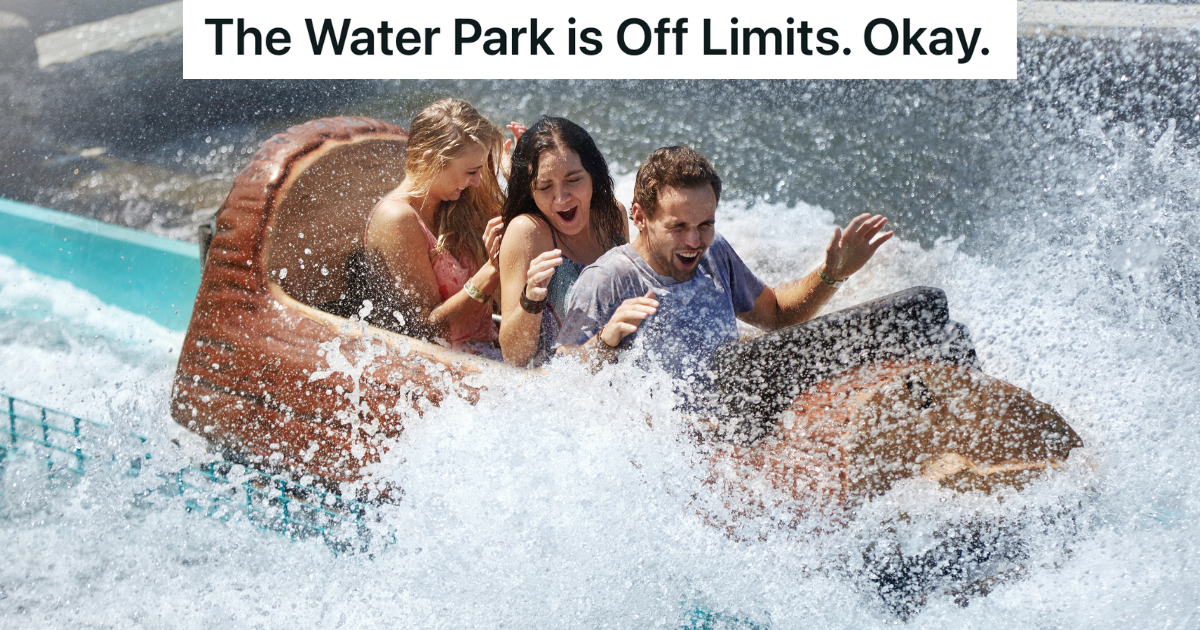
It’s not very high, and only has one drop but the caveat is the track is actually a slide with water, and the drop is over a body of water that causes a kind of wave that splashes both the rider and whoever is standing on the bridge across from the drop.
We all stumbled across this ride while we were wandering the park, and debated whether or not we should go on it.
They didn’t break the rules.
We decided, unanimously even, that technically this ride wasn’t in the Water Park, so riding it wasn’t actually against the rules.
We rode it twice.
By the time we finished explaining, he was glaring daggers at each one of us and after a pause, he just pointed behind him and said “Get on the bus.”
Years later, this story still makes OP laugh.
Everyone on the bus stared at us while we boarded, either thinking we were heroes or rebels.
Whatever the case, I still laugh about this story whenever I tell it, and one of my friends suggested I should post this on Reddit under Malicious Compliance, so here we are.
They followed the rules.
The teacher can only be mad at himself for not specifying that they weren’t to get wet.
Let’s see how Reddit reacted to this story.
They didn’t do anything wrong.


Yes, I have trouble thinking of an amusement park that DOESN’T have a water ride.


This is what I assumed too.


This would’ve been a better rule.


Even teachers like malicious compliance!

You can’t get mad at someone for following the rules!
Kids are great at malicious compliance.
If you liked that post, check out this post about a rude customer who got exactly what they wanted in their pizza.