


Pexels/Reddit
When two rescue kittens joined the household, she agreed to help make sure someone was always home with them. At the time, it seemed reasonable — they were young, nervous, and needed attention.
But two years later, the cats are adults, and the arrangement hasn’t changed.
Read on for the story.
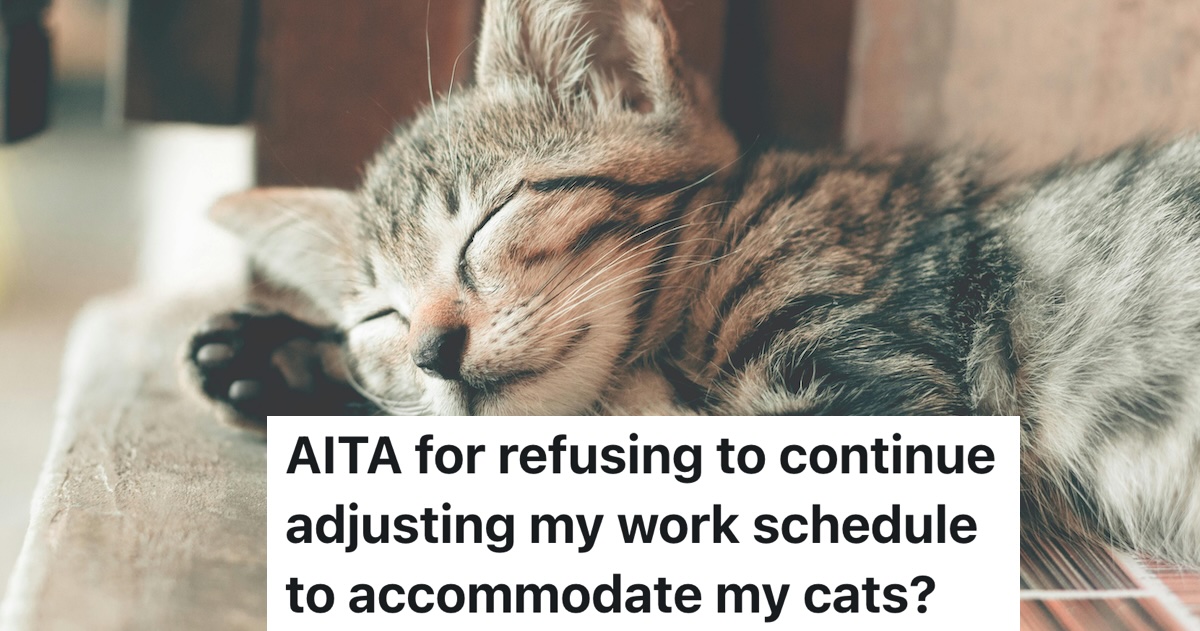
AITA for refusing to continue adjusting my work schedule to accommodate my cats?
My mother and I share an apartment together. We adopted two rescue cats two years ago. They are certainly nervous and clingy by temperament.
My mother and I both work a combination of remote and on site so that the cats have someone home and do not need to be left alone all day.
I agreed to this arrangement while the cats were kittens (under one year). The cats are now two and my mother continues to want me to adjust my schedule to be home half days.
How exhausting.
I am finding it draining to work at home, stop working, travel to work, then restart.
Furthermore, I am taking on a clinical student in March and will need to be on-site more.
I am perfectly fine with the cats spending days home alone as they are adults. My mother said this is a sin and is trying to make me feel guilty and says she has “so much anxiety”.
Oh brother.
I cannot accommodate her anxiety or this arrangement, but her guilt trip has me questioning myself or if I truly am an a****** for leaving the cats alone full days.
but…millions of people have pets and go to work everyday?
AITA?
Redditors quickly weighed in on the situation, and many had strong opinions about whether the responsibility should really fall on her.
This person says Mom needs to deal with her own anxiety.


This person agrees…she needs anxiety meds.


And this person adds that she has control issues.


Most cats nap for 16 hours a day, so expecting a human to rearrange their entire career around them might be the real overreaction.
If you thought that was an interesting story, check out what happened when a family gave their in-laws a free place to stay in exchange for babysitting, but things changed when they don’t hold up their end of the bargain.