



Pexels/Reddit
Rules are supposed to protect workers, not hand serial slackers a lifetime pass.
When one manager was told HR could not get rid of a protected employee who dodged work and underperformed, he dug into the law himself and found a workaround hiding in plain sight.
Keep reading for the full story!
A story from Oman. I helped HR move someone along.
Omani nationals have major labour law protections, particularly if they work in oil and gas, one of the major industries there.
I was posted to Oman for a project and discovered that a very small number of the locals use this protection for their own benefit.
He describes the locals’ dishonesty.
They basically slack off, claim they need to go to funerals for endless aunts, claim the wadi is flooded, and basically avoid work.
Due to various loopholes, the law seemed to be on their side.
Because of the labor law, you can’t fire them without a court case on your hands, and foreign companies don’t want to go in front of an Omani magistrate.
It was common for fired Omani nationals to be paid out years of severance as a penalty to their bad foreign bosses. If they resigned, this was not the case.
So when this manager arrived, he found himself managing one of these locals.
When I got to Muscat, I discovered we had “inherited” one of these clowns. He was doing it all and, unfortunately, was also technically incompetent.
I spoke to HR, and they said, “We can’t do anything.”
This manager wasn’t about to just accept the status quo without doing his due diligence.
I asked for a copy of the HR law for Oman and read it.
I then spoke to the chap in question and discovered he was interested in training and travel to the USA to our HQ.
Now one thing: no one there liked field work. They avoided it like the plague.
But this local agreed — on one condition.
But this chap agreed he would do the field work first if he could go to the States after.
HR witnessed this.
Here’s where things got complicated.
Two things then happened.
Under Oman labour law, we were allowed to assign field techs to the field only on an equal-time basis, for every day in the field, one day in the office, but there was curiously no upper limit in the law as to how long you could send someone for a contiguous period, provided it was equal time within the year.
So when HR pitched in, this manager presented them with an opportunity.
HR said, “Oh, it’s customary no more than two weeks.” I asked if this was in his contract, and they said no.
I then said, “OK, I am assigning this chap to 180 days in the field so we can then send him to the USA for 180 days.”
HR looked at me as though I was mad, but I insisted it was legal.
So after doing some checking, HR finally agreed.
They double-checked and said, “OK, seems legal.” I told the chap the next day he came in, “Since you agreed to go to the USA, we are sending you for 6 months, however you need to go to the field for 6 months, leaving tomorrow, to a nasty desert camp.”
So the manager ended up doing something HR had been meaning to do for years.
He resigned on the spot. HR came in and privately congratulated me. It turned out they’d been trying to get rid of the chap for 5 years.
Where’s the malicious compliance? I complied completely to the letter of the law in a malicious manner.
Sounds like this manager just became the most valuable person at the company.
What did Reddit have to say?
This user feels they’re lacking some key context.


HR will no doubt use this strategy to their advantage in the future.


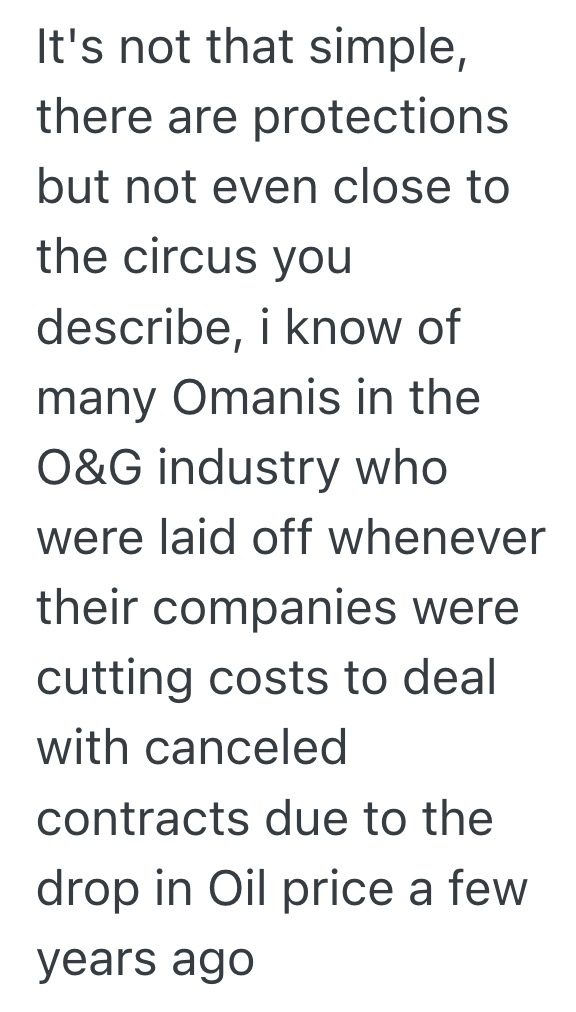
This commenter understands the industry a bit differently.

This commenter thought maybe the story was heading in a different direction.


There’s nothing like a good legal loophole to finally give a slacker the boot.
If you liked this post, check out this story about an employee who got revenge on a co-worker who kept grading their work suspiciously low.