


Shutterstock
Business travel gets expensive. Distrust makes it even pricier.
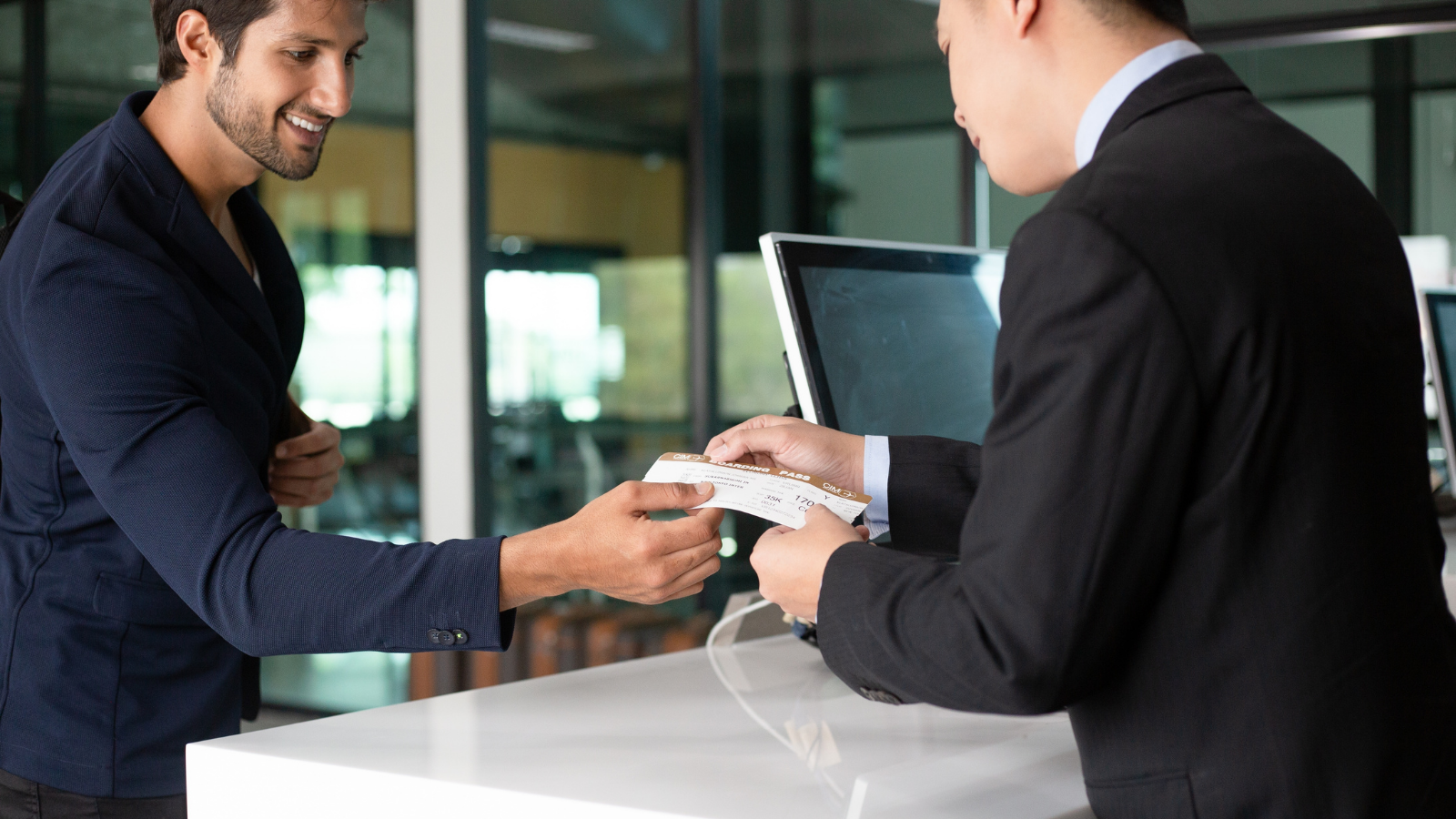
So, when employees need boarding passes for reimbursement, they figure out how to book flights in a different way.
Ticket prices climb fast.
See why the policy eventually disappears.
When the big company doesn’t trust employees
Bored of the repetitive posts maybe from bots, I have a different story about economic incentives.
This one has to do with flying on the company dime.
I used to work for a multinational that allowed to fly business class for intercontinental client trips.
And it all begins with some employee mistrust.
It must have been some accountant worrying that employees could trade the ticket in, fly coach, and pocket the money, because the policy stated that the boarding passes needed to be included in the expense report.
But the expectation was that the employees would front thousands.
Since people hated to spend 6-10k USD on a ticket and get reimbursed a month later once they could produce boarding passes, they all bought their tickets at the last minute, thus paying $10-15k. (this is the economic lesson: people respond to incentives).
And so, the company’s prolonged reimbursement timeline resulted in them losing out big.
So, the company ended up overpaying for plane tickets because it didn’t trust the employees.
Of course, the tides eventually changed, what with technology.
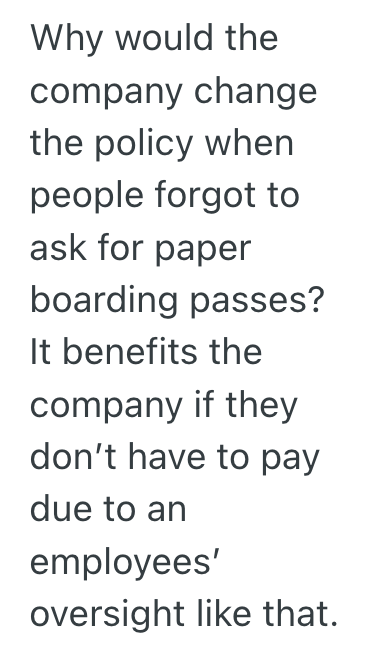
The policy changed when people started using electronic boarding passes and forgot to ask for paper ones.
Genius bean counters must have found significant savings in the average flight costs, but probably they were too dumb to figure it out.
Does Reddit have any examples of this?
Let’s read some of the comments below to see what everyone else is saying…
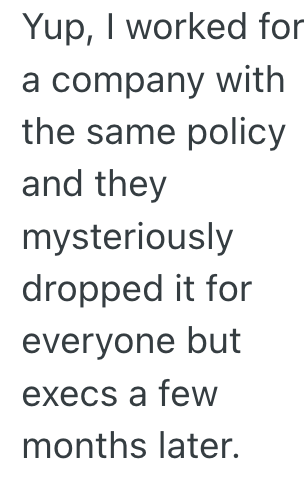
First up, a commenter could definitely relate.

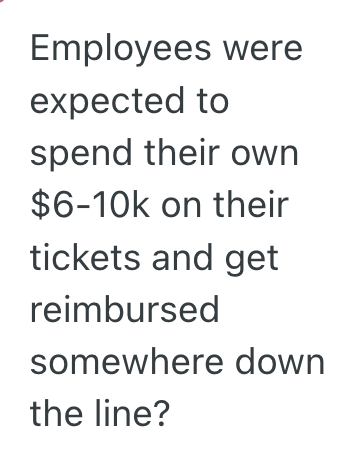
Some were in disbelief.

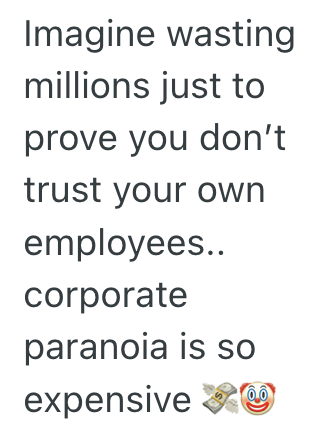
Others said the “paranoia” wasn’t worth the expense.

If you enjoyed this story, check out this post about a woman who received a work email from a place she never even applied.
And finally, one reader remained confused by the boarding passes.

Employees waited until the last minute to buy business-class tickets because reimbursement required proof they had actually flown.
That turned $6,000-$10,000 fares into $10,000-$15,000 purchases until electronic boarding passes finally helped kill the policy.
Nothing saves money quite like spending thousands extra to prevent imaginary theft.