



Shutterstock
Telling a major customer to leave is easy when you assume they have nowhere else to go.
Would you tolerate one painfully slow diesel pump or take your entire company’s business elsewhere?
This station owner laughed at a reasonable upgrade request and confidently invited her best customer to find another solution.
Yikes. Let’s see how this one played out.
“Don’t like our slow gas pumps? Take your business some place else!”
This happened many years ago at the company I currently work for.
At the time, we had about 130 company vehicles at our location and our own fuel pumps.
Our location is a few miles outside of town.
Over time, the two businesses had seen quite a lot of each other.
There was one small privately owned gas station within 100 yards of our company.
It received a lot of our business because, while we did not get gas there, our employees would stop in the morning, lunch, and after work to pick things up.
Their breakfast business was very strong.
But the gas station’s leadership wasn’t the best.
One of the owners was very rude. She would curse at us to hurry up and pick what we wanted, but for the most part, they were okay.
There was a change in the law on below-ground fuel pumps, and we found out that we could no longer provide our own fuel to company vehicles.
As a result, we made a deal with this small gas station to provide all the fuel for our company.
It didn’t take them long to regret it, though.
Right away, it was a nightmare.
They only had four regular pumps and one diesel pump. While the regular cars could fuel up at different times, our large trucks would bottle up badly in the morning at the one pump.
So when they made one big request, the gas station owners literally laughed in their faces.
So we sat down with them and requested they install a fast diesel pump designed for large trucks. I was actually in on that meeting.
The wife just laughed at us. She said there was no way in heck she would pay for that, and if we did not like it, we could just take our business elsewhere.
So you can guess what happened next.
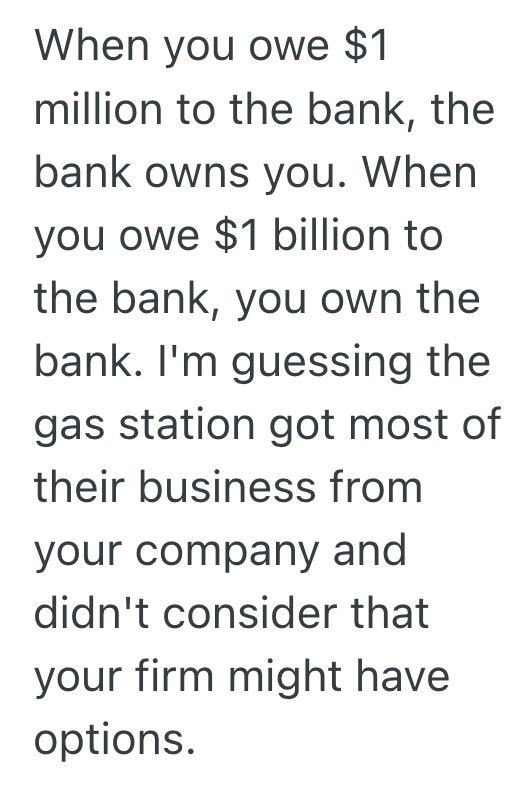
In her mind, we did not have a lot of options, and even if we did, she would still have all our breakfast, lunch, and after-work business.
Cue compliance…
So we did.
To really cover themselves, they decided to cut out this gas station altogether.
We did not want a repeat of what was happening at this location, so we supplied all employees with a Comdata card so they could get fuel any place they wanted.
And it hurt the gas station’s bottom line — big time.
This hurt that business more than anyone could have realized.
With our employees now stopping at the locations of their choice, they no longer needed to stop to pick up snacks, drinks, or food at this store.
Their morning, lunch, and after-work business evaporated.
So guess who came crawling back.
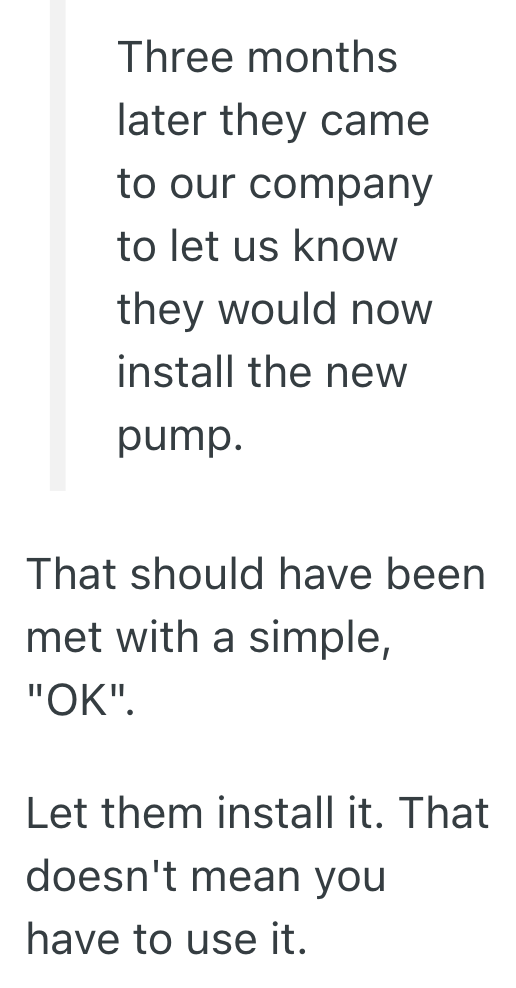
Three months later, they came to our company to let us know they would now install the new pump.
We told them it was too late.
I still remember, after we said no, the angry woman got mad again and cursed at us.
But they persisted.
One month after that, just the husband came by and asked if there was anything he could do to get our business back.
We had signed a contract, and it was actually saving us money, so we said no.
So finally these owners got what they deserved.
They closed the store about a year after that and tried to sell the location for a million dollars.
It sat for years until it finally went for about $100,000 to a veterinary clinic.
In business, arrogance can be a ticking time bomb.
What did Reddit have to say?
This was truly bad business on the rude gas station owners’ parts.


Why not just give these people the runaround?

Clearly these people weren’t thinking clearly.

If you enjoyed this story, check out this post about a helicopter inspector who grounds a flight after the pilot is rude to him.
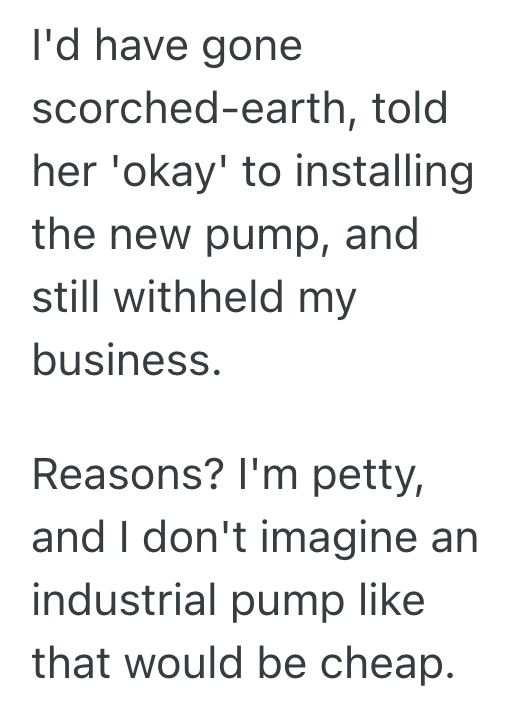
This user would have taken it even further.

The company issued fuel cards allowing employees to visit other stations, taking their food and drink purchases with them.
By the time the owners offered to install a faster pump, the company had already signed a cheaper contract elsewhere.
The station eventually closed and sold for a fraction of its original asking price.