


Shutterstock
A common joke in the scientific community is that fusion power is about 10 years away, and has been for about 50+ years. If humans can figure out a way to make power via nuclear fusion, it would produce an essentially unlimited amount of clean energy. The problem, however, is that even though scientists know HOW nuclear fusion works, they can’t quite make it happen on the scale necessary to produce energy.
This all may be changing…in about 10 years.
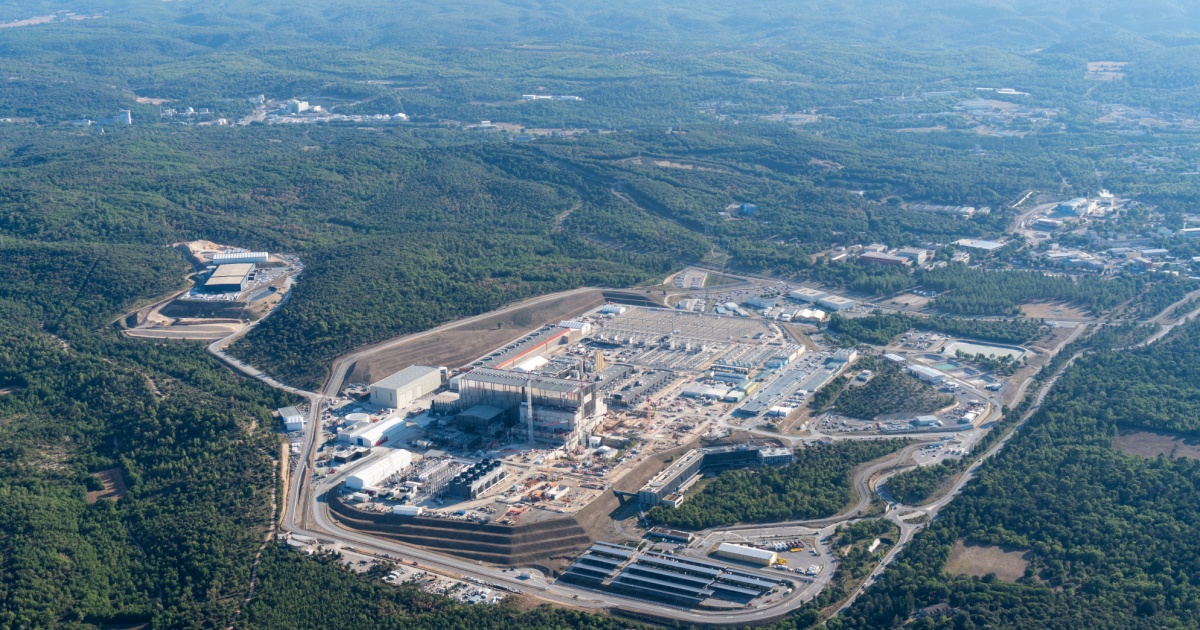
The International Thermonuclear Experimental Reactor (ITER) is a massive undertaking that has investments and scientists coming from more than 30 countries with one goal in mind. Nuclear fusion.
The thinking behind this project is that, rather than having dozens or even hundreds of separate companies and countries working on comparatively small nuclear fusion projects, collaborating and bringing everyone’s resources together has more potential.
Not surprisingly, however, this project is already well beyond schedule and over budget. That being said, progress is being made. All the components needed for the reactor have been made and now just need to be put into place. That is what is happening now.

Shutterstock
One big step in this process is bringing the solenoid, which is a massive conducting coil that will generate the magnetic field, and putting it in position. This central solenoid weighs about 1000 tons. Once active, it will produce a magnetic field that is 280,000 times stronger than that of the Earth. It will be able to store 6.4 gigajoules of energy.
So, to put it simply, it is huge.
If they can get this system running, the goal is that it will be able to produce more energy than it requires to run. Plus enough to offset all the time, energy, and money needed to build the facility. This is a big ask, but in addition to just being able to generate energy, this project has already found success in bringing people together for a common goal.
Countries including the US, France, China, Russia, and many others are all working together on this massive project, despite their many political differences. Pietro Barabaschi is the ITER Director General, and he said in a statement:
“What makes ITER unique is not only its technical complexity but the framework of international cooperation that has sustained it through changing political landscapes. This achievement proves that when humanity faces existential challenges like climate change and energy security, we can overcome national differences to advance solutions. The ITER Project is the embodiment of hope. With ITER, we show that a sustainable energy future and a peaceful path forward are possible.”

Shutterstock
If all goes according to plan, they are hoping that this facility will be able to generate energy in 2033, though that would just be the beginning of tests. The scientists working on this project are sharing information with other nuclear scientists around the world, however, so hopefully it will help to push this amazing technology forward.
Nuclear fusion may be ready in 10 years…As always.
If you thought that was interesting, you might like to read about a quantum computer simulation that has “reversed time” and physics may never be the same.