
Shutterstock
When you think about what astronomers do, you first think of looking up at the stars. While this is certainly a major component of astronomy, it is also sometimes necessary to use another one of your senses. Hearing (kind of).
That’s right, by listening to the sounds that a star makes, scientists can learn a lot about the star itself. This is a field known as asteroseismology and works by measuring waves as they pass through a star. This is normally done on large and young stars, which are very active. More recently, however, a team listened to a much older and smaller start to see what they can find out, and they learned a lot.
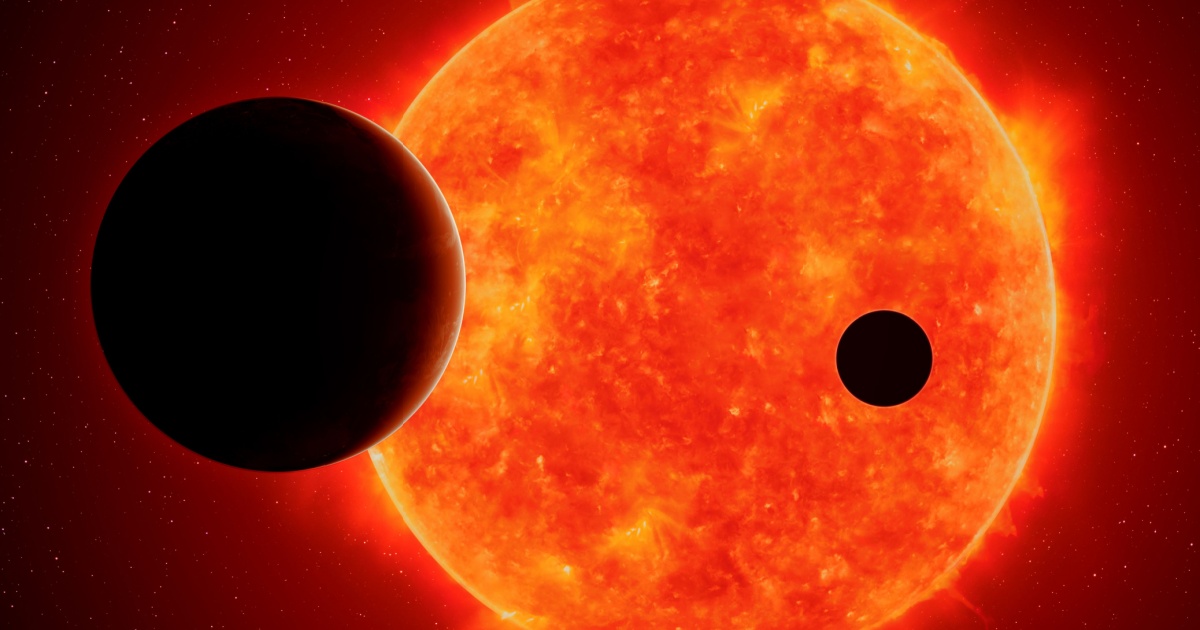
The star they analyzed was an orange dwarf about 21 light-years from Earth (named HD219134). It is a lot cooler and smaller than our own sun. Using Keck Observatory’s new instrument, called the Keck Planet Finder (KFP), the team could pick up the vibrations from this star.
They published a study on their findings in in The Astrophysical Journal, including the fact that this star is about 10.2 billion years old. How do they know that? It’s all in the vibrations.
The lead author of the study, Dr. Yaguang Li, is a researcher at the University of Hawaii at Manoa. In a statement, he explained:
“The vibrations of a star are like its unique song. By listening to those oscillations, we can precisely determine how massive a star is, how large it is, and how old it is. This is like finding a long-lost tuning fork for stellar clocks. It gives us a reference point to calibrate how stars spin down over billions of years.”
So, what does a star sound like? Listen in this quick video:

This new tool isn’t just great for learning about the star itself. It can actually help inform astronomers about any potential planets that orbit a star. In this case, researchers found that two of the five known planets in that solar system have a composition similar to that of Earth. Understanding the age of the sun can help shed light on the age of its planets. A co-author of the study, Dr. Daniel Huber, talked about how this new way of analyzing a sun could actually help to identify how old life on a planet is, if life is ever found:
“When we find life on another planet, we will want to know how old that life is. Listening to the sounds of its star will tell us the answer.”
This is certainly an exciting line of research that will help scientists to understand stars, and their planets, a little better.
If you thought that was interesting, you might like to read about a second giant hole has opened up on the sun’s surface. Here’s what it means.