


Shutterstock
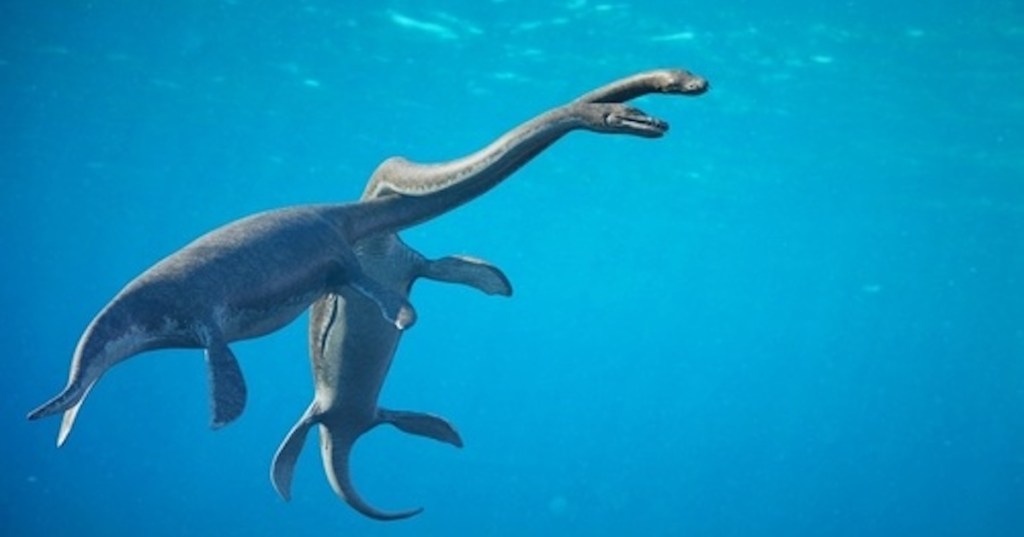
Back in 1988, Heather and Michael Trask dug up a set of fossils near the banks of the Puntledge River. The fossils were from an ancient animal that had a long neck, powerful jaws, and sharp teeth, which got it a lot of attention. They became so popular that these fossils became the official fossil emblem of British Columbia.
While interesting, nobody could quite identify what they were. The fossils seemed to have features of both very primitive and surprisingly modern animals. The neck was 12 meters (39 feet) long, and it had features that showed that it likely hunted by swimming above its prey and then diving down on it, capturing it in its powerful jaws. Another well-preserved partial skeleton was found in 2002, which helped scientists put the animal into a new genus and species called the elasmosaur.
More recently, a study was published in the Journal of Systematic Palaeontology that further solidified its position as an entirely new species of animal.

Shutterstock
The lead author of the study is Professor F Robin O’Keefe from Marshall University in West Virginia. In a statement, he said:
“Plesiosaur fossils have been known for decades in British Columbia. However, the identity of the animal that left the fossils has remained a mystery, even as it were declared BC’s provincial fossil in 2023. Our new research published today finally solves this mystery. The scientific confusion concerning this taxon is understandable. It has a very odd mix of primitive and derived traits. The shoulder, in particular, is unlike any other plesiosaur I have ever seen, and I have seen a few.”
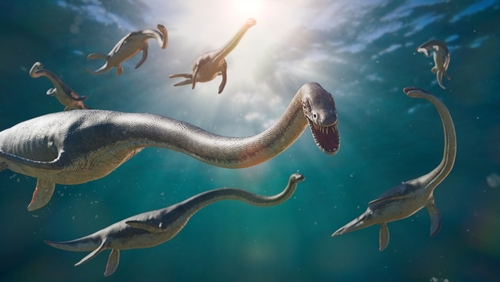
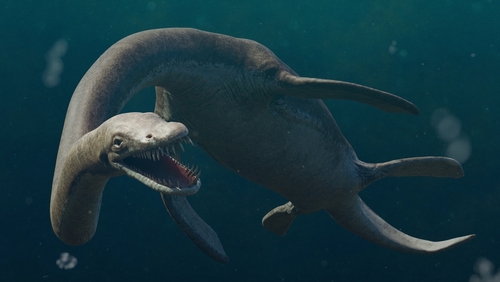
The study suggests that this animal would have likely fed largely on ammonites, which were found in great numbers during the time when this species lived. They had hard shells, but that shell would have been no match for the powerful jaws and teeth of the elasmosaurus. O’Keefe added:
“With the naming of Traskasaura sandrae, the Pacific Northwest finally has [a] Mesozoic reptile to call its own. Fittingly, a region known for its rich marine life today was host to strange and wonderful marine reptiles in the Age of Dinosaurs. The fossil record is full of surprises. It is always gratifying to discover something unexpected. When I first saw the fossils and realized they represented a new taxon, I thought it might be related to other plesiosaurs from the Antarctic. My Chilean colleague Rodrigo Otero thought differently, and he was right; Traskasaura is a strange, convergently evolved, fascinating beast.”
Shutterstock
It is always incredible when researchers continue to identify new species of animals from fossils that are thousands of years old.
This one is particularly interesting since it is so large and would have undoubtedly been a terrifying sea monster if it were still around today.
Thought that was fascinating? Here’s another story you might like: Why You’ll Never See A Great White Shark In An Aquarium