



Shutterstock
NASA’s Voyager Spacecraft are two of the most successful and enduring missions that the space agency has ever launched. First taking off in 1977, these probes gave us amazing pictures and other information about several planets and moons within our solar system. When they completed those missions, the probes just kept going out past Pluto and toward the edge of the solar system.
The edge of the solar system, however, is not a well-defined place. There are many ways that one could mark that edge, including space after the last planet in the solar system, space after Pluto, at the Oort cloud, or where the Sun’s magnetic field meets the interstellar medium. This place is known as the heliopause.
However one wants to define the edge of the solar system, it is a long way away from Earth with many different areas that need to be passed through to get there. While traveling out away from our solar system, the Voyager probes gathered information and sent it back to Earth to help scientists learn more about this part of space and give them the opportunity to better define the true edge of the solar system.
One of the most common areas used as the dividing point between the solar system and interstellar space is the heliopause. NASA writes:
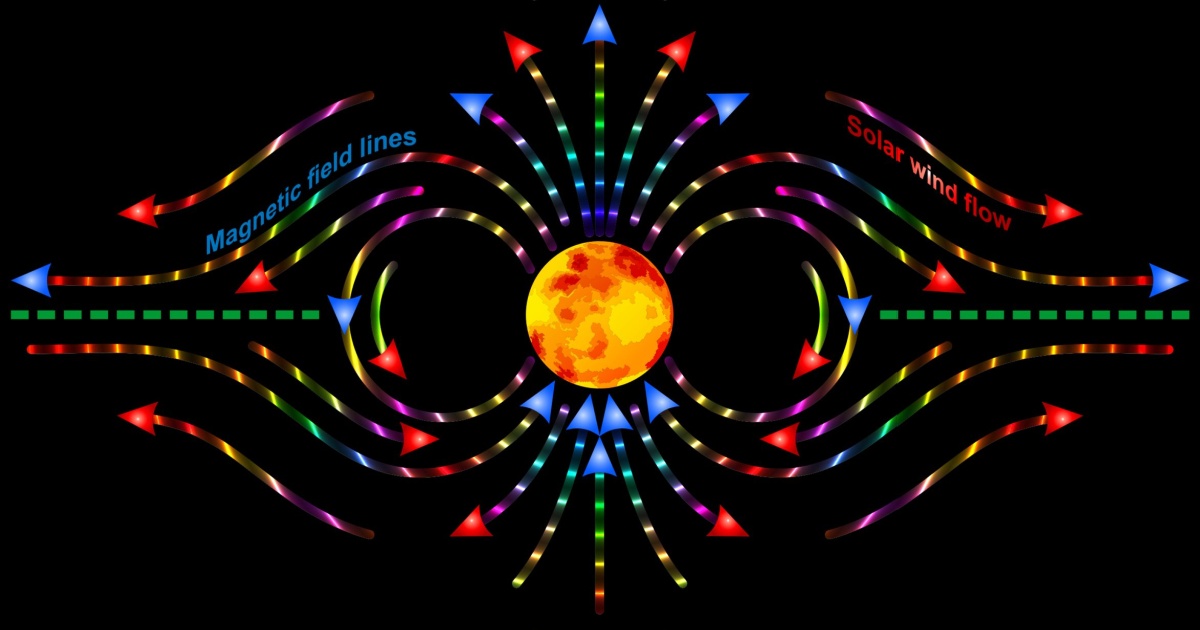
“The Sun sends out a constant flow of charged particles called the solar wind, which ultimately travels past all the planets to some three times the distance to Pluto before being impeded by the interstellar medium. This forms a giant bubble around the Sun and its planets, known as the heliosphere. The boundary between solar wind and interstellar wind is the heliopause, where the pressure of the two winds are in balance. This balance in pressure causes the solar wind to turn back and flow down the tail of the heliosphere.”
If you want to get a visual explanation of this interesting area of space, watch this brief video published by NASA:

When using this area as the marker for the edge of the solar system, it is important to understand that this is not an exact location drawn on the map. It will actually ebb and flow depending on solar activity. In a NASA statement, it is explained:
“Scientists expected that the edge of the heliosphere, called the heliopause, can move as the Sun’s activity changes, sort of like a lung expanding and contracting with breath. This was consistent with the fact that the two probes encountered the heliopause at different distances from the Sun.”
This, of course, begs the question of what is in this area of space. Well, to nobody’s surprise, there is not a giant road sign saying, “Welcome to Interstellar Space. Population 0” or anything like that. There was, however, a ‘wall’ of extremely high temperatures. When the spacecraft passed through it, they each measured temperatures ranging between 30,000 and 50,000 kelvin (54,000 – 90,000 degrees Fahrenheit).
Now, it is important to understand that in space, there are far fewer particles present to transfer the heat energy. So, while the instruments on the Voyager spacecraft could take temperature readings, the spacecraft themselves were not destroyed because there were not enough super-hot particles in the region to transfer that heat to the craft.
Shutterstock
Discovering that there is an extremely hot area of space at the edge of our solar system came as something of a surprise to NASA and other scientists, but the dramatic temperatures were confirmed by both Voyager 1 and Voyager 2 at different points and different times.
If you found that story interesting, learn more about why people often wake up around 3 AM and keep doing it for life.