


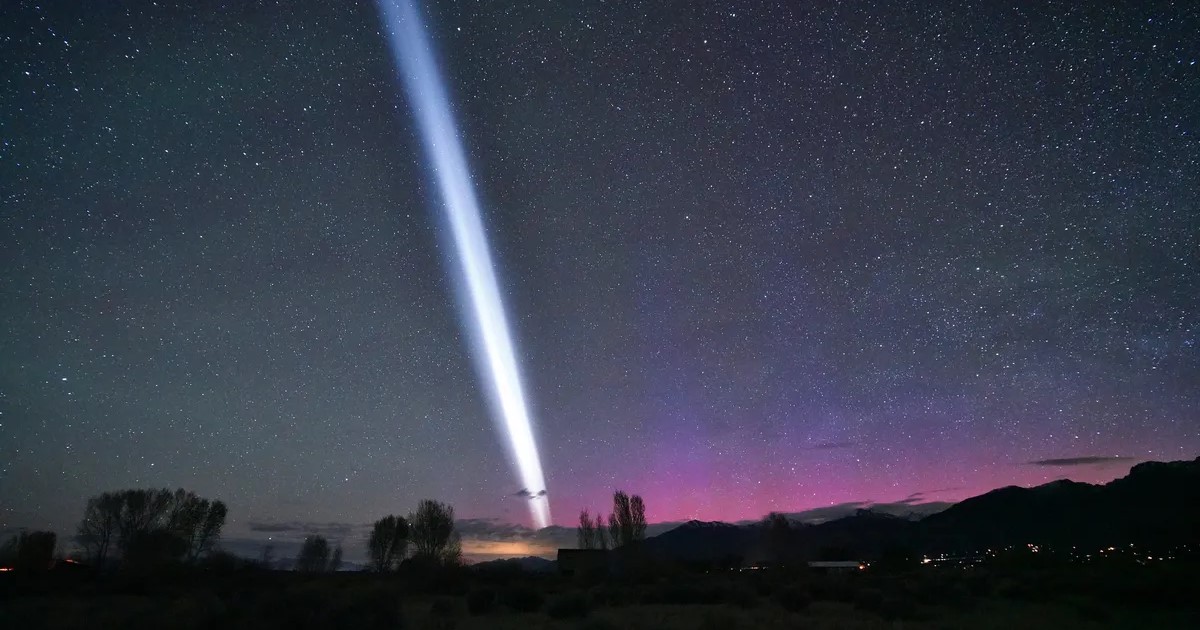
Mike Lewinski/SpaceWeather.com
The night sky can be a true delight, with treats including the Aurora Borealis, the Milky Way, Shooting Stars, and even other planets visible if you’re in the right place at the right time.
Not only can these be spectacular to the eye, they can show you just a few of the wonders of this universe that we are all a part of.
And back in May, in some parts of the US, avid skywatchers were in for an unusual sight, which led to a white beam of light – not unlike a huge spotlight or laser – cut through the sky.
Thanks to a recent article on SpaceWeather.com, we can now truly understand what that light was.

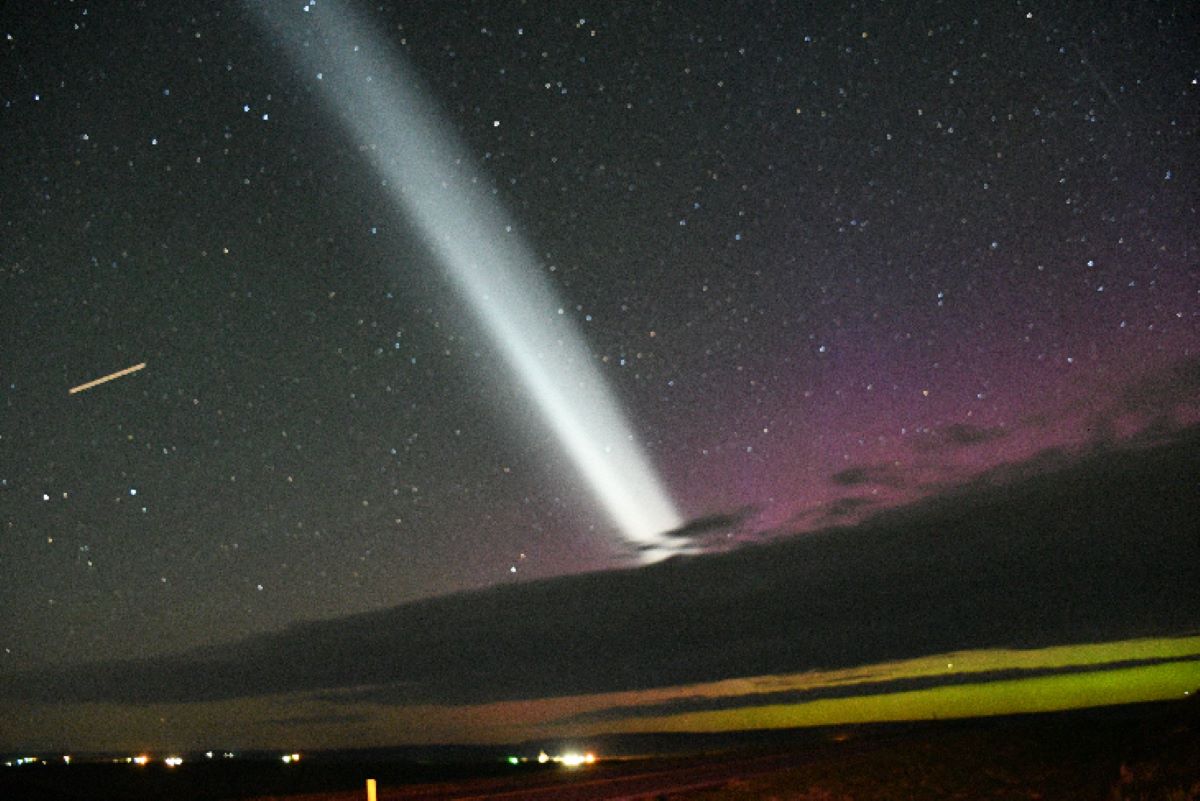
SpaceWeather.com/Troy Bryan
On the night in question – just after May 17th had come around – an unexpected aurora struck parts of the US, as a coronal mass ejection (CME) – an effect of the sun ejecting plasma into space five days earlier, and affecting our planet’s magnetic fields as a result.
Auroras happen when charged particles from the sun interact with a planet’s magnetic field, causing the beloved and awe-inspiring dancing lights in the night sky.
However, something else happened during the storm, with a huge white spotlight seemingly cutting through it.
But unlike the CME, this light effect was caused by something of Earthly origins.

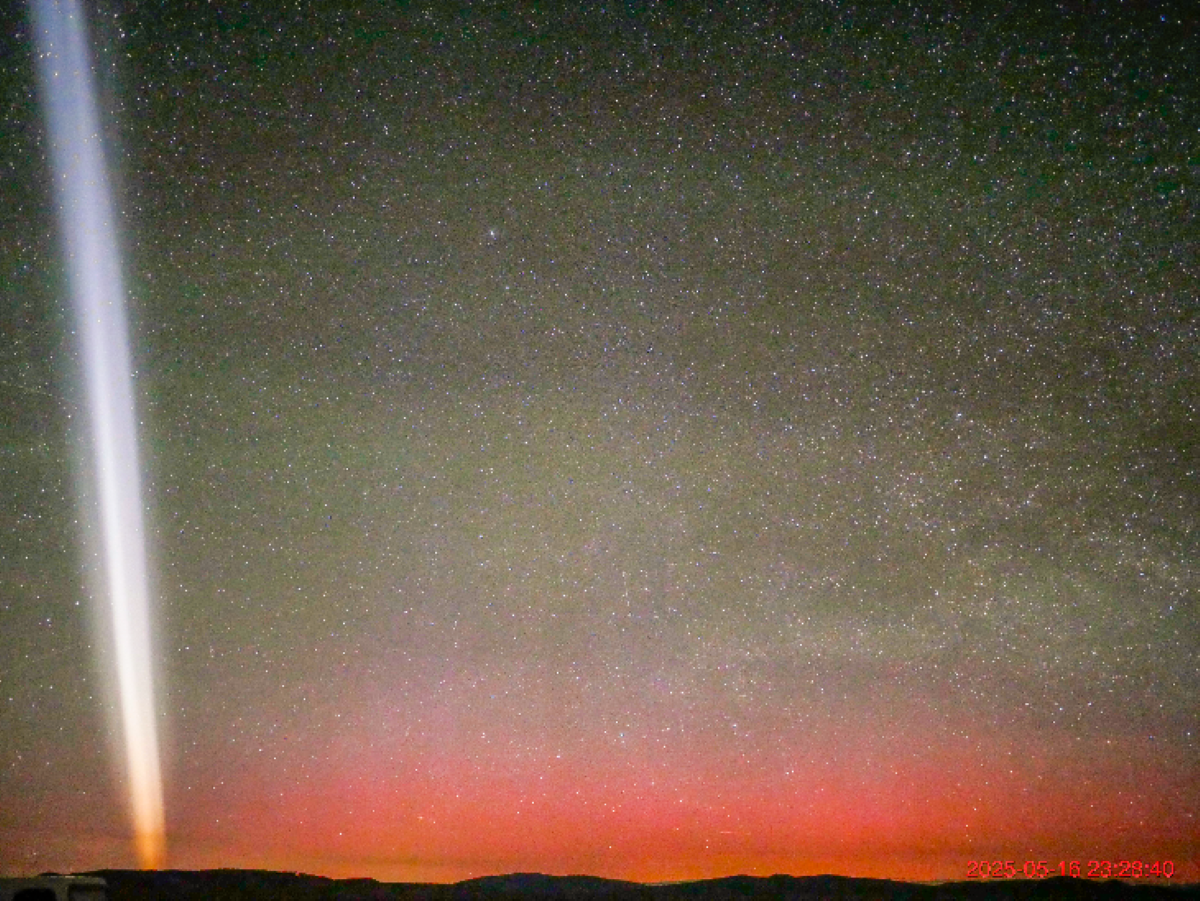
SpaceWeather.com/Jay Shaffer
Among those who spotted the mysterious beam was Mike Lewinski, who explained his view from Crestone, Colorado to SpaceWeather.com:
“The aurora was rippling low on the northern horizon when suddenly a bright streak of light, reminiscent of a rocket re-entry, appeared high in the sky and flowed down to the horizon.”
And Lewinski wasn’t far off the mark, with SpaceWeather.com hypothesising that the light was indeed caused by a rocket.
In fact, this seems to have been caused by a ZhuQue-2E rocket launched from the Jiuquan Satellite Launch Center just over an hour before, with speculation that the white light was caused by burn from the rocket or the satellites it was launching into space.
Though it was quite the spectacle, this striking display intersected the natural with the decidedly unnatural, leaving scientists and stargazers alike with something to think about.
Thought that was fascinating? Here’s another story you might like: Why You’ll Never See A Great White Shark In An Aquarium