


NASA
Aliens have been a point of interest for scientists, conspiracy theorists, science fiction lovers, and just about everyone else for a very long time. While most people think about aliens contacting us, there is also the potential for communication that goes the other way. Humans reaching out into the stars to make contact with other potential civilizations.
Sending out a message to the stars is something of a controversial activity. If, for example, the aliens who receive the message are highly aggressive, we would be telling them exactly where we are located. Remaining hidden away in our little corner of the universe may be the safest option, but we can’t remain entirely hidden because on November 16, 1974 a radio telescope sent out a signal to the depths of space.
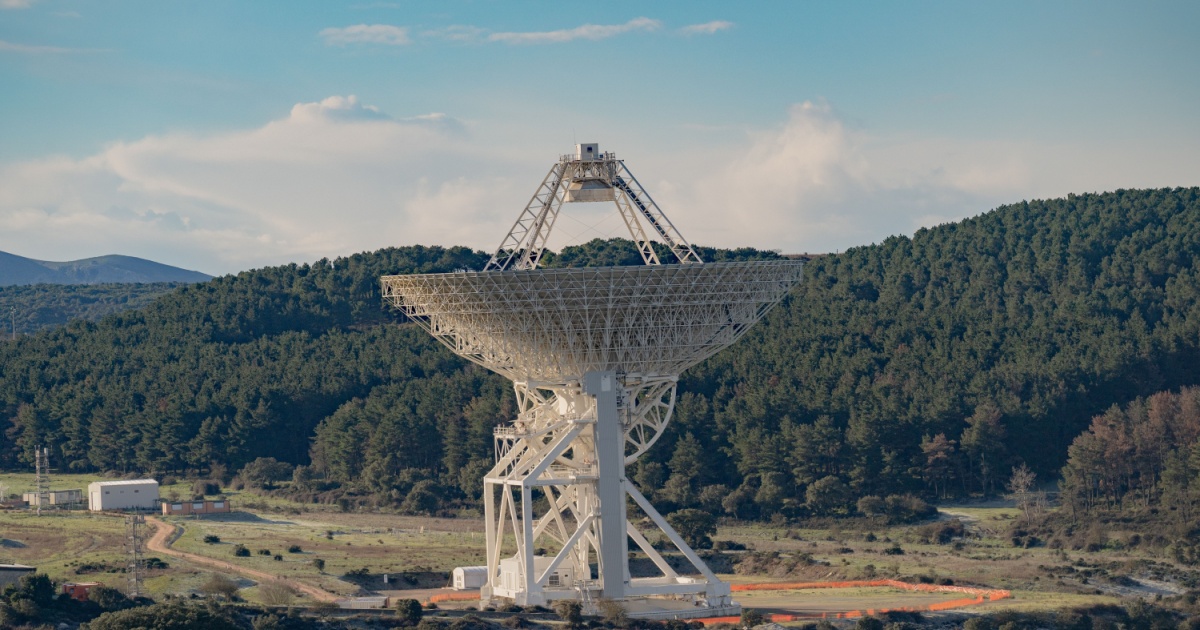
The Arecibo radio telescope was updated with the ability to send out messages, so one was drafted up by the top scientists of the day, including the legendary Carl Sagan. Once prepared, they blasted the message out toward Messier 13, which is a globular cluster that contains around 500,000 stars spread across 145 light-years.

Shutterstock
While that signal was sent out just over 50 years ago, it still has a long way to go before it reaches its destination. It is located 22,000 light-years away from Earth, which means it won’t arrive for another 222 centuries. Once it gets there, it would be necessary for an intelligent species to be around and listening. If they are aggressive, they would also have to plan a trip back to find us, so we are likely safe for a while. Oh, and the stars might not even be in the same place to be able to receive the message by the time it gets there.
Of course, there is the possibility that an alien ship, beacon, sensor, or another unknown technology could be in the path of the signal and pick it up. Then, if these aliens had technology far more advanced than ours, they could send us a message (or just come visit and destroy us) much more quickly.
All those logistics aside, sending a message like this is quite an accomplishment, and a lot of thought was put into it. So, what did the message say? Given the technology of the time, it had to be pretty simple. So, the team working on it decided to use the simplest option possible, binary pulses. This is not unlike the ones and zeros used in computer communication. These pulses were sent out over the course of three minutes.
The message is broken up into multiple parts:
- The first part of the message is simply the numbers 1 to 10 in binary. This will help to give the receiver a clear indication of the ‘language’ used in the message.
- Next, there is a binary representation of the elements hydrogen, carbon, nitrogen, oxygen, and phosphorus. These were chosen because they are the main elements in our DNA molecules.
- Next is the chemical formula of the molecules of DNA.
- After this is a graphic of the double helix that represents our DNA.
- The section after the DNA is information that says that the Earth had a population of 4.3 billion.
- Next was a stick figure of a human with the number 14, which, when multiplied by the wavelength of the message, gives 1.76 meters, or 5′ 9.4” (the average height of an American male at the time).
- Then they included a basic map of our solar system (including Pluto!), with the Earth being offset to indicate that this is the planet of origin.
- Finally, there is a crude schematic view of the telescope itself.
Given the limitations of the technology of the time, this is a lot of very valuable information to send out into space (assuming it reaches a friendly and advanced civilization).
Shutterstock
The message continues to travel at the speed of light away from us, spreading out.
While it is unlikely that it will actually ever reach an intelligent species (or an unintelligent one for that matter), it does represent a major step in our development and an important point in our roadmap of exploration of the universe.
Thought that was fascinating? Here’s another story you might like: Why You’ll Never See A Great White Shark In An Aquarium