


Shutterstock
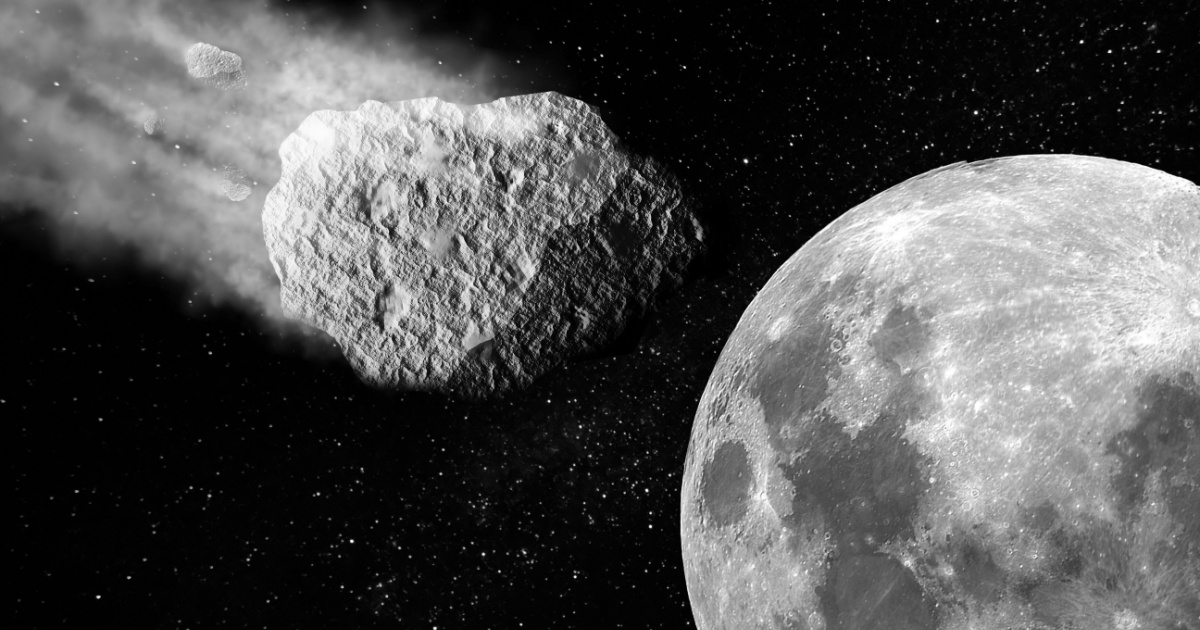
Asteroid 2024 YR4 has been on the radar of astrologers for some time. In the past, it was believed that this asteroid had a chance of hitting the Earth, so it got a lot of attention. Since then, its orbital path has been studied more, and the risk of it colliding with the Earth has been ruled out. Experts, however, say that it does have about a 4% chance of colliding with the moon.
The asteroid itself is somewhere between 53 and 67 meters (174-220 feet) across and is believed to be made of solid rock. If it does run into the moon, it would create a new crater that is about 1 kilometer (.6 miles) across, and would cause a flash of light that lasts a couple of seconds. This flash would be easily visible from Earth.
If it is determined that it will likely run into the moon, researchers will almost certainly try to get some seismic measuring equipment onto the moon and point a variety of instruments at the moon, so that they can study the impact. This would be an exciting opportunity for those in the scientific community who study the moon.
For now, however, researchers are trying to learn as much as they can about the asteroid, and it turns out that there is a lot to know. A study has been submitted and accepted for publication in the Astrophysical Journal Letters. In a statement about the asteroid, Bryce Bolin, who is a research scientist with Eureka Scientific and the lead author of the study, says:
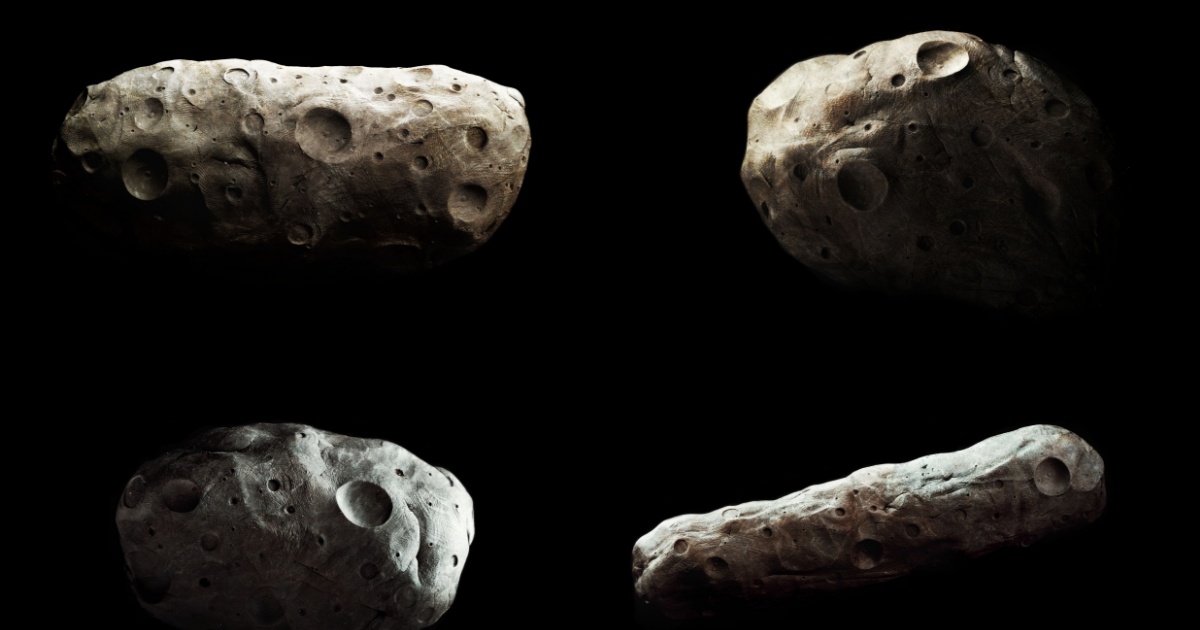
“YR4 spins once every 20 minutes, rotates in a retrograde direction, has a flattened, irregular shape, and is the density of solid rock. The shape of the asteroid provides us with clues as to how it formed, and what its structural integrity is. Knowing these properties is crucial for determining how much effort or what kind of technique needs to be used to deflect the asteroid if it is deemed a threat.”
Shutterstock
Assuming the asteroid does not crash into the moon, researchers want to know as much as they can about it so they know when they can expect it to orbit around again. In an interview with IFLScience, planetary scientist Dr. Andrew Rivkin from Johns Hopkins University said:
“The way that the orbit improved made the position move away from the Earth, but it moved toward the Moon. So there’s like almost a 4 percent chance it’s going to hit the Moon. That means there’s a better than 96 percent chance it’s going to miss the Moon, but if it did hit the Moon, it really would be pretty spectacular!”
While having an asteroid hit the moon sounds a little scary, it would actually be a really great opportunity to study asteroid impacts. Rivkin explains:
“Science-wise [the impact] would be great. It would be this natural experiment. People who study impact craters around the Solar System would get to see one in action. And you know people who study the Moon, if they were able to put seismometers in places on the Moon, they could learn about all sorts of things about the lunar interior. It would be this potentially amazing opportunity if nature cooperates.”
Fortunately, there is plenty of time to watch this asteroid to see if it will end up hitting the moon.
It is still pretty far away, and if it does hit, it won’t happen until December 22, 2032.
If you thought that was interesting, you might like to read about a second giant hole has opened up on the sun’s surface. Here’s what it means.