


Shutterstock
You likely know that you get half of your DNA from your mother and the other half from your father. It is this type of basic genetics that makes it possible to determine things like eye color and much more. In addition, knowing about DNA like this is what allows DNA tests to work effectively.
If you have a DNA sample from people, you can accurately identify who is related to whom, and in what way.
Most people would correctly assume that DNA is passed down from parents to child. Most people would incorrectly assume, however, that it never goes the opposite way. After all, how would a child’s DNA pass on to the parent?
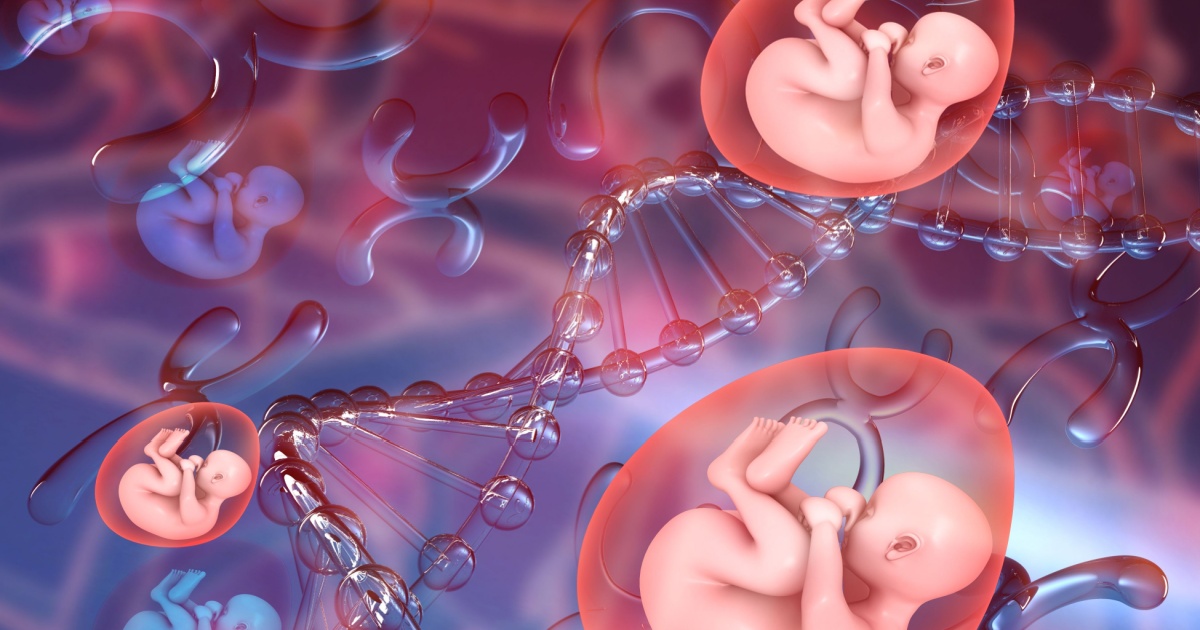
Well, it does happen through a process known as Microchimerism. The DNA of a child can and does pass through the umbilical cord and the placenta and into the mother’s body. From there, the fetal cells can travel around the mom’s body and stop in various areas including the brain, lungs, heart, eyes, and more.
One might think that these cells would get filtered out of mom’s body relatively quickly, but that is not actually the case. In fact, there is extensive evidence that the fetal cells from a child can remain with the mother for decades or even longer.
To make this even more interesting, these cells don’t just travel into the mother and sit there inactive. These cells can be used in the mother’s body to help repair damage or prevent various ailments. Some studies show that when a mother has a male son, his DNA will often make its way to her brain, which, through some currently unknown mechanism, reduces her risk of Alzheimer’s Disease.
It isn’t all good news for mom, however. There is also a growing body of evidence that says that this ‘extra’ DNA may cause mothers to have an increased risk of certain autoimmune disorders, including rheumatoid arthritis.

Shutterstock
Additional study is certainly needed to better understand how it is determined where the fetal cells will go, and what happens when they get there. It is also likely that these cells will have more impacts (both positive and negative) than currently understood.
It is also important to note that these cells can transfer from the fetus to the mother very early on in pregnancy. So, even mothers who have never had a son may find that they have male DNA in their body because a fetus that miscarried or was aborted had already shared his DNA in this way.
Additionally, there is some evidence that younger children can get some DNA from their older siblings in this way. The firstborn child, for example, can pass their DNA on to the mother who then passes that DNA on to future children.
This is an important and very interesting field of study that will likely have a major impact on the medical field for years to come.
It may even help to come up with new treatments for a variety of ailments in the future.
If you thought that was interesting, you might like to read about why we should be worried about the leak in the bottom of the ocean.