


Shutterstock
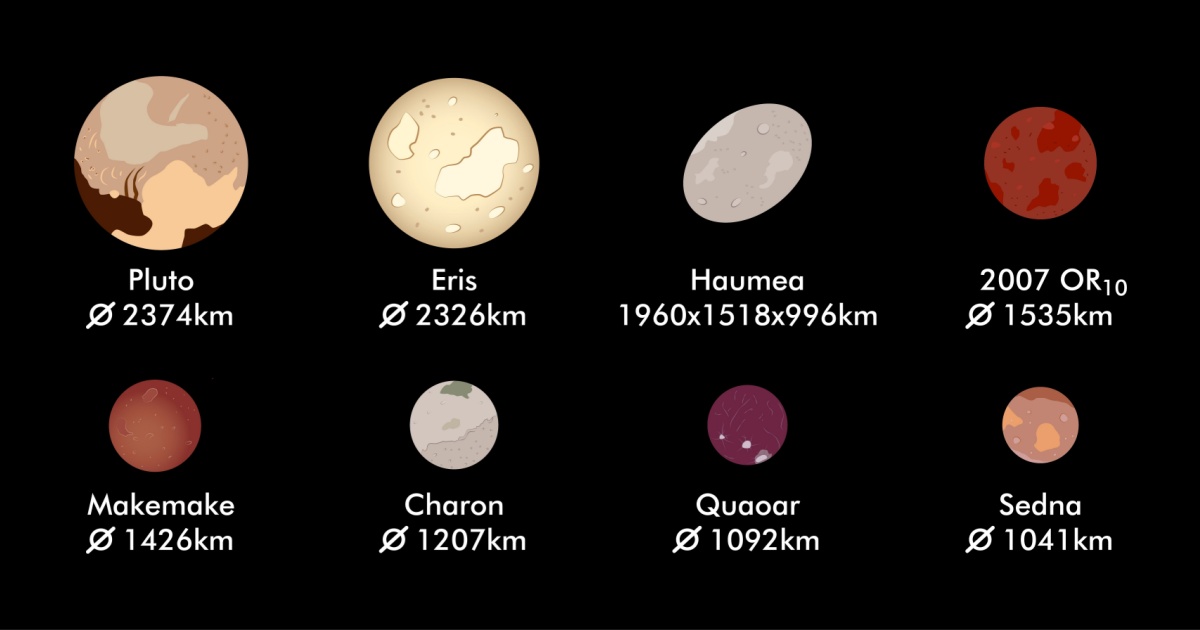
There is a dwarf planet out in the Kuiper Belt that has been named Quaoar, and it tends to get more attention than would normally be expected. This is for several reasons, including the fact that it is egg-shaped and that it has a moon and two sets of rings, which is not too common for a dwarf planet of this size. To make it even more unusual, the rings are positioned in a place that researchers once thought impossible.
Other planets with rings have them placed within what is known as the Roche limit, which is a set distance based on its gravitational pull. The rings of this dwarf planet are a lot further out, likely due to the planet’s spin and the positioning of its known moon, which is called Weywot.
These abnormalities have led astronomers to study the planet, and on a recent look, they found something unexpected. Either another set of rings, or more likely, a second moon.
In June of 2025, Quaoar was occulting (passing in front of) a star, which is named UCAC4 376-136839. As it just began to pass over the light from that distant star the rings would first block the light, which gave astronomers the opportunity to observe its rings. Since the rings would be passing between the edge of the star and Earth, researchers could get information about the rings based on how much light was blocked.
What was unexpected is that 2.4 minutes before the rings were set to pass in front of the star, it was blocked for 1.23 seconds.
Shutterstock
This means that something is orbiting around the dwarf planet at a distance even further than the already unusual rings, and that it is dense enough to block out the light from the star. The researchers analyzed the data and published a paper on it in the Research Notes of the AAS. In the paper, they say that this is most likely a second moon orbiting the planet, though it is possible that it is another dense ring.
They say that the possibility of it being a ring is unlikely because as the dwarf planet continued to pass over the star, they did not see a second darkening on the other side, which would have been there if it was a ring.
So, it seems that this already weird dwarf planet, which has a radius of 555 kilometers (345 miles) just got a little more unusual.
Astronomers will almost certainly want to observe it again in the future to try to confirm that it is indeed a second moon.
If you thought that was interesting, you might like to read about a quantum computer simulation that has “reversed time” and physics may never be the same.