


Shutterstock
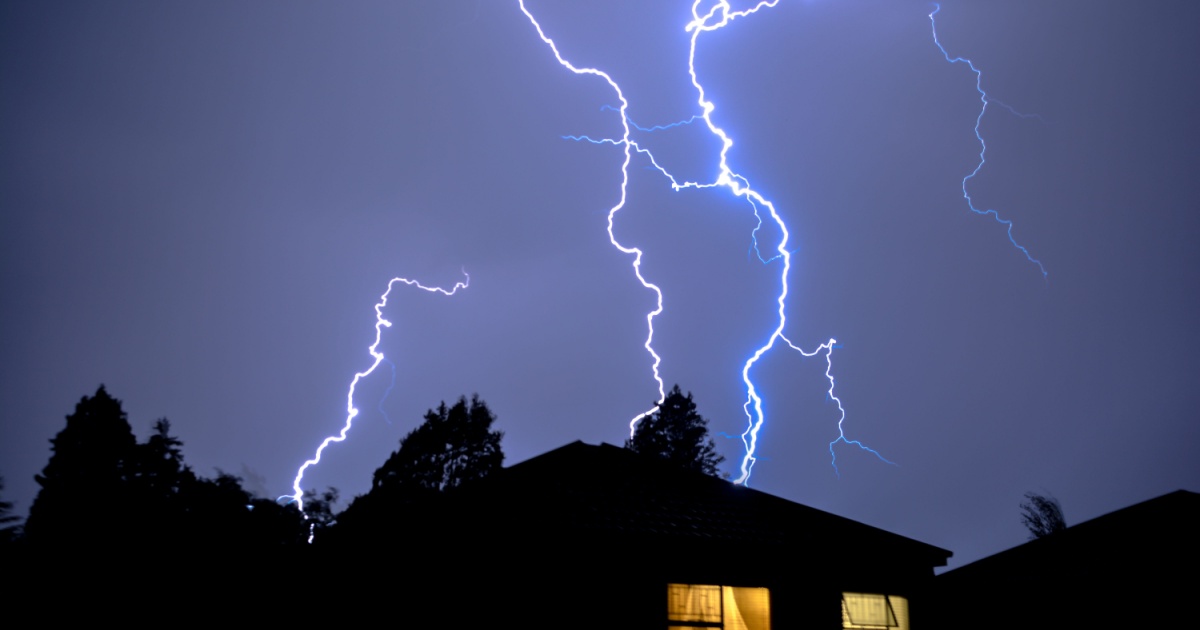
Lightning can be very dangerous with storms causing millions of dollars worth of property damage each year, and some unlucky people being killed or severely injured due to storms each year.
Almost everyone understands the seriousness of a thunderstorm, so they tend to move indoors, or at least get away from open areas, when a storm rolls in. While being inside is certainly the safest option, not all places in a house are equally safe, which is why you will often hear someone say not to take a bath (or shower) during a thunderstorm.
It is a common belief that engaging in these activities during a storm puts you at serious risk, but is it true?
The short answer is yes…and no.
The longer answer requires a bit of explanation. Lightning is a massively powerful bolt of electricity, and electricity generally follows the path of least resistance. So, if a bolt of lightning hits your house, it will ‘look’ for the most efficient way to get to the ground. Ideally, this will mean that it will get attracted to the grounding rod that is likely built into your electrical system so that it can pass directly into the ground without causing problems.
If that isn’t a possibility, the electricity may go to your plumbing if you have the older copper pipes. Once it gets to your plumbing, it can travel throughout your home in a fraction of a second, including to your bathrooms. Since water can also conduct electricity, the charge may pass from the copper pipes into the water and then through your body, which can be terribly dangerous.
Shutterstock
Of course, if your home uses PVC pipes, that same path would not be ideal for the lightning, so you would likely be safer.
So, while in some houses it is true that taking a shower or a bath during a thunderstorm would (slightly) increase your risk, that is not the full story. It is really your plumbing (and electrical) systems that are the most dangerous.
With that in mind, in addition to avoiding showers or baths, you should also skip things like doing the dishes or the laundry for the same reason. Working on an electrical system, including just plugging something in, is another thing to avoid if you want to work to minimize the level of risk as much as possible.

Shutterstock
In the end, however, the risk of getting injured by lightning while in your home is extremely low no matter what you are doing. In order for danger to be present, the lightning would have to hit your house, which is rare, and then travel to where you are within your house, which is also rare.
This is not to say that it is impossible, because it does happen. In fact, there are reports of between 10 and 20 people per year being shocked from lightning while inside. If you do hear thunder in your area, taking basic precautions like going inside and avoiding activities involving water should keep you very safe.
If you thought that was interesting, you might like to read about a quantum computer simulation that has “reversed time” and physics may never be the same.