


NASA
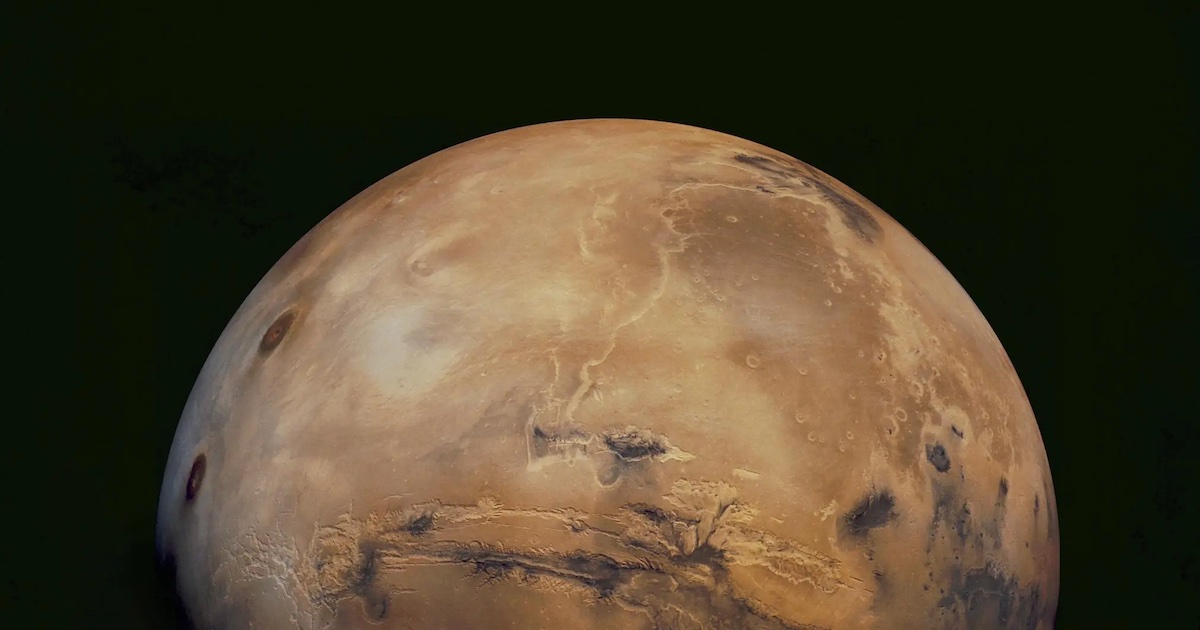
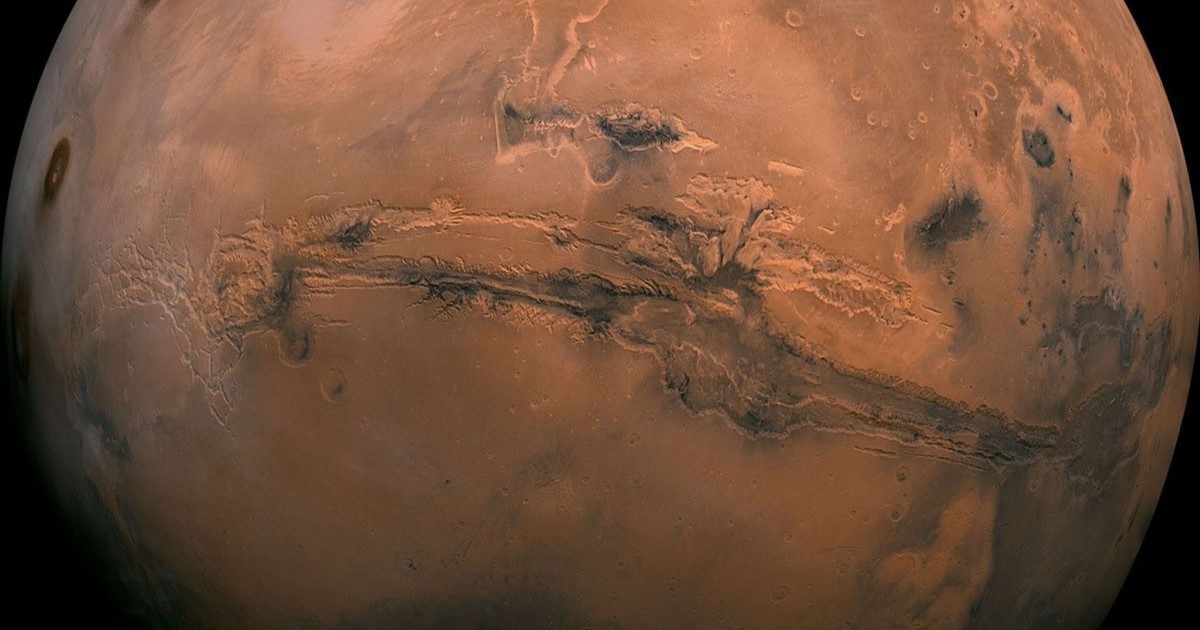
It may be our closest neighbor, but Mars really is a very different place to our home planet of Earth.
Look inside any textbook, and you’ll see diagrams of the Earth’s core divided into neat layers, one on top of the other – crust, mantle, outer core – until you reach our planet’s hot, melty inner core.
So it would be natural to assume that Mars, another rocky planet, would have a very similar cross-section to our own.
But according to researchers from Imperial College London, this couldn’t be further from the truth.
NASA/JPL-Caltech
In their recent paper, which was published in the journal Science, Mars’s insides are very different to Earth’s smooth layers, with chunky and uneven surfaces underneath its surface.
In fact, a statement from the university compares the structure under Mars’s surface as more like Rocky Road, in comparison to Earth’s Millionaire’s Shortbread.
Using seismic data from NASA’s retired InSight mission, the researchers were able to confirm ancient rocky fragments of up to 4km within Mars’s mantle.
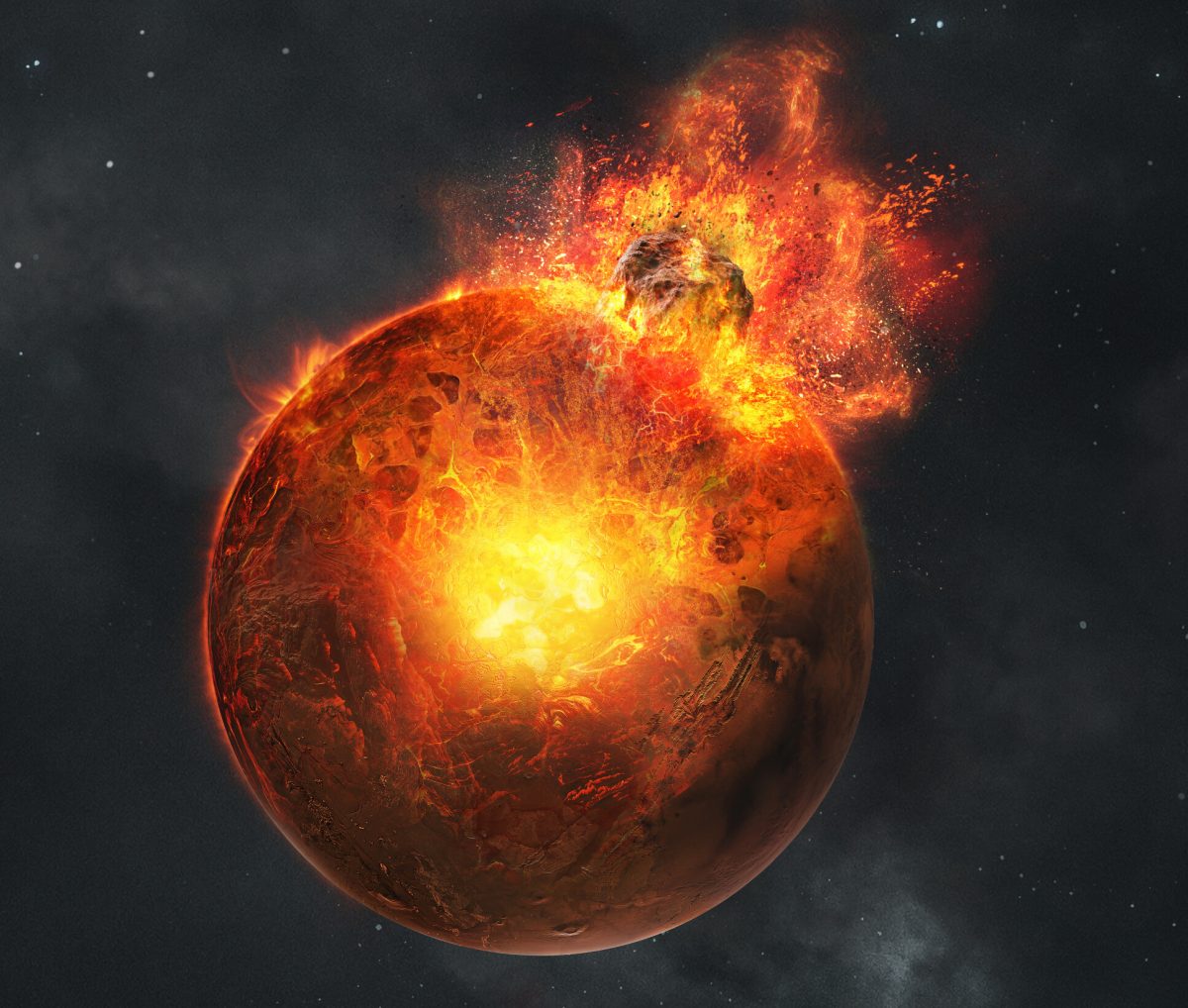
And the origins of these are just as fascinating, with these deposits a record of huge collisions that hit Mars early in the planet’s life, as Dr Constantinos Charalambous explained in the statement:
“These colossal impacts unleashed enough energy to melt large parts of the young planet into vast magma oceans. As those magma oceans cooled and crystallised, they left behind compositionally distinct lumps of material – and we believe it’s these we’re now detecting deep inside Mars.
Most of this chaos likely unfolded in Mars’s first 100 million years. The fact that we can still detect its traces after four and a half billion years shows just how sluggishly Mars’s interior has been churning ever since.”

Vadim Sadovski/Imperial College London
It was the InSight data that led the researchers to their conclusion, with evidence of eight marsquakes (the martian equivalent of an earthquake) showing odd patterns as they travelled through the planet.
It was these patterns – very different to those seen on Earth – that clued the researchers in to something unusual happening beneath the Red Planet’s crust, as Dr Charalambous continued:
“These signals showed clear signs of interference as they travelled through Mars’s deep interior. That’s consistent with a mantle full of structures of different compositional origins – leftovers from Mars’s early days. What happened on Mars is that, after those early events, the surface solidified into a stagnant lid. It sealed off the mantle beneath, locking in those ancient chaotic features — like a planetary time capsule.”
This fascinating new information doesn’t only help us to understand Mars better – particularly useful as manned missions to the planet may be taking place within the next couple of decades – but it can help us understand the evolution of other rocky planets too.
And it all goes to show how much there is for us yet to learn about our neighbor.
If you thought that was interesting, you might like to read about the mysterious “pyramids” discovered in Antarctica. What are they?