


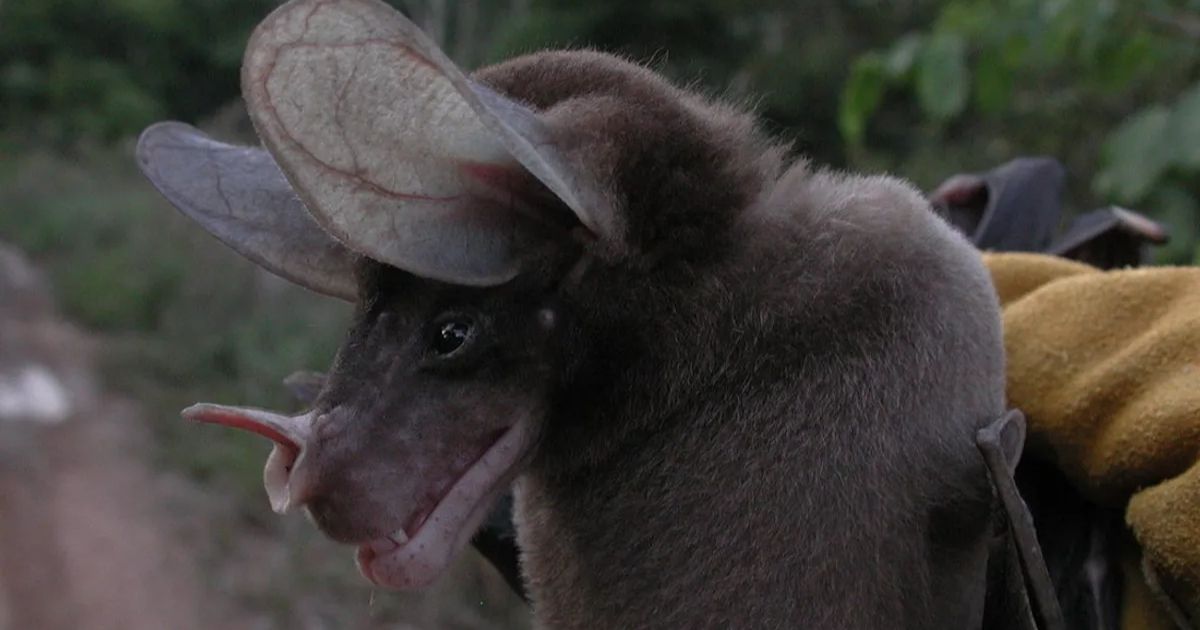
Matt Muir via iNaturalist (CC BY 4.0)
Bats are one of the relatively few flying mammals, and there are many different species of bats living throughout much of the world. Some bats eat mostly bugs, and others love to eat fruit. The spectral bat (Vampyrum spectrum), however, is a carnivore.
Not only is it a carnivore, but it is the largest carnivorous bat in the world, boasting a wingspan of nearly a meter (3 feet) and weighing between 145 and 190 grams (.3-.4 pounds).
This species lives in the tropical forests of Central and South America and primarily eats small rodents, other bats, and birds. A new study was conducted on these bats; however, it also shows that they seem to have a softer, more social side to them.
The study, which was published on PLOSOne, included the installation of a motion-activated infrared camera within a hollow tree in Costa Rica that was being used as a home for a family of spectral bats.
Over the course of three months, the camera captured the activity of their day-to-day life, and led the researchers to some surprising conclusions.
The family of bats included a mother, a father, and two children. While it has long been known that these bats form strong monogamous relationships and that both the mom and the dad help with parenting, the extent of this was not fully understood.
For example, the video found the bats playing with each other, and a greeting that was performed where one bat would wrap its wings around the one returning home in an action that can only be described as a hug.
In a statement about the study, lead author Marisa Tietge said:
“Rather than hunting and raising young in isolation, V. spectrum shows complex cooperation behavior, strong monogamous pair bonds, as well as extended parental investment and biparental care – traits highly unusual in carnivorous mammals, especially bats.”
To see these cute bats in their home, check out this brief video:
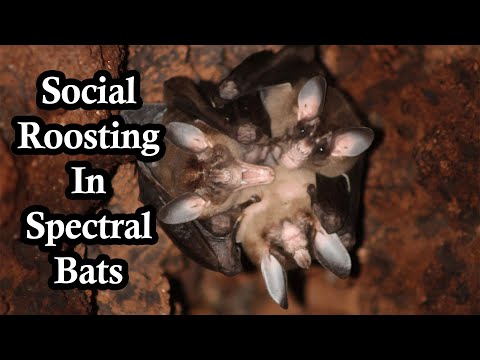
Another thing that the researchers noticed was that the juvenile bats in the roost were not the same age. This means that bats raise their children for an extended period of time and form close-knit families. Tietge commented on this:
“We were astonished by how gentle and cooperative these apex predators are. The most endearing behavior was forming a tight cuddle-ball when falling asleep: each bat wrapping one wing around its nearest neighbor, all snouts touching.”
While bats can seem scary (and this species is indeed very scary to its prey), this study really shows that they are much more social and even family-oriented than previously believed.
If you thought that was interesting, you might like to read about a quantum computer simulation that has “reversed time” and physics may never be the same.