



Pexels
When you think about sharks, it’s likely that the first image that comes to mind is a terrifying, Jaws-esque apex predator with a gaping mouth and more teeth than you can count in the time it takes it to gobble you up.
But in reality, huge species like Jaws are a minority among the shark family (and man-eating sharks even more so).
In fact, there are around 500 species of shark known to scientists, with the largest measuring around 39 feet in length (but being perfectly friendly), and the smallest shark reaching a maximum length of eight inches (and also being perfectly friendly).
And counter to what we may believe, there are plenty of species of shark that are threatened or endangered, largely thanks to human activities. But for one species, the sailback houndshark, promising news offers hope for a comeback.


Sagumai et al/Journal of Fish Biology
The sailback houndshark (Gogolia filewoodi) has only actually been known as a species since 1970, when it was first caught by a fisherman in Papua New Guinea and documented by researchers accordingly.
But despite this exciting discovery, the sailback houndshark has remained elusive in the many years since, with researchers concerned for the fate of the creature as a result.
However, in the last decade, efforts to conserve vital marine species in the waters around Papua New Guinea have increased, leading to new sightings of the sharks – however, for a long time this didn’t do much to alleviate their concerns.
That’s because, according to a new paper published by the Journal of Fish Biology, for the first few years of the monitoring project, the only sailback houndsharks caught and recorded were female.
But then, a breakthrough. Eventually, as the authors confirm, the first ever male sailback houndshark was caught and described, giving hope that this mysterious species will continue to breed and survive in the waters off Papua New Guinea.

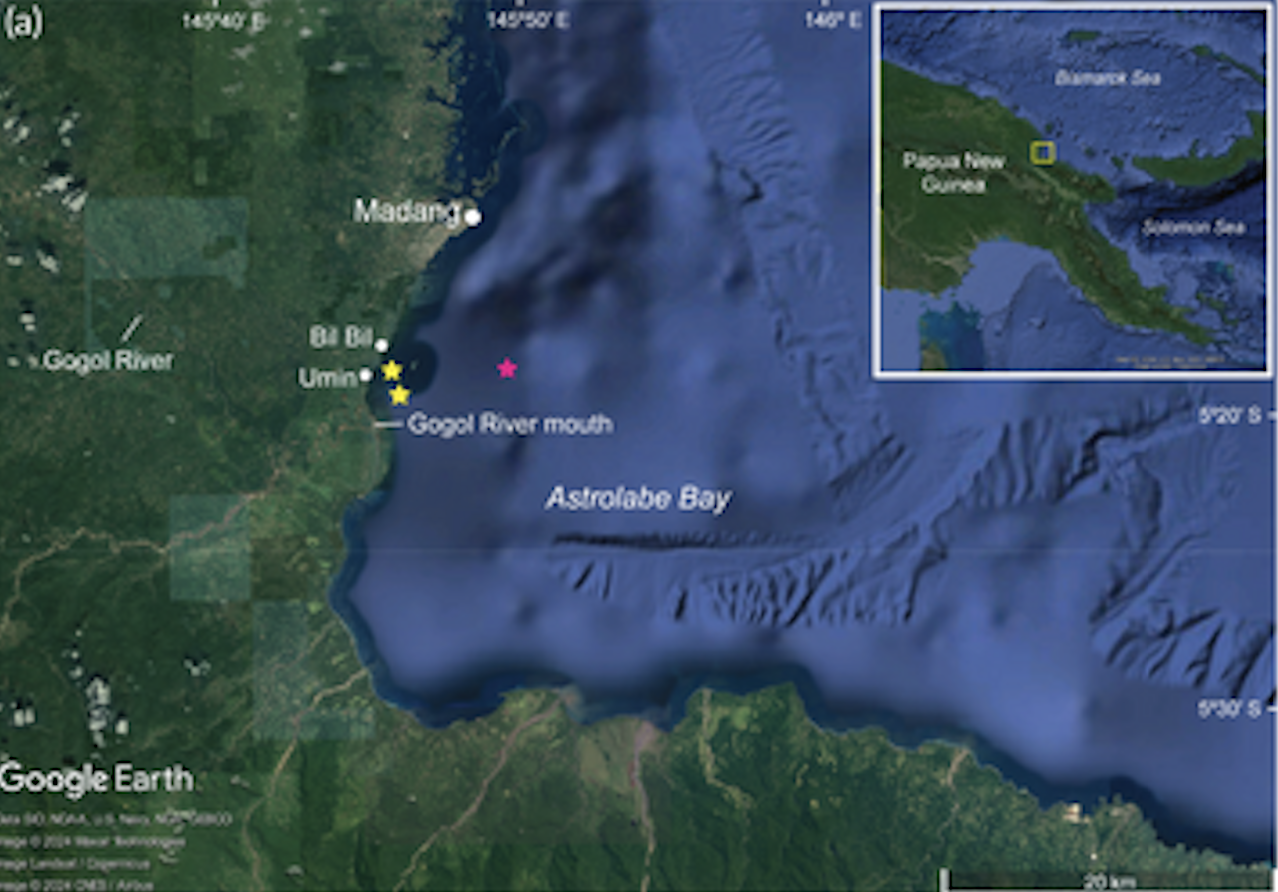
Sagumai et al/Journal of Fish Biology
So why so elusive?
Well, the scientists hypothesise that the sailback houndshark is a microendemic species, meaning that the creature is highly adapted for one very small and specific environment, and its species is entirely limited to that place.
This makes the creatures highly vulnerable, since any small change in the area in which they are endemic could wipe out the species as a whole.
In fact, the researchers identify several threats to the species, including the hunting of a specific fish that lives in the same area, as well as human damage to the planet and its warming and acidifying oceans.
With this in mind, protection of these sharks and their environment is not just important – it’s vital to their survival.
Thought that was fascinating? Here’s another story you might like: Why You’ll Never See A Great White Shark In An Aquarium