


Pexels
If you’ve ever owned a dog, you’ll know that training them – whether that is basic things like teaching them to sit or where to go to the bathroom, or advanced training to do tricks – can be a tumultuous process.
Some dogs take to training like second nature, whereas others are very much the epitome of ‘two steps forward, one step back’, which can be frustrating for the animal and the trainer alike.
There are many factors at play here, from the dog’s temperament, personality and bond with the trainer, to the trainer’s skill, understanding of the dog and, importantly, patience level.
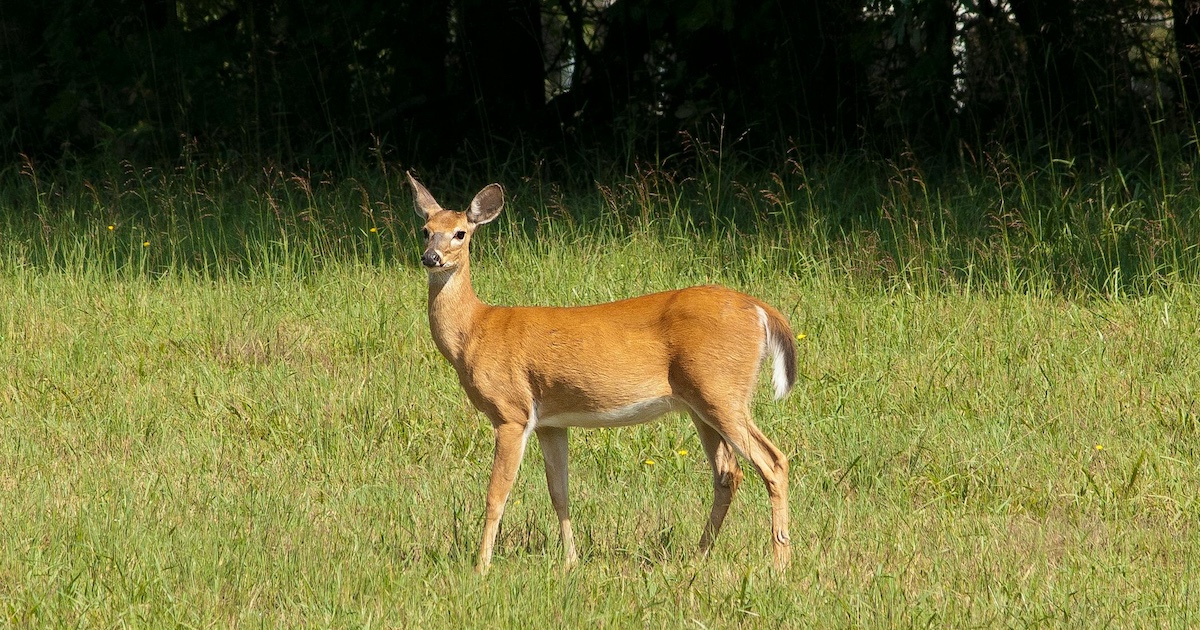
And this doesn’t apply to dogs alone, with a recent study from researchers in Brazil proving that just the same is true with other species, including red brocket deer (Mazama americana).


Pexels
Sure they weren’t teaching them to do tricks per se, but the researchers were keen to teach the deer to respond to basic commands, in order to assist staff caring for the creatures to administer health checks and medication without unnecessary distress or injury (to the deer or the human!)
In their study, which was published in the journal PLOS One, the researchers worked with twelve animals using positive reinforcement techniques when the deer responded to commands in the desired way. In the case of this study, this meant feeding the creatures a piece of banana.
Since they are the prey of much larger animals in the wild, deer are understandably jumpy and reactive to things that startle or scare them – which doesn’t bode well for humans trying to give them medical treatment, especially if they are already distressed.
So the researchers observed all twelve deer in several situations: being approached by a stranger, later being stroked by the same stranger; then being transferred to a handling box, and later being gently touched on their backs and rear by an expert handler.

Pexels
After judging their reactivity to each of these processes, the researchers tried to teach the deer several commands, including ‘come’ and ‘snout’ – feeding the deer pieces of banana to demonstrate the safety associated with these words, before later rewarding their obedience to the commands with the fruity treat.
When the jumpiness of each deer was compared with their ability to learn to respond to commands, a particularly interesting pattern emerged.
The deer that were most fearful were also least likely to respond to commands, with the opposite being true too: the bolder a deer was, the more likely they were to learn to respond to the commands.
This makes sense, since a body experiencing a fear response really doesn’t learn as well as one that is relaxed – as therapists and teachers alike will tell you about humans too. But a piece of banana, it seems, goes a long way.
If you thought that was interesting, you might like to read about a second giant hole has opened up on the sun’s surface. Here’s what it means.