


Shutterstock
The fact that humans now have the ability to look deep into our galaxy, and even out further into the universe, using advanced telescopes, is incredible. This ability, however, can sometimes make us think that we already know a lot about our own little solar system neighborhood, so we don’t need to spend as much time (or money) investigating.
This is a huge mistake, and one that a recent study, which has been accepted for publication in Astronomy & Astrophysics (available on ArXiv), sheds light on.
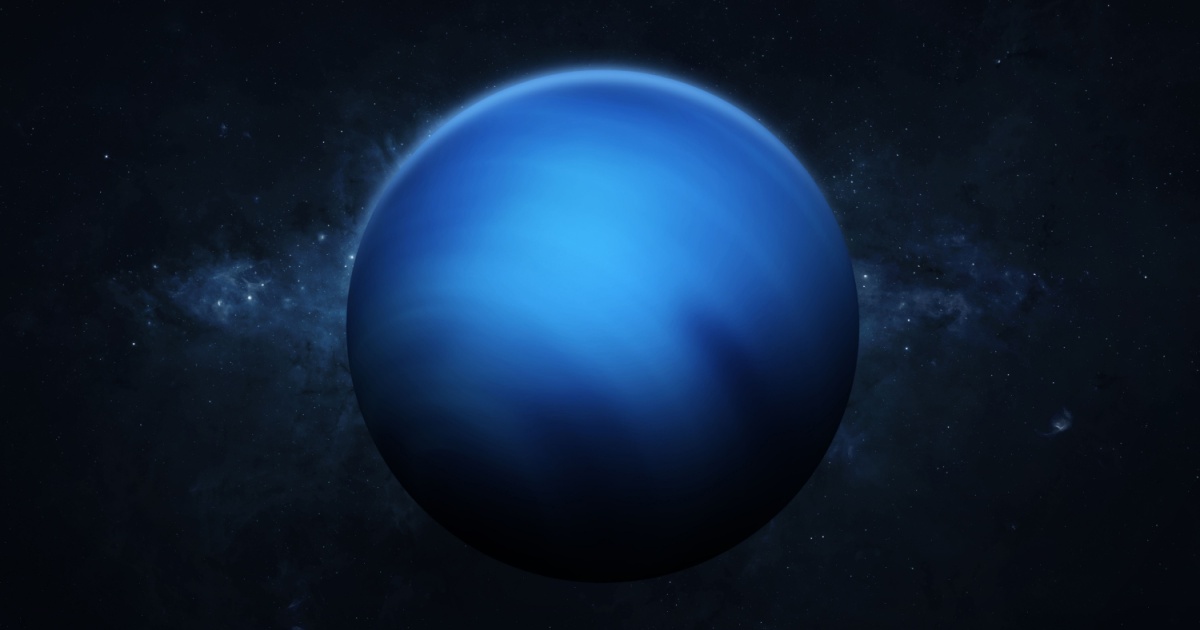
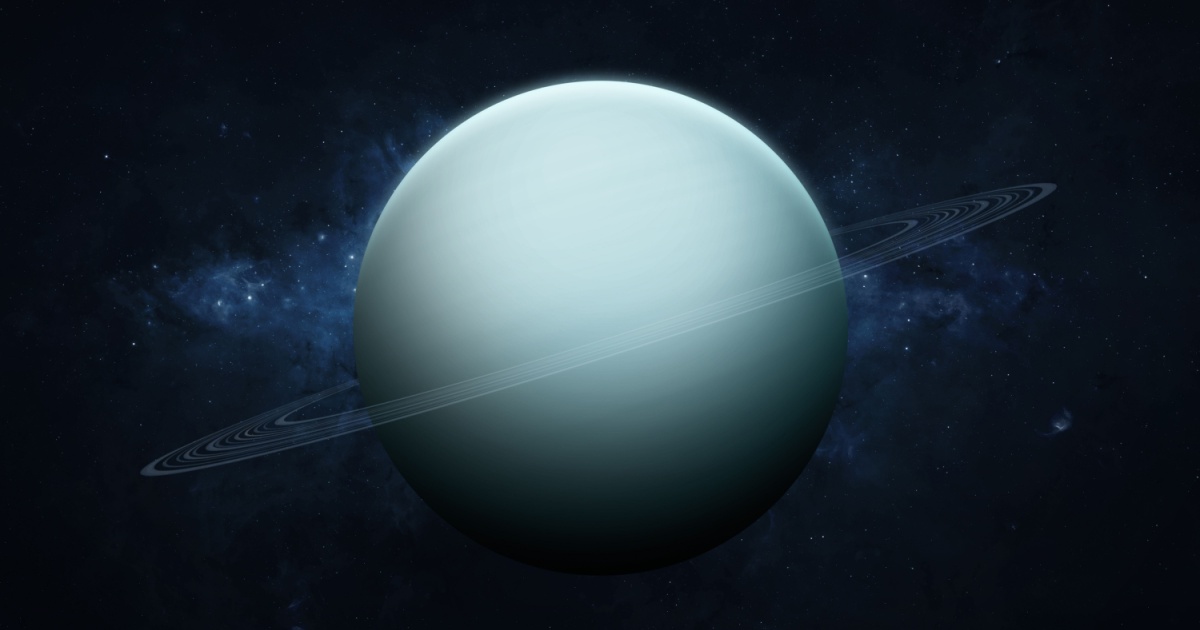
In the study, the researchers try to take a closer look at the two planets in our solar system that are the furthest away from the sun, Uranus and Neptune.
For a very long time, these planets have been classified as ‘ice giants,’ but that may not be accurate.
In the inner solar system are Mercury, Venus, Earth, and Mars, which are all listed as rocky planets since they are primarily made up of rock, metals, and other solid things.
Shutterstock
Then there are the gas giants of Jupiter and Saturn, which have 90+% of their mass from hydrogen and helium. Finally, Uranus and Neptune don’t fit in either of those categories. They have less than 20% hydrogen and helium, but also don’t have the same levels of rocks and metals.
They are rich in things like water, ammonia, and other elements, and since they are so far from the sun, they are very cold. So, years ago, they were dubbed ice giants, and that description has held.
The study says, however, that all of this information is based on what we can see on the surface (either from Earth or from when Voyager 2 traveled past them 30+ years ago). Other data comes from looking at the magnetic fields and moons of the planets, which can give some insights.
The authors of the paper, however, say that none of this evidence provides certainty about the makeup of the planets:
“Overall, our findings challenge the conventional classification of Uranus and Neptune as ’ice giants’ and underscore the need for improved observational data or formation constraints to break compositional degeneracy.”
Instead, these may be rocky giants, or something else entirely. The fact is, we just don’t know, and aren’t likely to know until significant resources are spent studying the distant planets. Professor Brian Cox talked about the need for this type of mission, saying:
“Really, the case for a big mission, an orbiter to both Uranus and Neptune, I think, is so overwhelming! If I was one of these billionaires… just floating around with all my money, I would fund two missions: I’d fund an orbiter to Uranus and an orbiter to Neptune.”

Shutterstock
So, Elon Musk, Jeff Bezos, you clearly have an interest in space. Creating a probe and launching it toward these planets shouldn’t take too much money. Why not get that little side project going to see what we can learn?
If you thought that was interesting, you might like to read about the mysterious “pyramids” discovered in Antarctica. What are they?