



Shutterstock
In 2020, Keith Thomas dove into a pool and hit the bottom, breaking his neck. The injury to his spinal cord made it so he could no longer feel or move anything from the chest down.
As a quadriplegic, he began adjusting to his new life, but in 2023, he entered a trial that used a system of artificial intelligence and electrodes placed on his head to allow him to regain some level of motion and sensation.
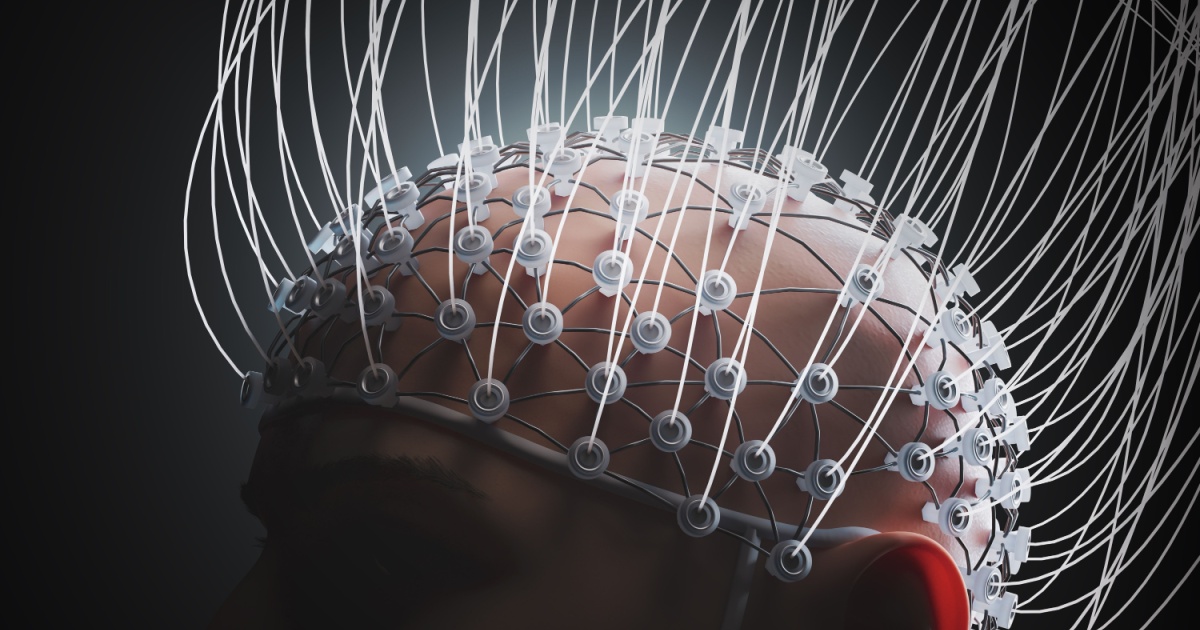
The brain-computer interface system was designed to help create a bridge between his brain and his body, which was severed in the accident. Within a year of using this device, he could feel various objects and even use his hands to pick up a cup and manipulate it enough to take a drink.
While the advancement took a lot of work, it shows the promise of this type of treatment option.
According to a new paper that was written about him and published in pre-print to MedRxiv (not yet peer-reviewed), however, he has received an implant that takes his abilities to a whole new level.
Shutterstock
The new interface treatment has allowed him to control the movement of someone else’s hands.
During the study, a non-disabled woman volunteered to hook up the electrodes and create a connection with Thomas. Once ready, Thomas could control the volunteer’s hands and even feel the sensations that they felt.
To prove this, the researchers blindfolded both parties and had Thomas do various things without allowing the volunteer to know what he wanted her to do.
He was able to have the volunteer’s hands open, close, grasp objects, and even touch them to feel the difference between things.
In addition, the researchers connected him to Kathy Denapoli, who is a 60-year-old with a partially damaged spinal cord. He was able to help her move her hands, pick up a bottle, pour from it, and more.
The researchers say that this type of demonstration, they hope, will encourage those with spinal cord injuries to go through rehabilitation and gain the ability to move again on their own.
Thomas was happy to participate in the study. In 2023, he talked about what he was going through, saying:
“The only thing I want to do is to help others. That’s always been the thing I’m best at. If this can help someone even more than it’s helped me somewhere down the line, it’s all worth it.”
He is indeed helping others, not just in inspiring them, but also in helping to push this technology forward.
Hopefully, with time, these types of devices will allow those with spinal cord damage to fully regain their ability to control their body.
Thought that was fascinating? Here’s another story you might like: Why You’ll Never See A Great White Shark In An Aquarium