


Shutterstock
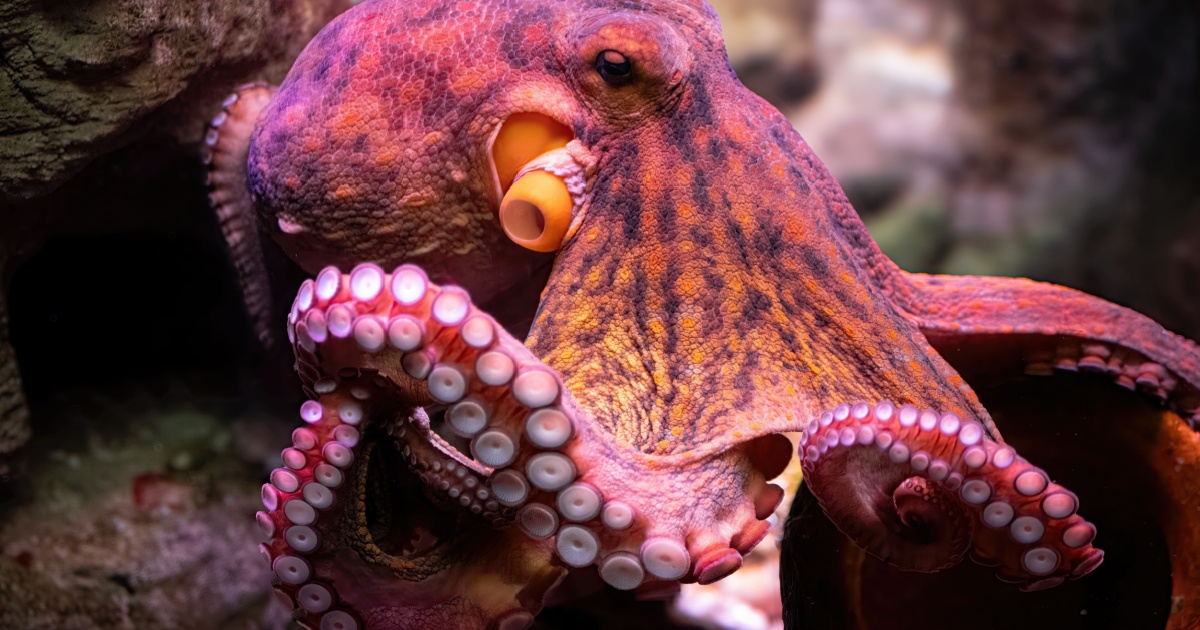
Today, octopuses? octopi? Whatever they are called, they are widely considered one of the smartest animals in the world. They have been seen navigating mazes, opening containers, escaping enclosures, and much more.
The amazing animal is endlessly curious as well, so it is always learning about its environment.
Why was it, then, that it was once considered one of the stupidest animals on the planet?
Well, it comes down to one undisputed genius who happened to get almost everything about the animal wrong.
Aristotle.
In his The History of Animals, the philosopher wrote:
“The octopus is a stupid creature, for it will approach a man’s hand if it be lowered in the water.”
Interestingly, it is that exact curiosity that has modern experts impressed with just how smart it really is. He went on:
“The octopus as a rule does not live the year out. It has a natural tendency to run off into liquid; for, if beaten and squeezed, it keeps losing substance and at last disappears. The female after [laying eggs] is peculiarly subject to this […] it becomes stupid; if tossed about by waves, it submits impassively; a man, if he dived, could catch it with the hand; it gets covered over with slime, and makes no effort to catch its wonted prey.”
Aristotle was obviously very respected (and still is), so maybe it shouldn’t be a surprise that his opinion on the octopus became standard thought for a very long time.

Shutterstock
In fact, 400 years after Aristotle was dead, Pliny repeated the errors, saying:
“though [it] is in other respects deemed a stupid animal […] it has a certain kind of sense in its domestic economy.”
Thankfully, scientists have come a long way since then. Lisa Poncet, a biologist in the laboratory of animal and human esthology at the University of Caen Normandie said in a 2021 piece for The Conservation, said:
“Octopuses meet every criteria for the definition of intelligence. They show a great flexibility in obtaining information (using several senses and learning socially), in processing it (through discriminative and conditional learning), in storing it (through long-term memory) and in applying it toward both predators and prey.”
This is an important lesson to learn. While ‘trust the science’ is a good rule of thumb, nobody should ever blindly trust scientists, or we might be dead wrong for hundreds of years.
If you thought that was interesting, you might like to read about the mysterious “pyramids” discovered in Antarctica. What are they?