


Shutterstock
There are many different species of antelope out there. Some of them are thriving with millions of members, and others are struggling to survive. In an area near the Kenya-Somalia border, however, is the most critically endangered antelope species in the world.
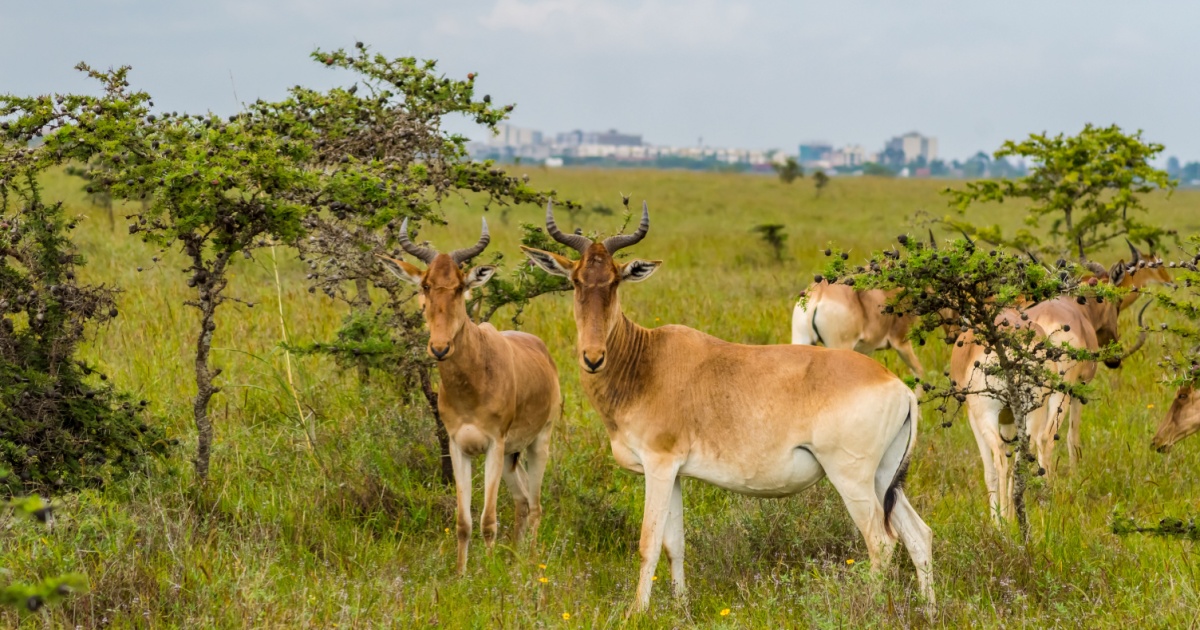
This species is called the hirola, but it is commonly called the four-eyed antelope. The name comes from the fact that it looks like it has four eyes, especially when viewing it from a distance.
What appears to be a second set of eyes are actually preorbital glands. Up close, they just look like dark blobs, and they are used to mark their territory. The name hirola, however, comes from the word Arawla in Somali, which describes the tawny color of the animal’s hair.
Years ago, this animal dominated the region with thousands of members in the species, but in the past century, it has struggled for a variety of reasons.
Perhaps the biggest challenge it faced was in the 1980s when there was an outbreak of rinderpest. Rinderpest is also called cattle plague, and it is a highly-contagious disease that can effect many types of antelope, cattle, and other mammals.

Shutterstock
According to the Hirola Conservation Program (HCP), the viral disease causes fever, discharge from the eyes and nose, diarrhea, dehydration, mouth lesions, and eventually death in many cases. Many animals that are infected will die in just 10-15 days. In the 1980s it is estimated to have wiped out between 85 and 90% of the entire population.
Fortunately, rinderpest has been eradicated, which is an incredible accomplishment. It is just the second viral disease to be entirely eradicated by human efforts (the first being smallpox).
In addition to the terrible disease, predation, livestock competition, and the loss of grassland habitat have made it difficult for the animal to recover.
Further attempts to save the species by the HCP include working to get local communities and governments to set aside over 1 million acres of habitat, and working to restore grasslands in the region.
With a little luck, this could be just what the four eyed antelope needs to help its number grow back to where they once were.
If you thought that was interesting, you might like to read about why we should be worried about the leak in the bottom of the ocean.