


Shutterstock
Elephants are amazing creatures with great intelligence and a very social life out in the wild. Unfortunately, due to their size and intelligence, humans have long used them to perform various types of work, some of which is torturous to the animals.
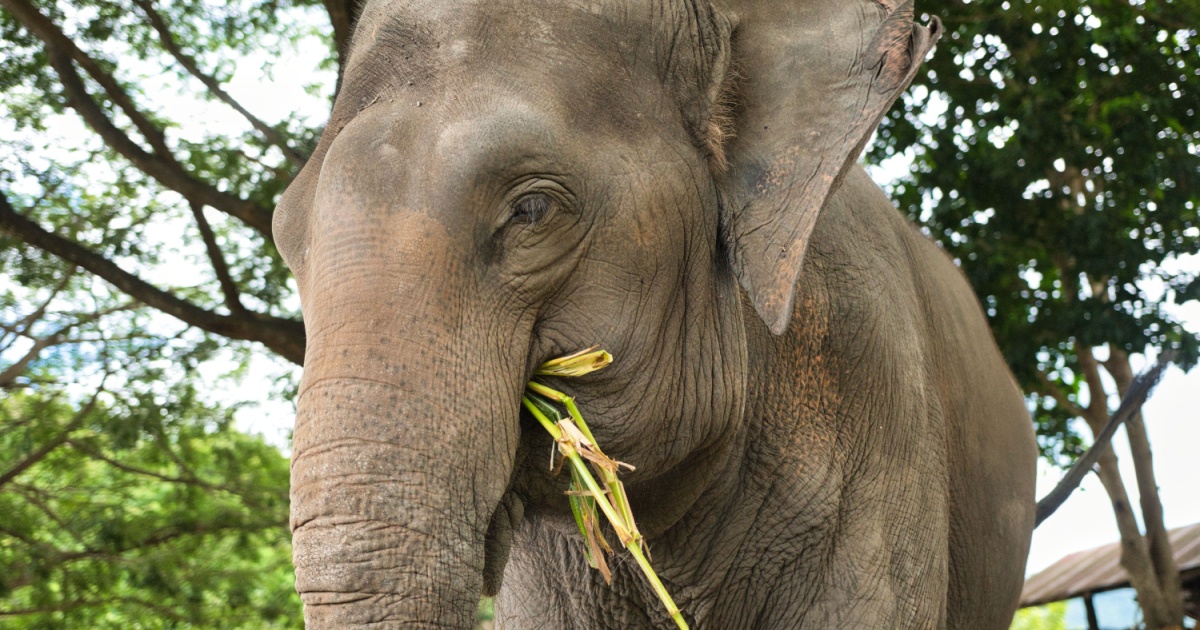
In Bangladesh, elephants have been used in zoos, circuses, tourist attractions, and to engage in heavy labor such as carrying loads or pulling objects. A government project, however, is looking to identify the captive animals and help transition them back to the wild.
In this part of the world, Asian elephants (Elephas maximus) were once very common, roaming from southern Asia to India, and beyond. Their numbers have gone down dramatically, however, due to habitat loss, hunting, capture, and other issues.
Today, Bangladesh has about 268 wild elephants within the country, and another 93 that are known to migrate in and out of the region. There are also 96 known captive elephants and untold numbers more of those held captive without any documentation.
To help bolster the numbers of wild elephants, Bangladesh’s Ministry of Environment, Forest, and Climate Change has begun an effort called the Elephant Conservation Project.

Shutterstock
The project has also received support from their high courts, offering legal protection for wild elephants.
This is a multi-pronged effort that includes setting aside habitat land for conservation, making it illegal to ‘adopt’ wild elephants, and working to rehabilitate animals that are currently held captive, so that they can be reintroduced to the wild.
Jahir Uddin Akon is the project director, and recently talked with Mongabay about the conservation efforts, saying:
“Initially, we selected two forests – Rema-Kalenga in Moulvibazar and Chunati in Chittagong. A team of experts is working on finalizing the best option between these two to turn into their home.”
Rehabilitating these elephants can be difficult because many of them have been in captivity for many years and have lost many of their wild instincts. A zoology professor at Jahangirnagar University in Bangladesh also spoke with Mongabay, explaining:
“Though the initiative is good, it will be tough to implement for several reasons. Firstly, the captive elephants have already lost their wild nature to some extent, and secondly, they might carry different types of diseases due to their close contact with humans, which needs to be handled carefully.”
How successful the efforts will be remains to be seen, but every captive elephant that can be reintroduced to the wild adds a lot of value to the population. This will be a multi-year effort that will hopefully see all of the captive elephants released back into the wild where they belong.
Thought that was fascinating? Here’s another story you might like: Why You’ll Never See A Great White Shark In An Aquarium