


Shutterstock
Dark matter is an interesting thing in that while it is not known for certain that it even exists, most scientists agree that it does, and they therefore incorporate it into some of their research.
There is nothing wrong with this since it does seem clear that SOMETHING is in the universe that causes everything to behave the way it does, we just don’t know what. Based on observations, scientists can predict how, for example, light will bend around gravity using the assumption that dark matter is present.
Having so much that is not known about dark matter, however, does open the doors for scientists to come up with some new theories. If proven correct, these theories will help expand the understanding of dark matter, and if not, they can just go back to the drawing board.
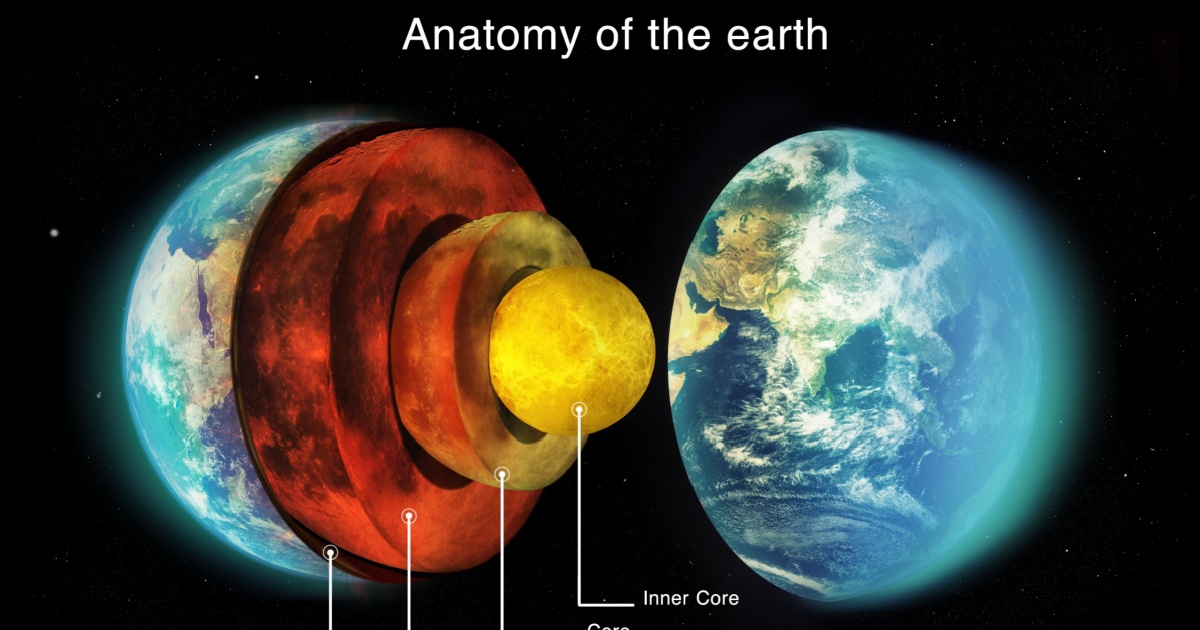
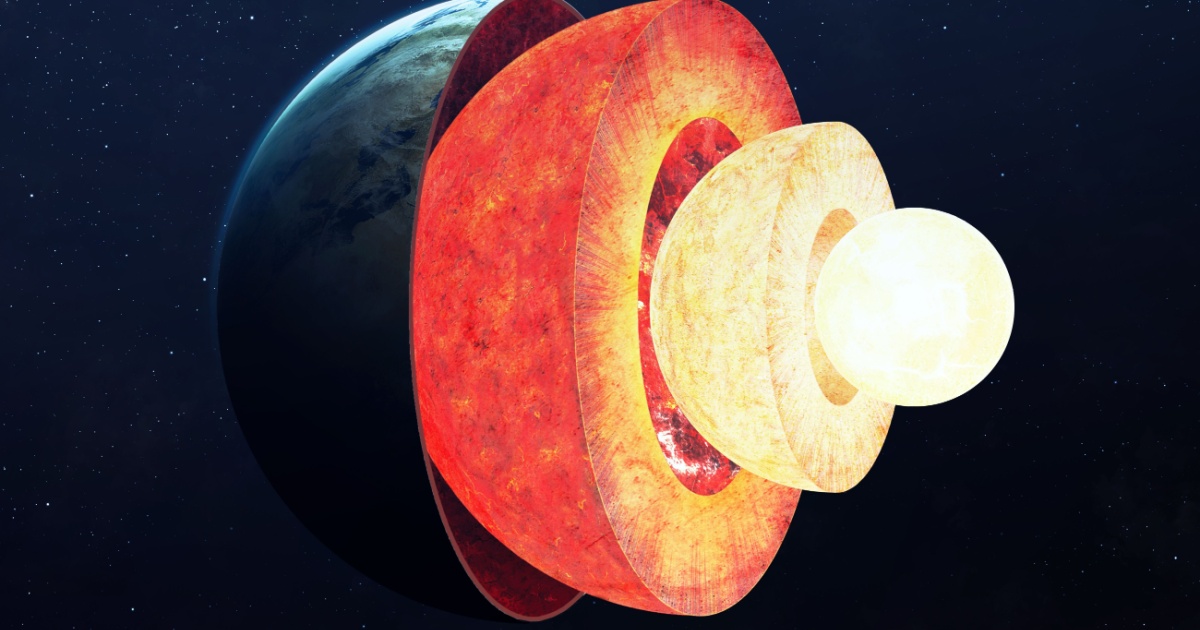
In this case, a new study that is published in open access in Physical Review D, claims that for some models and particle masses of dark matter, it may be creating a ‘dark inferno’ within the core of the Earth.
Shutterstock
If true, this could help to narrow down the range of possibilities for dark matter.
Dr. Christopher and Dr. Tansu Daylan of Washington University, St. Louis, claim that it is possible for dark matter particles to accumulate in the Earth and release heat.
Since dark matter should concentrate in places where there is a lot of gravity, that would include the core of the Earth or other planets.
According to many models, this would mean that the dark matter particles would come in contact with antiparticles and annihilate each other, producing energy in the process. This energy would likely come in the form of heat (or become heat after other steps).
Geologists know that the core of the Earth is solid, and if enough heat were produced, it would melt the core. This puts limitations on just how much dark matter could be present, or how much heat it is causing.
It is possible, the authors of the study suggest, that the heat is indeed melting the core, but not at levels sufficient to melt it all. They say that as much as 400 kilometers (240 miles) of the core of the Earth could have become liquid before it would be detectable to geologists on the surface.

Shutterstock
The researchers calculated that it would mean that the most energy that dark matter could be releasing is around 20 Terrawatts.
Of course, when dealing with speculative topics like this, it is hard to account for all the factors. It may be possible that there is more heat, but it is somehow being released from the core.
Whatever the case, this theory presents some interesting ideas that will hopefully one day be able to either be confirmed or ruled out. Either way, it will help future scientists to better understand dark matter.
If you thought that was interesting, you might like to read about a quantum computer simulation that has “reversed time” and physics may never be the same.