


Shutterstock
Tigers are amazing creatures, and in the eyes of many, they are the true king of the jungle. There are several different types of tigers out there, and all of them are at least being monitored to ensure the species is healthy.
None are as rare, however, as the Golden Tiger. Kind of.
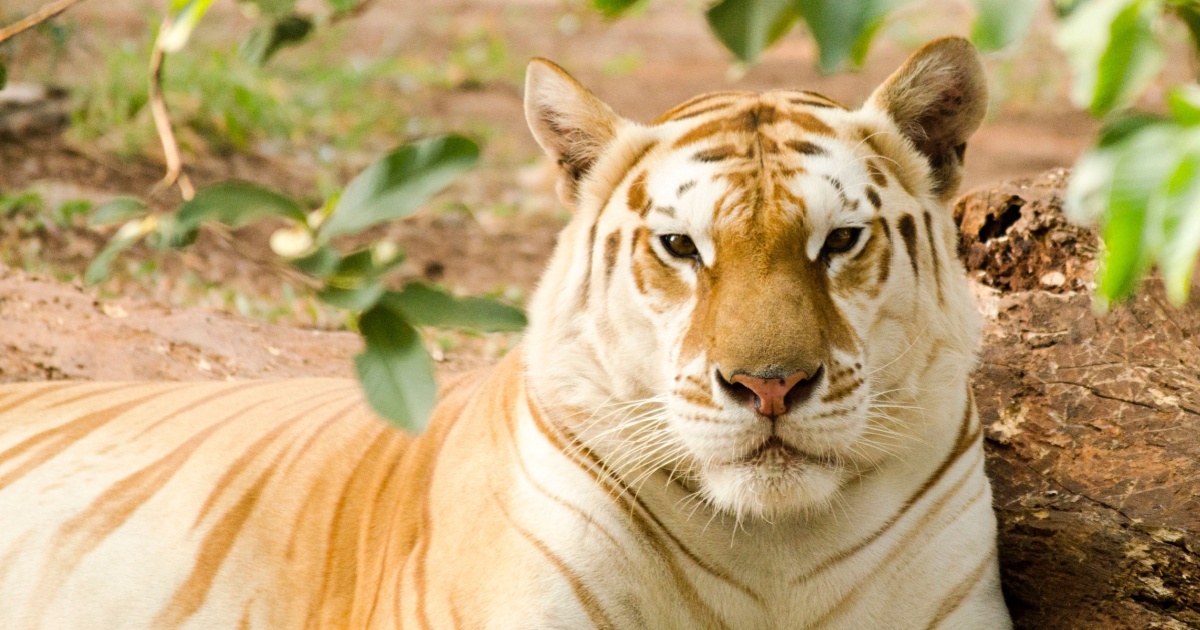
Technically speaking, the golden tiger is a Bengal tiger (Panthera tigris tigris) that has a very unusual genetic mutation. The mutation is the result of a recessive trait, which means that a baby Bengal tiger will only occur if both the mom and the dad tiger happen to pass on that recessive gene.
When that does happen, the result is a beautiful tiger with strawberry-blond fur and large patches of white. While very pretty, this coloring is likely so rare because it works against the tiger’s survival in that the camouflage is not as effective.
In fact, there are only four golden tigers known to exist in the wild. In captivity, there are around 30 of them total.
Normally, when an animal is extremely rare, conservationists will work hard to protect it and try to create more of them, but that is not the case here.
In a 2024 paper, professor of ecology at India’s National Center for Biological Sciences, Uma Ramakrishnan, wrote:
“The pace of breeding in privately owned tiger populations has prompted concerns of inbreeding, especially since phenotypes (i.e., striped whites, snow whites, and golden tigers) that rely on rare, recessive mutations are considered to be of high economic value.”
The main point is that this is not a separate breed of tiger, but a genetic mutation.

Shutterstock
In order to try to get more of the tigers to have this mutation, some profit-driven owners have engaged in inbreeding, which will only hurt the species as a whole in the long run.
In the paper, it was further explained:
“In fact, the white tiger (“Bengal”) breeding program was discontinued by the AZA [Association of Zoos and Aquariums] when the intentional selection for the single variant responsible for producing the white phenotype was determined to be detrimental to conservation. The phenotype attracts unwanted attention from exotic breeders, and since it is a recessive mutation, the phenotype was generally achieved through inbreeding.”
While it is true that intentional breeding of golden tigers should be avoided, the conservationists would like to see the trait survive naturally.
Allowing the wild tigers to breed normally will pass down the gene and even potentially spread it out. Even when a mom or a dad do not display the golden coloring, they can carry the gene and pass it on to their offspring.
This is one of those situations where it is best to just let nature take its course. If the golden tiger gene has any benefits in the wild, it will be passed on and survive. If not, then that is what is best for the species.
Thought that was fascinating? Here’s another story you might like: Why You’ll Never See A Great White Shark In An Aquarium