


Shutterstock
On the one hand, the oceans are filled with life, serving as homes to millions of different species. On the other hand, the ocean is so vast that there are some parts of it where very little is happening at any given time.
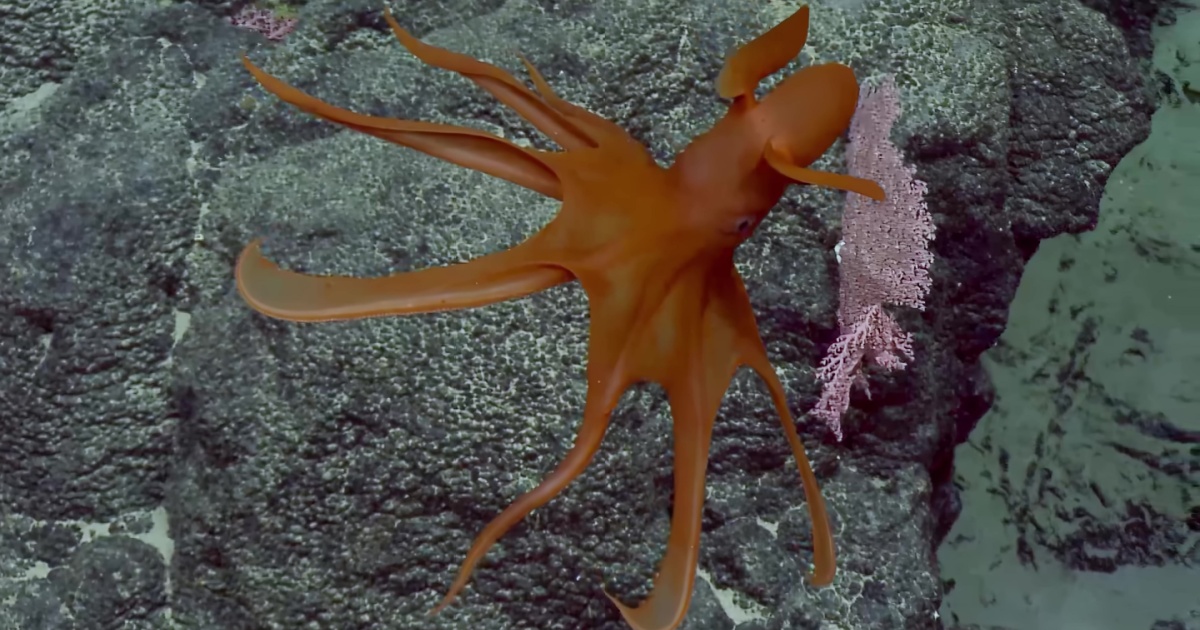
Scientists who are part of the Ocean Exploration Trust were on board the E/V Nautilus were exploring the abyssal plains, located in the South Pacific.
Madison Dapcevich is the Communication Lead for the Ocean Exploration Trust, and she was on board when they witnessed something amazing. She spoke with IFLScience about what happened:
“It felt wild to see this cephalopod! I was awed by the way that it seemingly put on an otherworldly show – beginning its dance along the seafloor, drifting into the water column, opening its mouth to our camera and eventually skimming off into the dark abyssal distance.”
Fortunately, they caught it on video, which you can see here:

She went on to explain how it occurred right at shift turnover:
“The deep-sea, eight-armed animal came into our camera view just as we were doing our watch change. This is when the previous watch, in this case 1200-1600, hands over the control van to the relieving watch, which in this case was 1600-2000. We had nicknamed the ‘four to eight’ team the ‘octo-watch’ because they had been spotting most of the octopuses in this deep-sea abyssal plain environment – and there was an ongoing joke onboard that as soon as I gave up my seat in the control van, the octopuses came out to visit!”
The species is incredible in that it can live at such amazing depths. This one was seen at around 5000 meters (16,400 feet) below sea level in the waters that are about 160 kilometers (100 miles) off of Aituaki Island.
Shutterstock
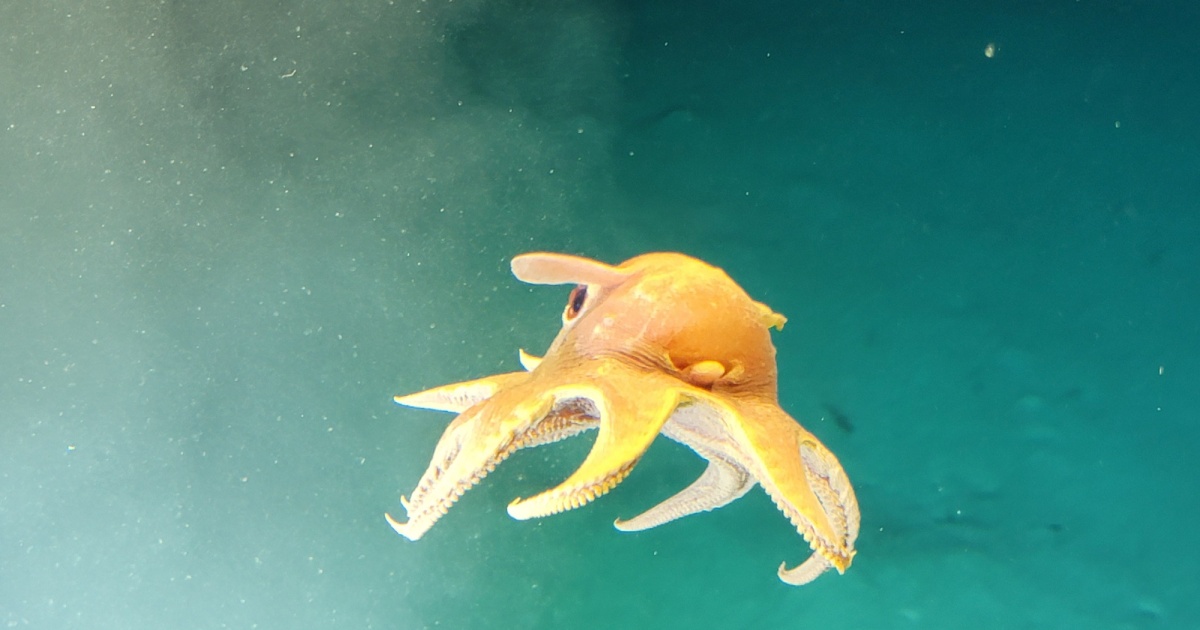
Things living in this area are quite incredible, explains Dapcevich:
“Life in the abyssal plains of the South Pacific is quite unique. Organisms that live here have evolved distinctive adaptations to their habitat’s extreme environments – an enormous amount of pressure, near-freezing temperatures, and absolute darkness.“
You never know what you’ll see when exploring the oceans, and in this case, the team got incredibly lucky to catch such a beautiful event.
If you thought that was interesting, you might like to read about a quantum computer simulation that has “reversed time” and physics may never be the same.