


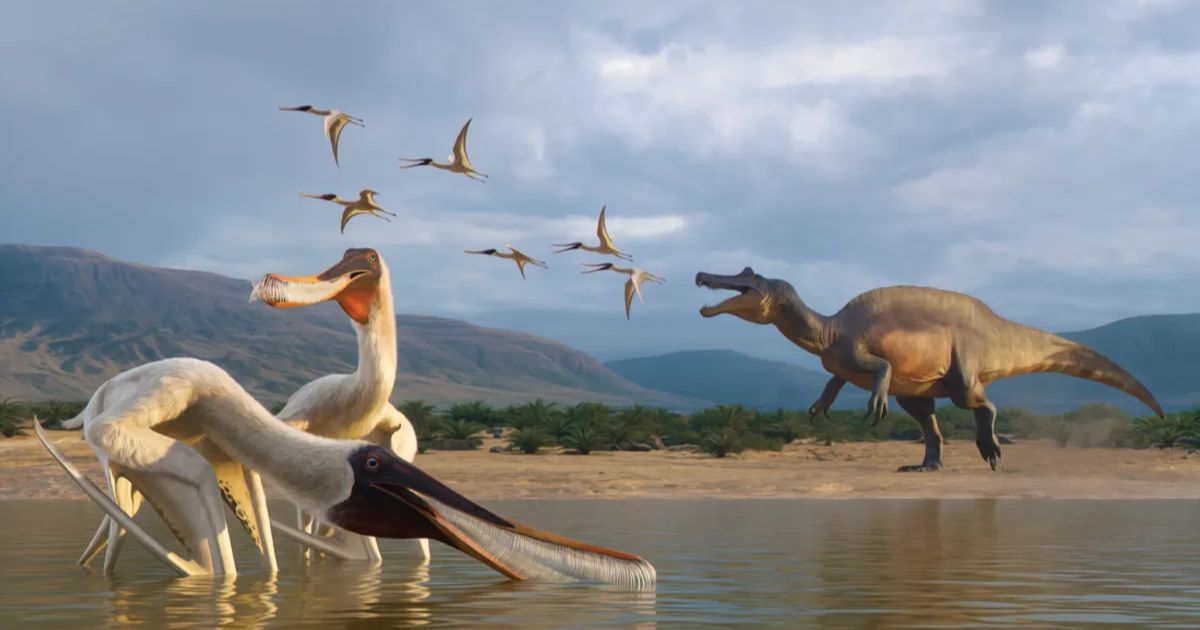
Illustration by Julio Lacerda, Pêgas et al., Scientific Reports 2025 (CC BY-NC-ND 4.0)
There are many ways to die, and some of them are better than others. If your goal is to become fossilized, you need to die in very specific conditions that will allow your body to quickly become preserved.
While far from the most common option, one way to do that is apparently to get eaten by a predator, then get vomited back up and preserved in rock.
That is what happened to a pterosaur according to a study published in the journal Scientific Reports. It is the first time an extinct animal has been found fossilized in vomit, or regurgitalite if you want to use the scientific term.
This ancient dinosaur is also a new species and has been named Bakiribu waridza, which comes from the Kariri words bakiribu waridza, which translates roughly to “comb mouth.” The name is fitting since the dinosaur had a long jaw that had hundreds of brush-like teeth, which it used to filter feed small creatures.
The fossil was found encased in rock along with several fish that the predator also ate. The researchers know that it was regurgitated because the fish that were encased along with this animal were positioned in such a way that they were clearly swallowed whole and head first. This is a common strategy for predators that need to avoid getting injured by the spines or bones of the fish they eat.
In addition, when predators have to vomit up food, it is generally encased in a thick layer of mucus, which helps to protect their throat during the process. This mucus also keeps the contents of the stomach stuck together in much the same position as it was before being vomited out. Most of the time, the vomit would be eaten up by scavengers, insects, or other animals, but in this case it was quickly preserved until it could be found, millions of years later.
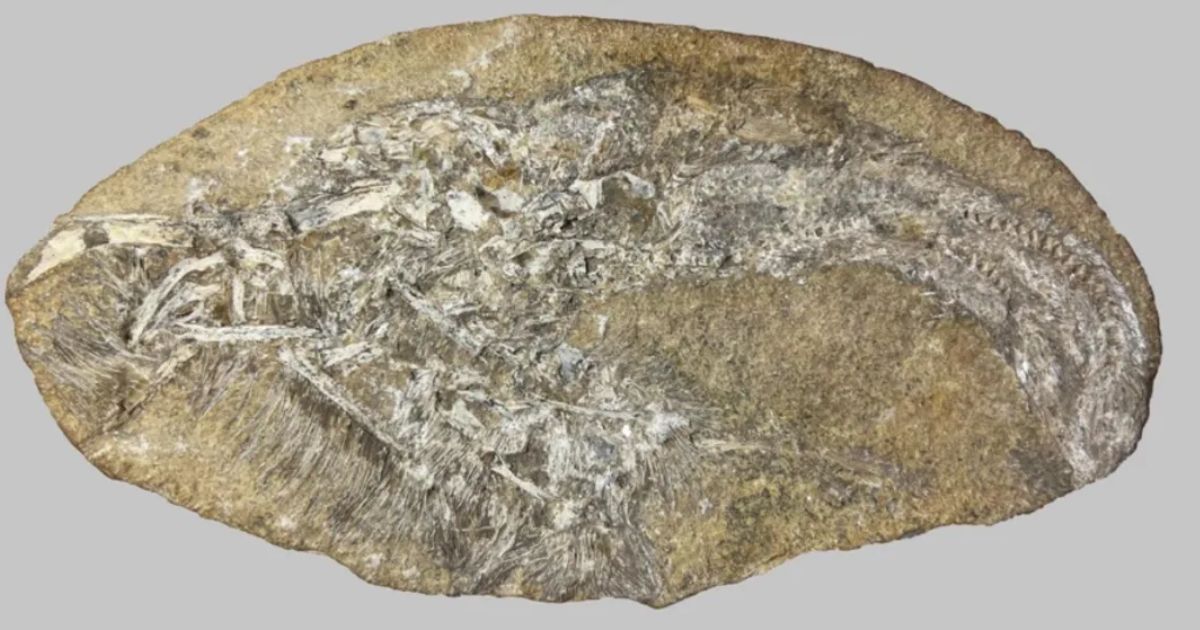
Image credit: Pêgas et al., Scientific Reports 2025 (CC BY-NC-ND 4.0)
While it is not possible to know exactly what type of predator ate this unusual animal, the researchers suggest it was likely some species of spinsaurid dinosaur or possibly an ornithocheiriform pterosaur.
Whatever the case, based on the positioning of this animal and the fish that died alongside of it, the scientists who analyzed it believe that it was the filter feeder that was eaten last and likely upset the stomach of the predator. The authors explain the importance of this find:
“Its unique combination of anatomical traits—particularly its very elongated jaws, dense dentition with long and slender teeth, subquadrangular crowns in cross-section, and acrodont-like tooth implantation in both jaws—sheds new light on the evolutionary trajectory of filter-feeding pterosaurs. The exceptional preservation of the specimen within a regurgitalite, alongside head-aligned fish remains, provides rare direct evidence of trophic interactions in the Early Cretaceous Araripe paleoecosystem.”
Nature was brutal back then, as it is today, but every once in a while it leads to a species being preserved in weird ways, which can teach us a lot about the environment at the time.
Thought that was fascinating? Here’s another story you might like: Why You’ll Never See A Great White Shark In An Aquarium