


Shutterstock
We humans, make a lot of trash, and some of that trash is extremely dangerous. The nuclear waste from power plants, for example, can remain harmful to humans for hundreds, or even thousands, of years after it is no longer in use.
This is why it is carefully transported to designated areas within mountains where nobody will ever get close to them.
While this is fine for what it is, why don’t we just take that type of waste and put it into a rocket and shoot it at the sun? Well, there are quite a few reasons why this isn’t a great option.
First, it is expensive to send stuff into space, and this type of waste is often quite heavy. Plus, modern rockets are reusable, so a one-way trip to the sun isn’t exactly a good use of money.
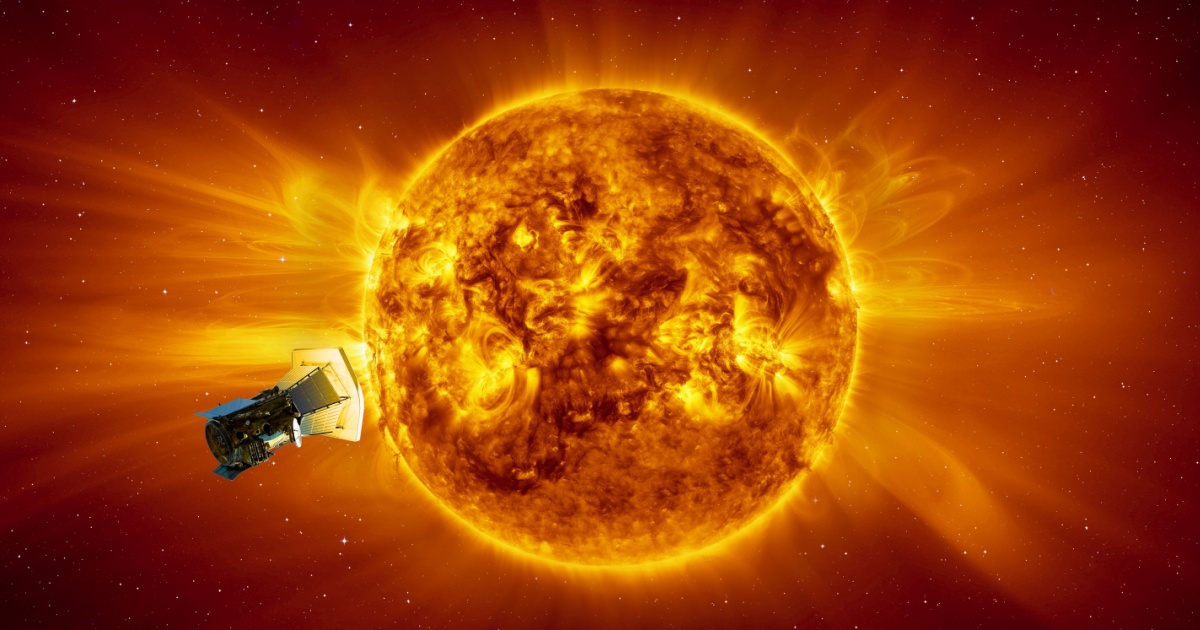
An often overlooked reason why you can’t just send a rocket toward the sun is that it is actually extremely difficult to send something to the sun at all.

Shutterstock
The sun is by far the largest and most massive object in our solar system, so one might think that all you have to do is point the rocket toward the sun and go, but that is not at all the case. If you tried that, the rocket would miss the sun by hundreds of millions of miles. NASA explains why:
“Our planet is traveling very fast – about 67,000 miles per hour – almost entirely sideways relative to the Sun. The only way to get to the Sun is to cancel that sideways motion.”
This is further discussed by Michael J. I. Brown, an Associate Professor in Astronomy at Monash University in a piece for The Conversation. He says:
“When our rocket leaves the proximity of the Earth it is travelling faster around the Sun than towards the Sun. At first the rocket gets closer to the Sun. But the motion of the rocket around the Sun and gravity results in an elliptical orbit that misses the Sun entirely. It isn’t even close: we miss the sun by almost 100 million km.”
So, if you really want to send trash (or anything else) to the sun, you need to start by offsetting the motion of the Earth. This isn’t exactly easy. Brown goes on:
“To do this, we would have a rocket leave low Earth orbit at 32km per second travelling in the opposite direction to Earth’s motion. If the Sun was overhead, the rocket would be travelling almost horizontally due east. Once the rocket leaves the proximity of Earth, its speed relative to the Sun would be almost zero. At this point the Sun’s gravity would pull the rocket (and the villain contained therein) inexorably inward.”
If you could pull this off, the trash would be on its way to the sun, which would only take about 10 weeks. The problem, however, is that we don’t have any rockets that can achieve anywhere near those speeds using nothing but the rocket engines themselves.

Shutterstock
Instead, you would have to plan out some gravity assist maneuvers where the rocket gets slingshotted around planets to speed up or slow down as needed.
So, to put it simply, sending something to the sun really isn’t as easy as it seems.
If you thought that was interesting, you might like to read about a second giant hole has opened up on the sun’s surface. Here’s what it means.