


Pexels
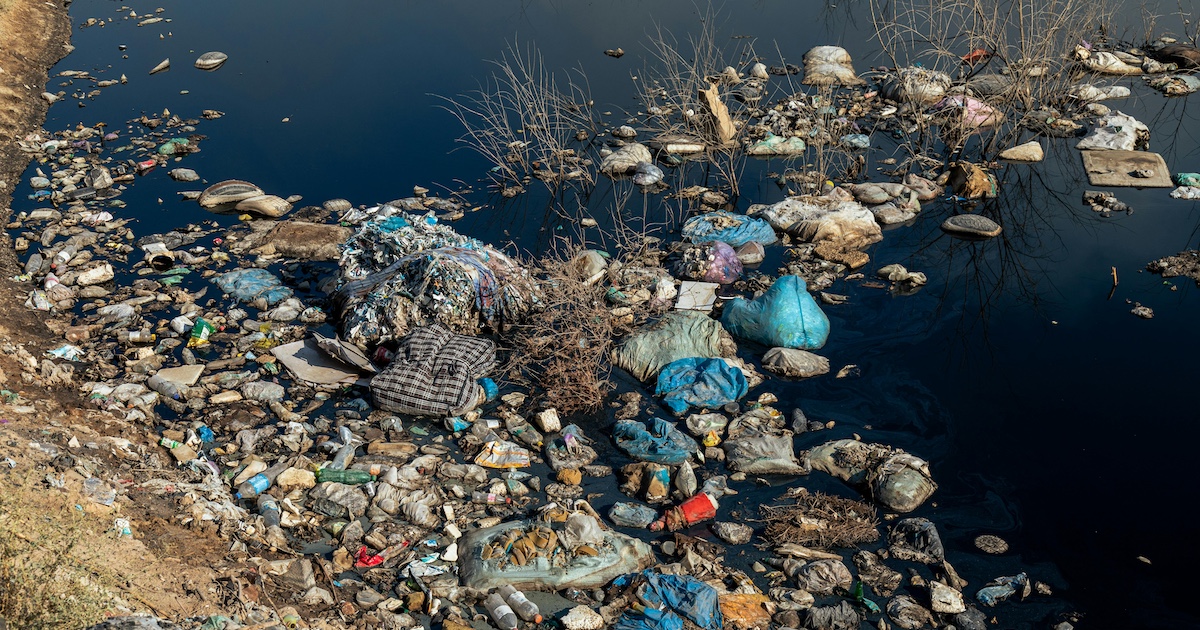
The Great Pacific Garbage Patch. A mass of plastic debris in the ocean – 610,000 square miles, or 79,000 metric tons of it – pulled together by winds and currents.
In the middle of the ocean, far away from human activity, it’s a huge and disgusting symbol of some of the worst humankind has to offer the world.
We overconsume. We litter. We pollute. We’ve been doing this for decades – perhaps the kicker being that plastic waste is not only composed of crude oil, it takes forever to break down. And when it does, the microplastics can be devastating to our precious marine ecosystems.
So studies of the Great Pacific Garbage Patch are fundamental to dealing with the issue. Bur when researchers from the Smithsonian Environmental Research Center studied the area, they were shocked by what they discovered.

Pexels
In their study, which was published in the journal Nature Ecology & Evolution, the researchers explain that they sampled a small section of the Garbage Patch in an area located between California and Hawai’i.
But their examination of the trash gave them more to ponder than they’d ever expected.
That’s because amongst the trash were living creatures – lots of them.
And surprisingly, it wasn’t just marine life that existed there; there were plenty of coastal species – including anemones, oysters, and mollusks – too.


Pixabay
How did those coastal species get there? Well, the authors suspect that they used the trash as a raft, drifting out to sea aboard the human detritus.
This is problematic, because the trash that we didn’t correctly dispose of has created a new, essentially man-made habitat in the middle of the ocean, disrupting the ecosystems that previously existed there – in one case, the researchers saw a coastal anemone eating a sea snail, the two creatures in competition for the first time.
Moreover, the coastal species’ reproduction within the Garbage Patch is going to further disrupt the marine ecosystem, with the possibility of invasive species threatening the delicate balance of the ecosystem there.
At the same time, the presence of life in the Great Pacific Garbage Patch makes the task of clearing it more of a problem too, since to deny these creatures their habitat is not only impractical, it’s unethical too.
And that really doesn’t bode well.
If you enjoyed that story, check out what happened when a guy gave ChatGPT $100 to make as money as possible, and it turned out exactly how you would expect.