


Shutterstock
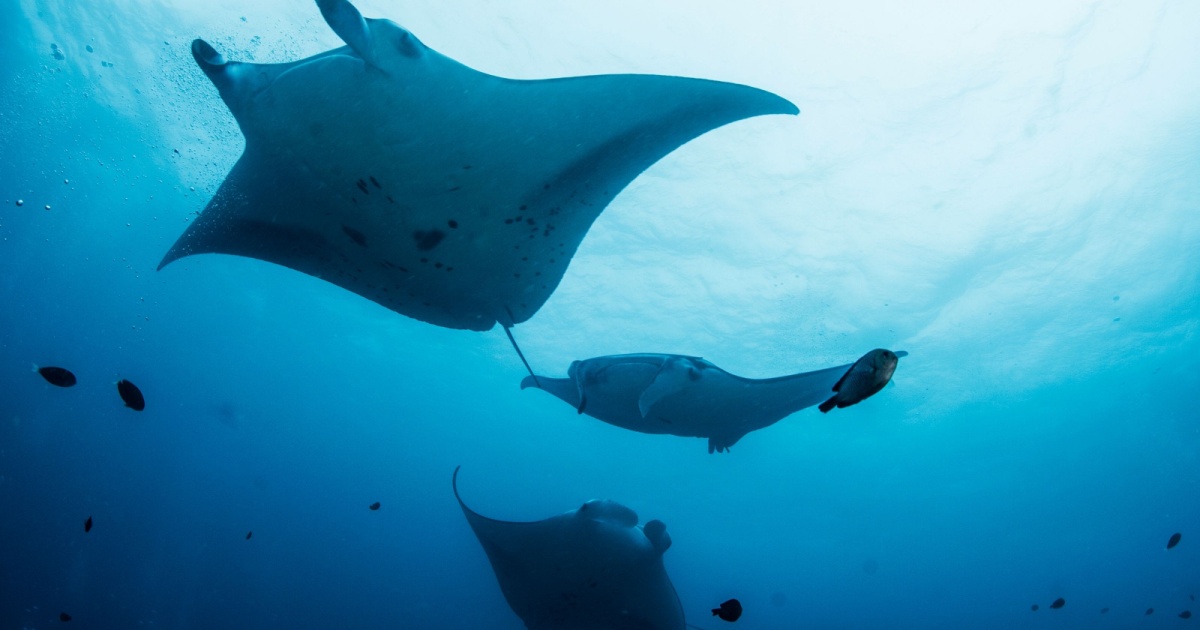
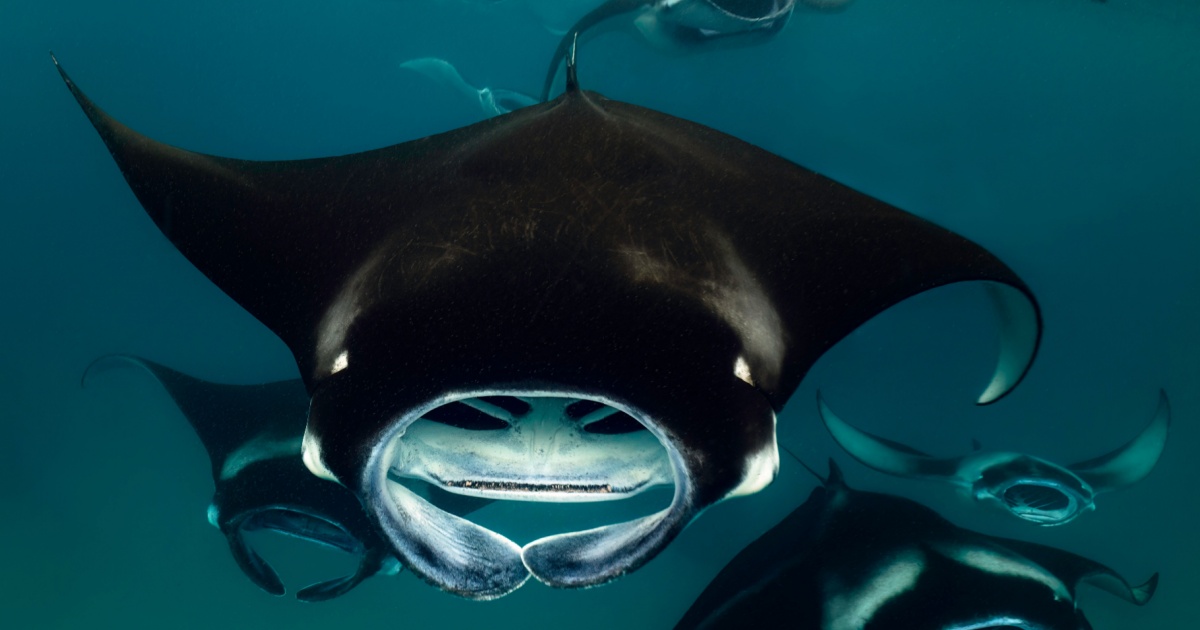
Manta rays are incredible creatures, swimming gracefully through thousands of miles of ocean throughout their lives. To learn more about the habits of these rays, researchers attached tags to 24 oceanic manta rays (Mobula birostris) across three separate locations.
The locations were Raja Ampat in eastern Indonesia, near Tumbes off of northern Peru, and close to Whangara by northern New Zealand.
Some of the tags automatically detached from the rays, floating up to the surface for collection. Others remained in place and transmitted data back to the researchers via satellite.
Shutterstock
The study, which is published in Frontiers in Marine Science, gave a combined 2705 total ‘tag-days’ of information to look at, which included 46,945 separate dives by the rays.
Out of all of those dives, the manta rays went down to depths of more than 500 meters (1640 feet) 79 times, so it was pretty rare. The deepest dive was a remarkable 1250 meters (4101 feet) deep. This is far deeper than this animal has ever been recorded going before.
Also interesting was that it was found that when making these deep dives, the rays don’t just go straight down or travel downward until they reach their destination.
Instead, they go down in ‘steps,’ meaning they will swim down for a while, then swim horizontally at a set depth, before continuing down. It is suspected that this is necessary to help their bodies acclimate to the colder water as they descend, or possibly to recover from all the effort it took to swim down.
The first author of the study, Dr. Calvin Beale, who is a PhD at Murdoch University, said in a statement:
“We show that, far offshore, oceanic manta rays are capable of diving to depths greater than 1,200 meters, far deeper than previously thought. These dives, which are linked with increased horizontal travel afterwards, may play an important role in helping mantas gather information about their environment and navigate across the open ocean.”
The rays did not spend a lot of time at the lowest point in their dives, though, so it is not likely that they go there to forage, or even to avoid predators. In addition, the researchers found that after coming up from such a deep dive, the rays would usually spend a lot of time at the surface.

Shutterstock
Beal went on to say:
“Understanding the nature and function of deep dives helps explain how animals cross vast, seemingly featureless oceans and connect ecosystems thousands of kilometers apart.”
All of the deepest dives occurred in the location near New Zealand, which may be important. Additional study will be needed to try to determine what it is about that area that prompted the rays to dive so deep.
If you thought that was interesting, you might like to read a story that reveals Earth’s priciest precious metal isn’t gold or platinum and costs over $10,000 an ounce!