



Shutterstock
In ancient history, both Homo Sapiens and Neanderthals lived at the same time and in many of the same places. Over the course of generations, the Homo Sapiens thrived and expanded while the Neanderthals eventually went extinct.
While there are undoubtedly many reasons that contributed to this, a new study published in the journal Scientific Reports says that one significant contributor was the inability of Neanderthals to master the process of mass hunting.
Mass hunting is a difficult and potentially dangerous activity where a group of ancient people would work together to hunt large numbers of animals at once. This would often be animals that lived in large herds.
Rather than hunting a single member of a herd, mass hunting would involve either using weapons to take down multiple at once, or even driving the heard in a direction until dozens, or even hundreds, would fall off a cliff. From there, the hunters could process their bodies and feed large communities of people successfully.

Shutterstock
This type of hunting began at least 50,000 years ago with Homo Sapiens during a time known as the Great Leap Forward, because of the incredible advancements in culture, communication, and according to this study, hunting. The authors of the study explain:
“Mass hunting, pertaining to the simultaneous killing and subsequent processing of several herd animals… may involve high levels of cooperation and communication among numerous people from different bands over several days, sometimes longer. As such, it is an important archaeological proxy of large-scale cooperation.”
In the study, the authors looked at an area in Israel known as Nesher Ramla, where large numbers of aurochs bones have been found over the years, many of them having signs that the animals that left them behind were butchered by humans. It is well known that Neanderthals lived in this region, and initially it was suspected that they may have learned to engage in mass hunting from Homo Sapiens.
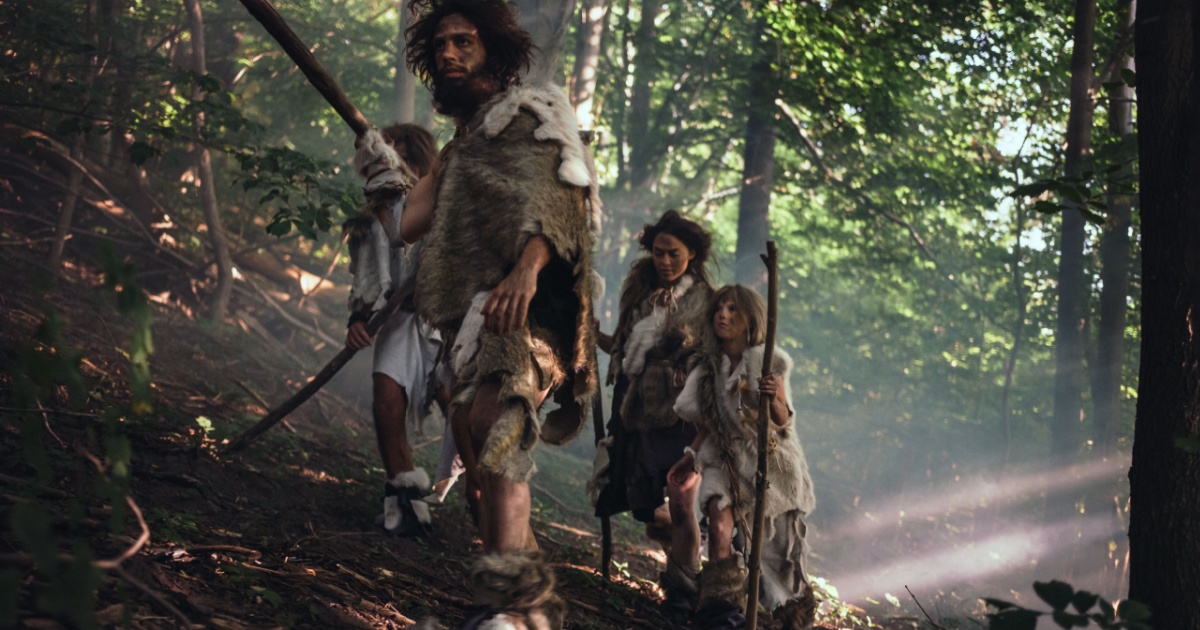
Shutterstock
The study found, however, that these animals did not die in mass hunts. This is known because the bones all belong to adult females of the animals, which would not be the case in mass hunting. Instead, the evidence pointed toward the fact that those Neanderthals living in the region hunted individual animals, likely separating them from the herd. The study says:
“Our analyses and data do not support the hypothesis that [Nesher Ramla] hosted mass hunting events, speaking for multiple small-scale hunting events instead.
While important, hunting individual animals is not able to feed large communities of people, and leaves them vulnerable to times where the hunting was less successful. Even in areas where Homo Sapiens and Neanderthals interacted, it seems that the Neanderthals were not able to learn how to engage in mass hunts.
Eventually, this put them at such a disadvantage that they were not able to survive.
If you thought that was interesting, you might like to read about the mysterious “pyramids” discovered in Antarctica. What are they?