


Shutterstock
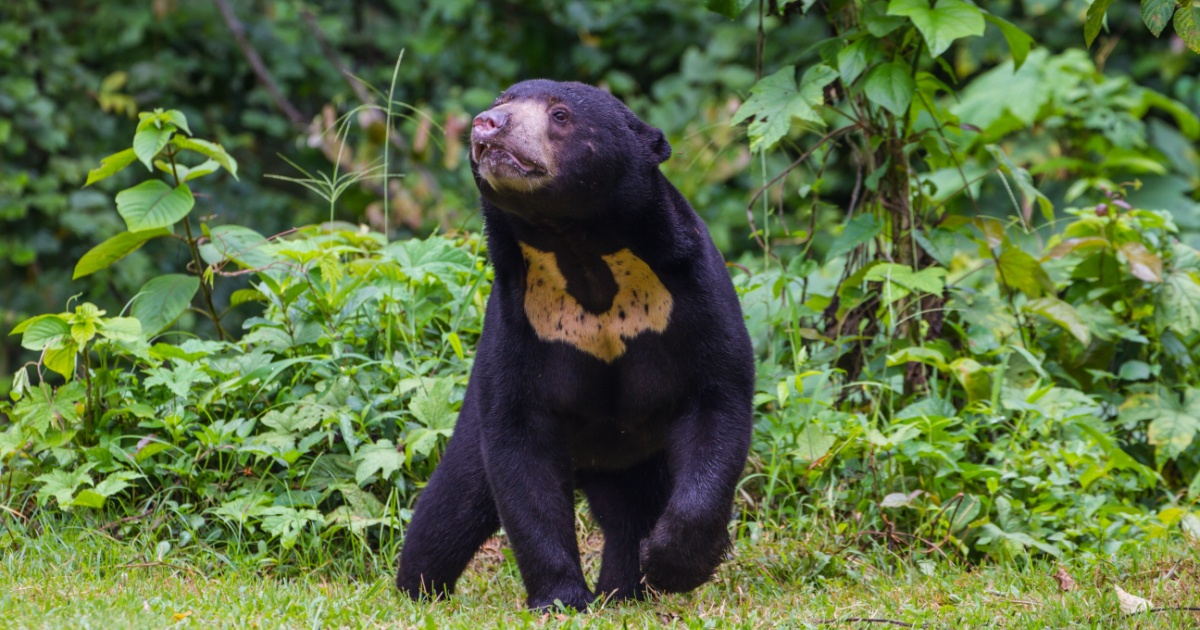
There are many species of bear out there, and while some aren’t that big, none of them should be approached in the wild. Even the smallest bear species, the Sun Bear (Helarctos malayanus) can be a formidable opponent if you were to ever fight one.
The sun bear measures about 1.1 to 1.4 meters (3.6 to 4.6 feet) long, and they generally weigh 25-65 kilograms (55-143 pounds). So, if you ever see one in the wild, it would be at least somewhat understandable that you wouldn’t feel overly threatened.
That, however, would be a big mistake.
While the bear is more likely to try to run and hide because they are pretty antisocial, if they do decide to fight back, they can be extremely aggressive. And if they get close enough to you, they can quickly do a lot of damage. Their jaws and teeth are powerful enough to rip open trees, and could easily crush the bones of a human.
In addition, they are known for their extra folds of skin and fat, which give them a layer of protection that is difficult to get through by predators, even those much larger than humans. That extra skin also means that even if you were able to jump on the back of the bear, it could turn itself around and attack you without a problem.
Fortunately, these bears are rarely seen in the wild because they are solitary creatures and tend to stay away from humans to the extent possible. Sadly, they are also rarely seen because there few of them remaining. This species is listed as endangered, though there is no accurate count of how many are left because they are difficult to track down.

Shutterstock
The continued loss of their normal habitat, which is in forested areas of southeast Asia, has caused their numbers to dwindle. While they are legally protected, poachers still hunt them aggressively because it is believed that their gallbladder has bile that contains healing properties. Of course, that claim has not been backed up by any modern science. Siew Te Wong, the CEO and founder of the Bornean Sun Bear Conservation Centre, spoke with Mongabay about this issue, saying:
“We must do everything possible to stop bears from being poached in the first place. we need to work with people. The holistic approach is challenging, but as long as we don’t give up and stay positive, one day we will achieve our goals.”
Hopefully conservation efforts can be successful and this small but incredible bear can make a great comeback.
If you found that story interesting, learn more about why people often wake up around 3 AM and keep doing it for life.