


Unsplash
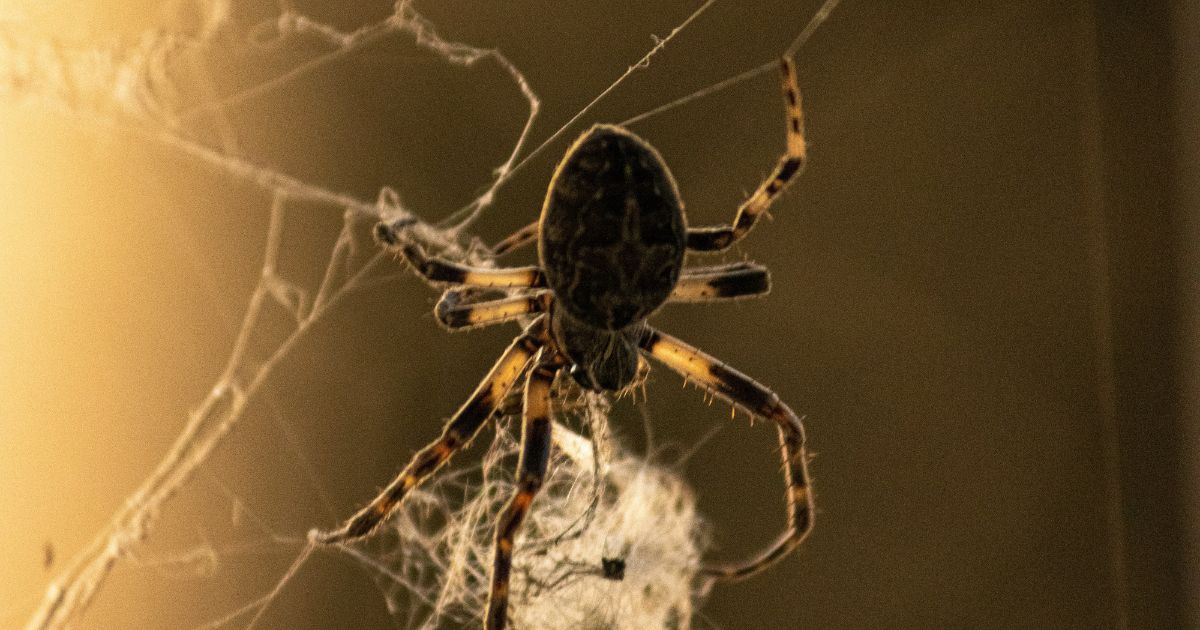
Spiders are amazing creatures that have a lot of different traits that let them thrive through many different parts of the world. While spiders are mostly thought of as predator animals that hunt insects and small animals, they are also a food source for certain larger creatures such as birds, mantis, or even other spiders.
This is especially true for smaller spiders such as the trashline orbweaver (Cyclosa). This type of spider does what many other species do, weaves webs that are great at catching flying insects that they can later consume. According to a study published in the journal Ecology and Evolution, however, they also do something pretty unique.
They gather up little pieces of the prey have eaten as well as bits of plants or other debris, and collect them in their web, generally toward the center. This may seem counterintuitive since it makes the web easier to see, but if you take a step back and look at the creation, you might see why.
These spiders create a large ‘sculpture’ that looks just like another, larger, spider. These have been called decoy dummies as well as spider scarecrows, and the authors of the study believe that they are made in order to scare away predators. You can see them being made in this somewhat creepy video from National Geographic:

The authors of the study explain what they believe is happening:
“During a predation attempt, it is likely that concealment inside its spider-like stabilimentum by the Philippine species would be beneficial to the spider by allowing it to escape detection until the predator abandons its attack. The Peruvian species, on the other hand, perches on the web directly above its spider-like stabilimentum and, to the human eye, appears as a small projection relative to the larger structure. The spider may be attempting to direct potential predators toward the stabilimentum and away from itself, escaping by abandoning the web in the event of a predation attempt.”
The study was done by watching spiders across time, one in Peru and the other in the Philippines.
Exactly how the spiders learned to make these creations, or why, is not yet known, but it must be effective for it to have become a common trait throughout the species.
If you think that’s impressive, check out this story about a “goldmine” of lithium that was found in the U.S. that could completely change the EV battery game.