


Pexels
Competition for food is one of many factors that can lead to a species becoming endangered, or even extinct.
In the UK it happened to the red squirrel, which just couldn’t compete with the bigger grey squirrel for their shared food source.
And humans have been the bad guys too, since our overconsumption of mussels and shellfish led to the Labrador duck going extinct too.
Incredibly though, new research has proven that some species have evolved with this very factor in mind, and it’s a fascinating adaptation to behold.


Pexels
In a new study, recently published in the Journal of Animal Ecology, researchers have proven that wild cats have evolved in the Guatemalan rainforest in a very specific way to prevent their extinction.
And they’ve proven that there’s more to live in the rainforest than we’ve ever known.
In their groundbreaking research, the team used trail camera footage and the analysis of droppings to understand what each species of wild cat – the jaguar, the puma, the ocelot, and the margay – preferred to hunt and consume in the rainforest.
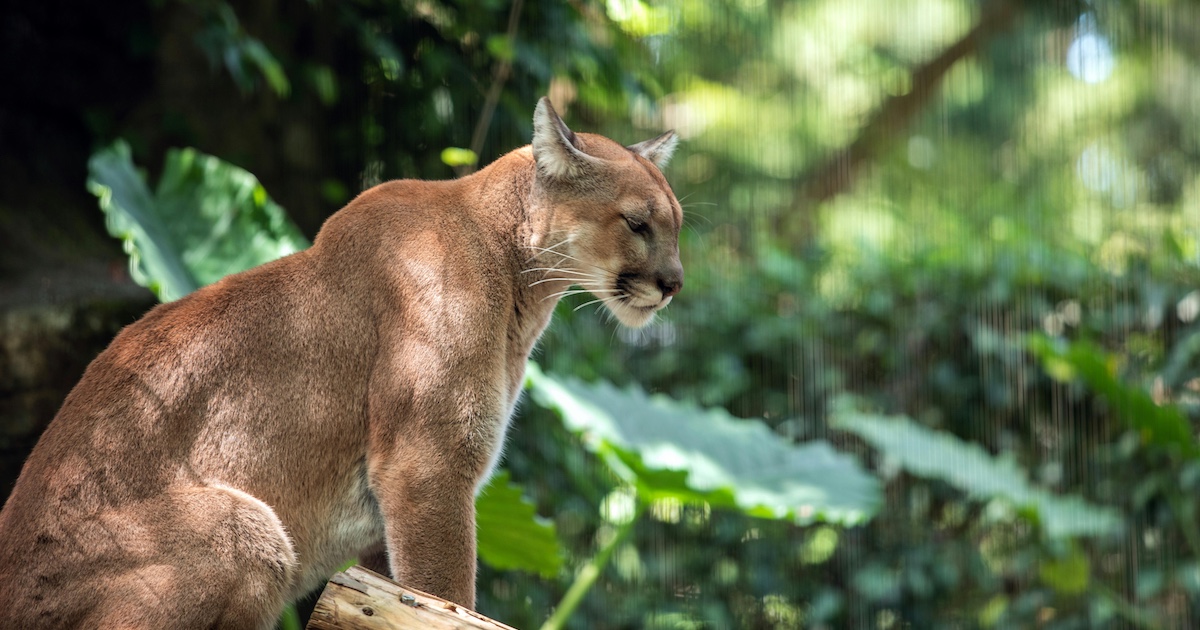
Fascinatingly, the results proved that jaguars and ocelots hunted mostly prey that lived on the rainforest floor, whilst the puma and the margay preferred to head upwards to hunt, catching and eating creatures that lived in trees.


Pexels
Of course, the size and weight of the wild cats plays some part in where they choose to hunt, but the researchers suggest that they have in fact developed in that way to ensure that all species can hunt effectively.
This phenomenon, known as vertical hunting, allows the lighter cats to hunt in trees, where their chance of success and ability to compete is higher, whilst the heavier cats hunt on the ground with more than enough food to go around.
And as Oregon State University’s Ellen Dymit explained in a statement, this knowledge will assist in conservation efforts too:
“This research challenges long-held assumptions about how large carnivores coexist without competitively excluding each other and highlights the importance of vertical foraging stratification. As habitat loss and climate change reshape ecosystems, understanding how predators partition resources will be critical for conservation.”
With a little teamwork, everyone can co-exist.
Thought that was fascinating? Here’s another story you might like: Why You’ll Never See A Great White Shark In An Aquarium