


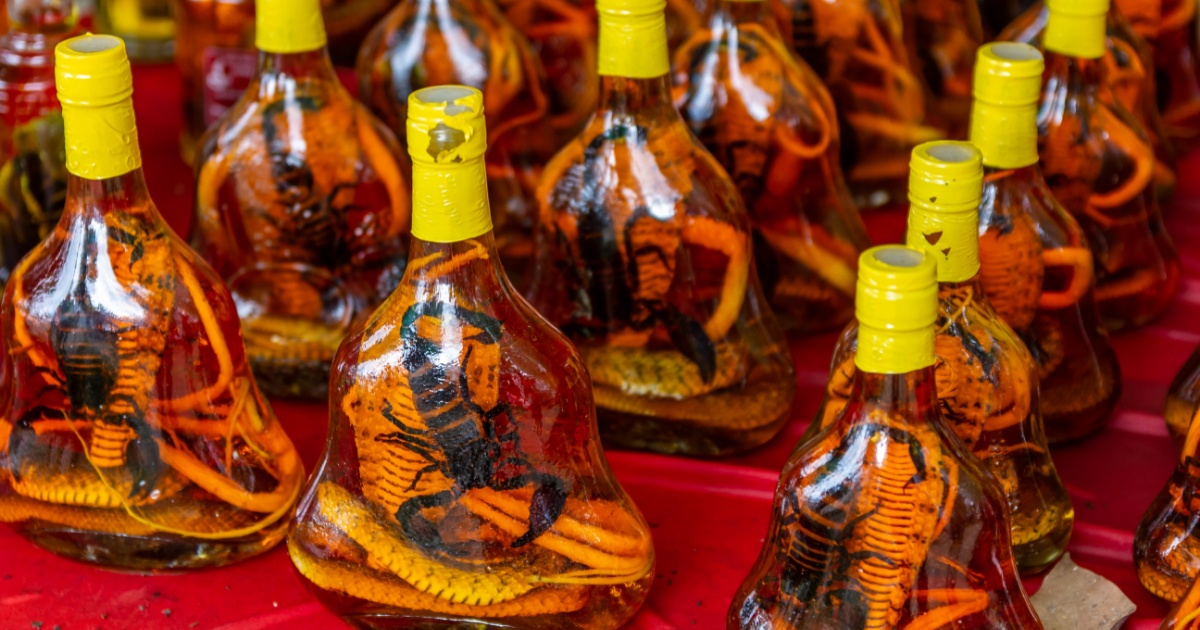
Shutterstock
The term snake oil has come to mean pretty much anything that makes wild claims but doesn’t actually do what it is supposed to.
Most commonly, it is used when referencing medical treatments, but some people have started using it for other things as well, including technology like AI.
This negative connotation got its start way back in 1893 when Clark Stanley went to the Columbian Exposition in Chicago to sell his “Stanley’s Snake Oil.” Whatever else he may have been, Stanley was a great salesman.
He was dressed up like a traditional cowboy with a large moustache and goatee, and he came out to the crowd holding a live rattlesnake. That alone is enough to get some attention, but when everyone was looking close, he sliced the snake open and put its body into a large pot of boiling water.
From there, he would gently skim off the ‘oil’ from the top of the water, which came from the fat of the snake. He then explained that this snake oil was a highly effective liniment, which could be used to treat just about everything, including frost bites, chills, bruises, sore throat, animal bites, insect bites, rheumatism, sciatica, lame back, and much more. Of course, it would work on both humans and animals.

Shutterstock
After putting on a show, it is no surprise that many people were reaching for their wallets to purchase a bottle themselves. Joe Schwarcz is the director of McGill University’s Office for Science and Society, and he wrote:
“The crowd lapped up the hype and shelled out the money. And many claimed immediate relief from their pain.”
With so many people claiming to get relief from the treatment, sales continued to improve. Long after the fact, samples of the snake oil were tested and it was found that the ointment didn’t actually contain snake oil. Instead, it was a mix of mineral oil, turpentine, beef fat, camphor, and red pepper.
What makes this particularly interesting is the fact that camphor and capsaicin (from the peppers) do have some anti-inflammatory properties to them, so it is very possible that they would provide some mild relief to things like burns, bites, and other aches and pains.
The most important part of the snake oil, however, was almost certainly placebo.
To make the story even more unusual, Stanley likely got the idea for using snake oil from Chinese immigrants who were working on the railroad. To treat their aches and pains, they would also use snake oil, which was a traditional Chinese remedy. Unlike Stanley’s rattlesnake oil (which contained no rattlesnake), however, the Chinese used an extract from the fat sack in the Erabu sea snake.
This snake is rich in omega-3 fats, which are also known to have anti-inflammatory effects. A potent ointment made from this could very well provide some level of pain relief. Unfortunately, Stanley did not have access to these snakes, which is why he turned to the rattlesnake.

Shutterstock
Eventually, the Pure Food and Drug Act was passed in 1906, which made it so medications had to contain the ingredients that they claimed and do (or attempt to do) the things that those selling them said they could do. After a federal investigation of Stanley’s ointment was analyzed, he was issued a $20 fine (worth around $500 today).
He paid the fine and faded off to obscurity, other than the fact that people well over 100 years later still reference his product as being a fake, even if they don’t know they are doing it.
If you thought that was interesting, you might like to read about a second giant hole has opened up on the sun’s surface. Here’s what it means.