


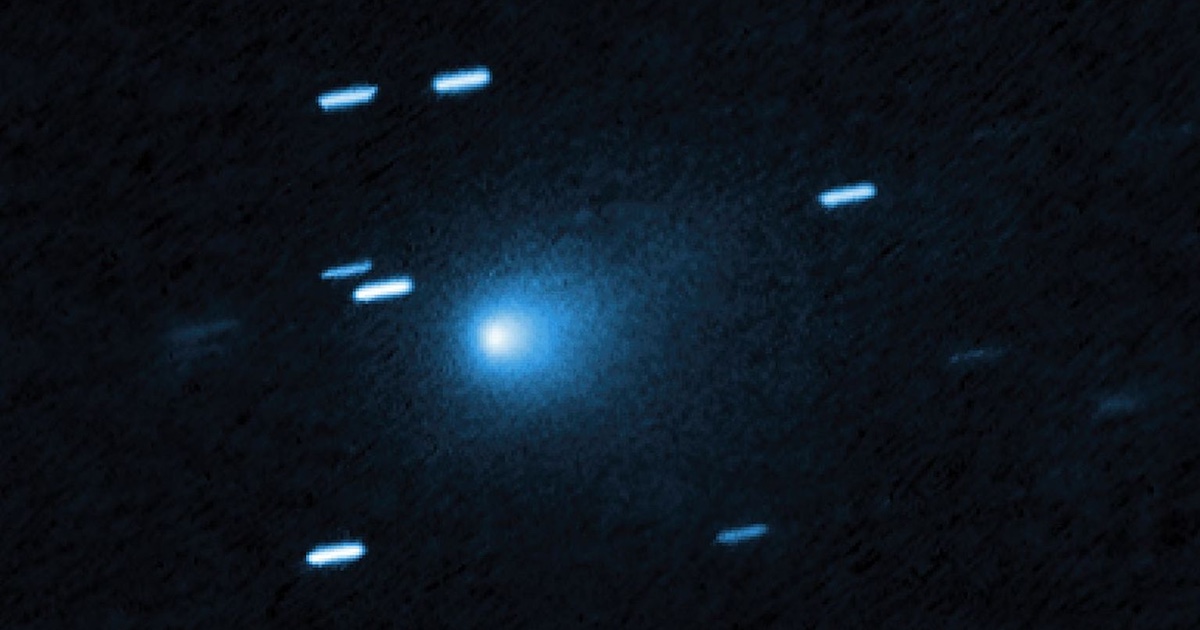
NASA/ESA/David Jewitt (UCLA)/Joseph DePasquale (STScI)
Since it was first spotted back in July 2025, comet 3I/ATLAS has been causing quite a stir in the scientific world.
That’s because 3I/ATLAS is only the third interstellar object ever known to cross our solar system.
And it is currently well on its way through, following a hyperbolic trajectory that will have it exit our system and travel back out into interstellar space in 2029.
But just because the comet is well past our own planet now, doesn’t mean it is no longer interesting. In fact, scientific interest is growing ever-greater.
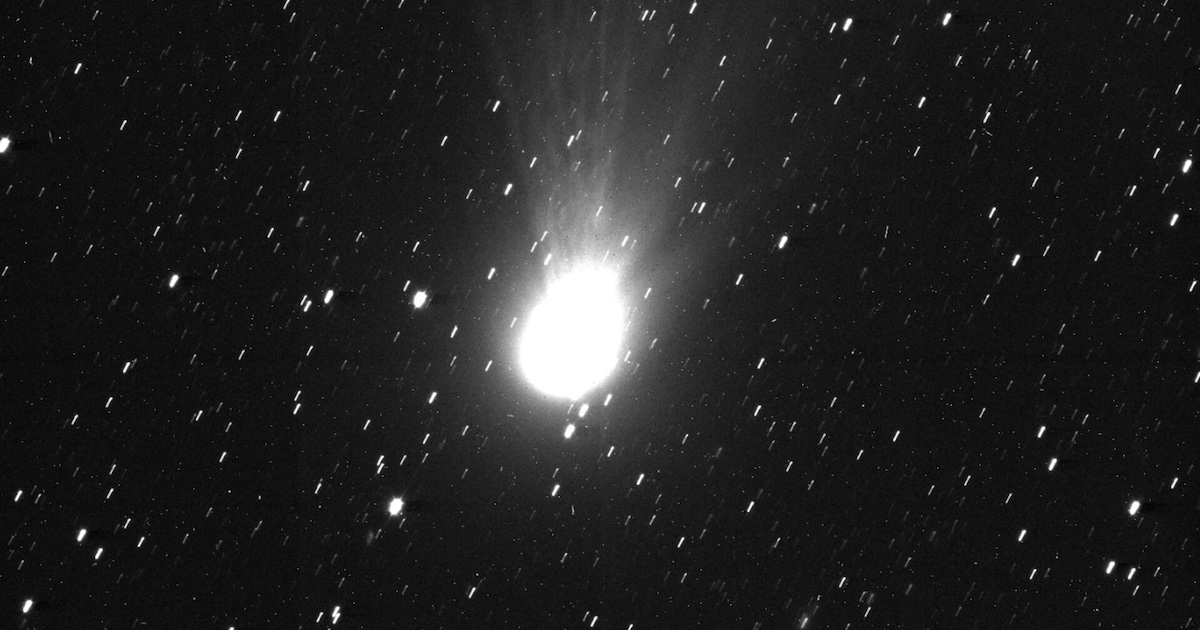
ESA/Juice/JANUS
In a recent paper published in The Astrophysical Journal Letters, a research team have explained something that many of us have been wondering for a while: what exactly 3I/ATLAS comprises of.
And the results are surprising, with the interstellar object jam-packed with a molecule less common of comets that originate in our own solar system.
This particular organic molecule? Methanol, as researcher Nathan Roth explains in a statement:
“Observing 3I/ATLAS is like taking a fingerprint from another solar system. The details reveal what it’s made of, and it’s bursting with methanol in a way we just don’t usually see in comets in our own solar system.”


NSF/AUI/NSF NRAO/M.Weiss
The researchers made this discovery using the ALMA Atacama telescope in Chile, and investigating how the comet changed as it passed the Sun.
3I/ATLAS is usually covered in ice, and when this ice was melted by the Sun’s intense light and heat, the dust and gas released made a halo around the core of the comet – and by analysing this halo, the researchers were able to confirm the presence of not only methanol, but hydrogen cyanide and carbon dioxide too.
This is particularly fascinating, as it means that 3I/ATLAS has one of the highest concentrations of methanol in any studied comet, something that doesn’t really happen in comets originating in our solar system.
What does this tell us? Well, more than anything it shows that wherever 3I/ATLAS came from, the conditions are very different to our own.
If you thought that was interesting, you might like to read about a second giant hole has opened up on the sun’s surface. Here’s what it means.