


Pixabay
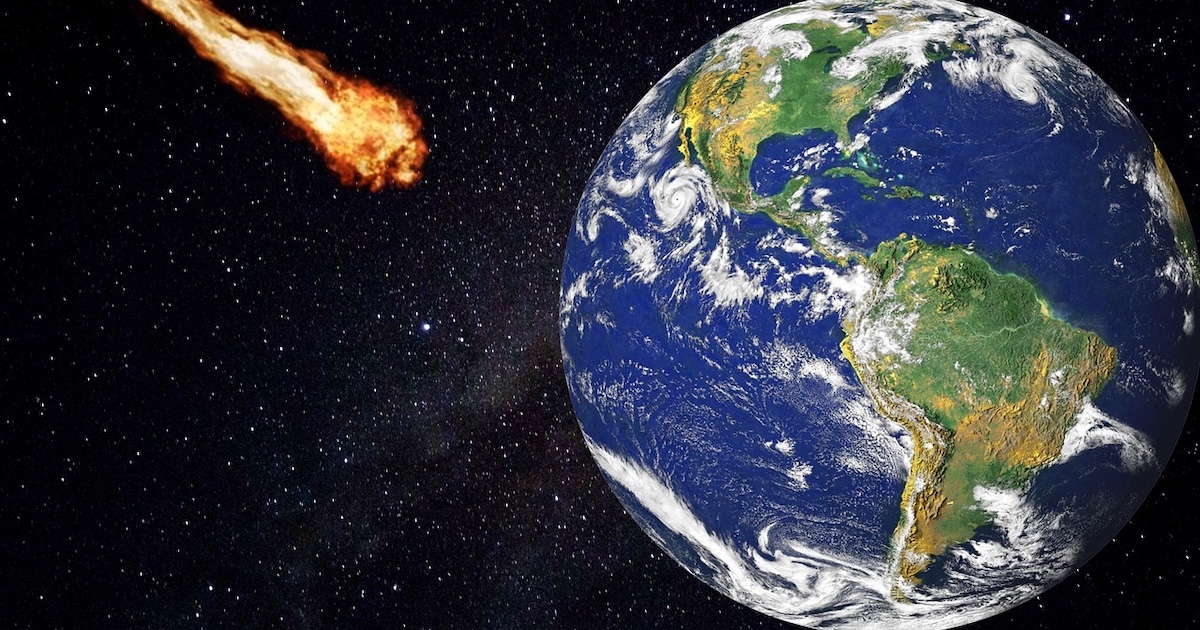
Every now and then, an asteroid with the potential to strike Earth hits the headlines – and for good reason, since it is thought to have been a 15km wide asteroid impact that caused the mass extinction event that killed the dinosaurs.
The most recent one to pique the media’s interest was 2024 YR4, which currently has a 1 to 3% chance of hitting the Earth in December 2032.
It’s not a huge risk, but any risk of being struck by one of the millions of asteroids in our solar system is enough to cause concern – which is why international teams are constantly working on ways to avoid any kind of significant asteroid strike.
The most obvious option, of course, is to simply cause them to explode before they hit our planet – but according to a new study by researchers at CERN, nuking an asteroid may actually do more harm than good.


Shutterstock
In their recent study, which was published in the journal Nature Communications, the scientists highlighted exactly why hitting an asteroid on course to hit the Earth would have to be our very last option for defence.
And that’s because instead of blowing it up, the nuke may just make the asteroid stronger.
In fact, in various experiments, the scientists – in collaboration with researchers from the University of Oxford – found that proton pulses could cause iron-nickel based asteroids to behave in wholly unwanted ways, softening and becoming more flexible, but then instead of breaking up, just getting stronger, as Melanie Bochmann explains in a statement:
“The material became stronger, exhibiting an increase in yield strength, and displayed a self-stabilising damping behaviour.”


Shutterstock
This might sound alarming, but the news could also be quite helpful for our planet’s plans to avoid asteroid impacts.
That’s because this deeper understanding of how asteroids behave after nuclear impact actually helps with another of the plans – to deflect incoming asteroids, veering them off course instead of causing them to explode, as Bochmann continues:
“Our experiments indicate that – at least for metal-rich asteroid material – a larger device than previously thought can be used without catastrophically breaking the asteroid. This keeps open an emergency option for situations involving very large objects or very short warning times, where non-nuclear methods are insufficient and where current models might assume fragmentation would limit the usable device size.”
Of course, nuking anything is a potentially disastrous situation to be in, and one that must be avoided unless we have no other choice.
But if the worst should happen, this understanding may help our planet to save life itself.
Thought that was fascinating? Here’s another story you might like: Why You’ll Never See A Great White Shark In An Aquarium