


Shutterstock
If you’ve never heard of chitin, it would not be a big surprise. This isn’t a commonly talked about substance outside of certain very specific researchers and industries.
Chitin (C8H13O5N)n is actually the second most commonly found organic polymer on the Earth (the most common is cellulose).
It is a major component in things like crab shells, and modern researchers are actually looking into possible ways to use it as an alternative to plastics in certain things.
It has long been known that chitin has been around for a very long time, but exactly how long was (and technically, still is) a mystery.

Shutterstock
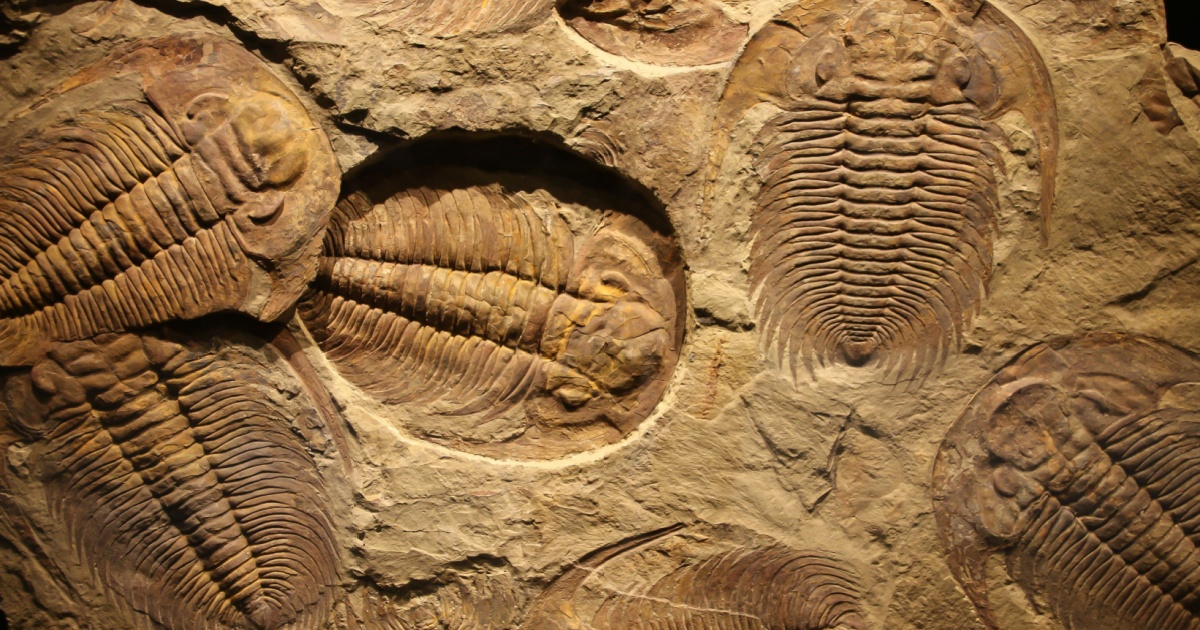
Dr. Elizabeth Bailey of the University of Texas, San Antonio, and a team of researchers recently analyzed an Olenellus trilobite fossil that was within shale at Emigrant Pass, California. That shale was tested to be between 514 and 506 million years old. They published the results of their study in PALAIOS.
Detecting chitin in fossils that old is very difficult because it normally breaks down more quickly than that, but the conditions allowed it to remain, though they had to use advanced scanning techniques, including infrared, mass spectroscopy, and fluorescence, in order to spot the d-glucosamine, which is a molecule that combines in order to form chitin.
Researchers weren’t surprised by the fact that trilobites produced chitin so long ago, but they were pleasantly surprised that it could now be proven. Dr. Bailey said of the discovery:
“This study adds to growing evidence that chitin survives far longer in the geologic record than originally realized. Beyond paleontology, this has significant implications for understanding how organic carbon is stored in Earth’s crust over geologic time.”
The way that the Earth captures and stores carbon dioxide is very important, and understanding it better can help make more informed decisions regarding climate change and other subjects. Dr. Bailey said:
“When people think about carbon sequestration, they tend to think about trees. Evidence that chitin can survive for hundreds of millions of years shows that limestones are part of long-term carbon sequestration and relevant to understanding Earth’s carbon dioxide levels.”

Shutterstock
The carbon cycle of the Earth is, of course, more complicated than anyone truly understands at this point, so gathering more research on the subject is essential.
If you think that’s impressive, check out this story about a “goldmine” of lithium that was found in the U.S. that could completely change the EV battery game.