


Shutterstock
You can find some surprising things while working in your home, but few will be as unexpected as what David Martin found when looking in the chimney of his Bletchingley, Surrey, UK home in 1982.
He saw some skeletal remains of a bird, which on its own isn’t that shocking. On one of those bones, however, was a small red cannister, and in that cannister was an encrypted message that appears to have come from World War II.
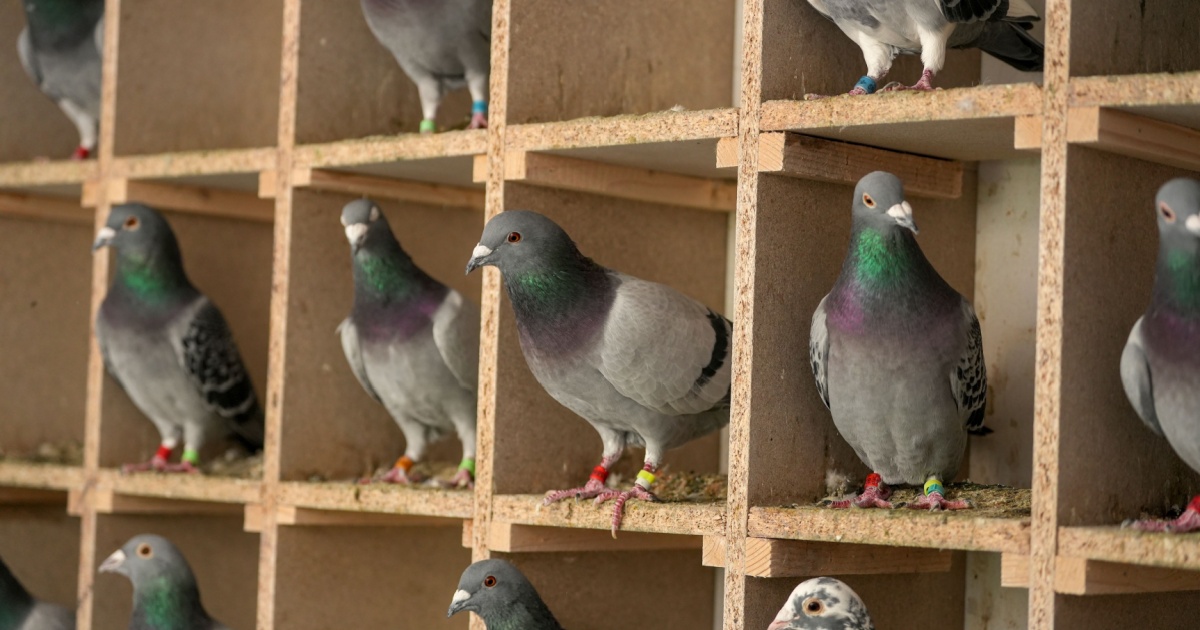
In that war, the National Pigeon Service (NPS) was created in the UK, and over 250,000 birds were used for carrying messages.

Shutterstock
This type of bird has a remarkable ability to be able to fly back to their home from anywhere they happen to be. So, they could be taken with soldiers to the front lines, or anywhere else, and equipped with the small cannisters that could be used to send notes back to their central command.
When radios weren’t available, or they would not have been secure, the pigeons offered a way to communicate that would largely go unnoticed. By encrypting the written notes, the messages would be safe even if the enemy had captured the pigeon. The UK’s Government Communications Headquarters (GCHQ) explains the encryption process by saying:
“During the war, the methods used to encode messages naturally needed to be as secure as possible and various methods were used. The senders would often have specialist codebooks in which each code group of four or five letters had a meaning relevant to a specific operation, allowing much information to be sent in a short message. For added security, the code groups could then themselves be encrypted using, for example, a one-time pad.”
These pigeons were so critical to the war effort that of the 60 animals who recieved the Dickin Medal, which is the highest honor an animal can receive while serving in a military conflict, 32 of them were pigeons.
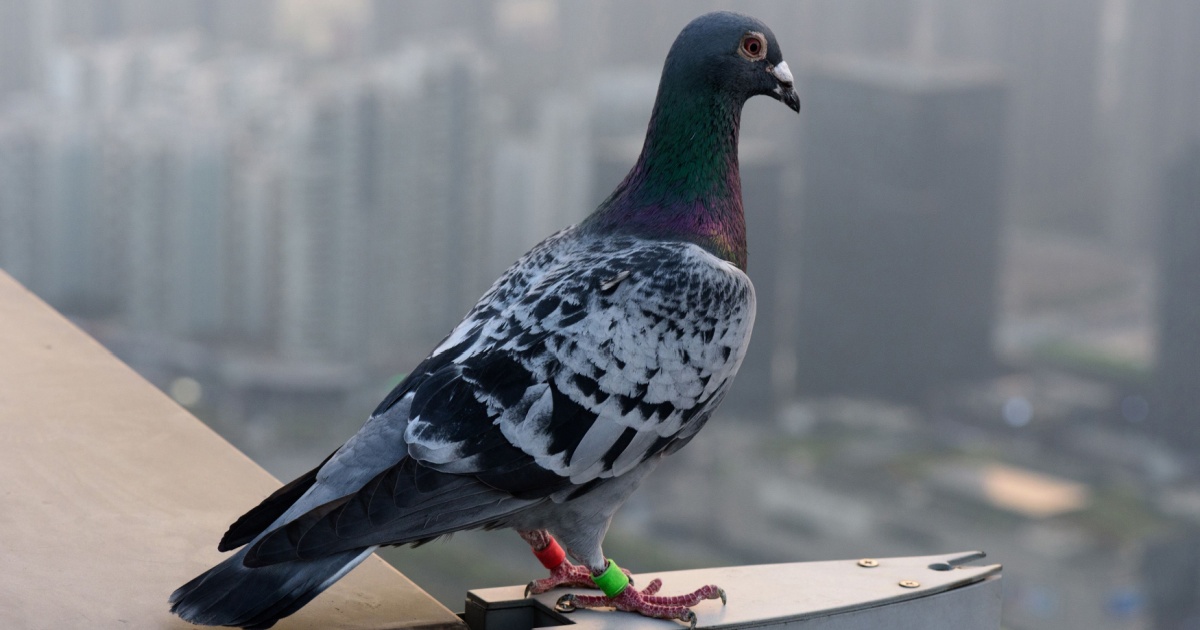
It is believed that this pigeon was flying on its way back from somewhere behind enemy lines when it stopped on the chimney for a rest and died due to some unknown cause. The message it was carrying reads:
“AOAKN HVPKD FNFJU YIDDCRQXSR DJHFP GOVFN MIAPXPABUZ WYYNP CMPNW HJRZHNLXKG MEMKK ONOIB AKEEQUAOTA RBQRH DJOFM TPZEHLKXGH RGGHT JRZCQ FNKTQKLDTS GQIRU AOAKN 27 1525/6”
If you happen to know what that means, the GCHQ would love to hear about it, because so far, nobody has been able to decrypt the message.
Shutterstock
Many people have claimed that they knew what it meant, but according to the GCHQ, none of them appear to be correct. They have stated:
“GCHQ followed with interest media reporting on possible solutions to the encoded message. Hundreds of these proposed solutions have been carefully examined by our expert cryptanalysts at GCHQ. So far none have proved credible. Without access to the relevant codebooks and details of any additional encryption used, it will remain impossible to decrypt.
It is very likely that the codebooks that were used to make this message have long since been destroyed, so unless another very unexpected discovery is made somewhere, this pigeon’s message will almost certainly remain a mystery.
If you thought that was interesting, you might like to read about the mysterious “pyramids” discovered in Antarctica. What are they?