


Fauna & Flora
Back in 2011, it was announced that scientists and biodiversity experts estimate that there are around 8.7 million species living on our planet.
The complicating factor? We know about hardly any of them. In fact, predictions suggested that humans had only actually discovered and identified around 14% of the species count – and in the oceans this was lower, at around 9%.
Incredibly, the process of finding, identifying, and describing all of the millions of suspected species would take thousands of years. So it goes without saying that no one is targeting completing that in their lifetime.
But in the years since – as has been ongoing for centuries – scientists have been hard at work locating, identifying, and describing new species. And a recent examination of rocky areas of Cambodia proved particularly fruitful.


Fauna & Flora
In a recent report, the researchers noted that during their biodiversity study of the Battambang and Stung Treng Provinces of Cambodia, they were able to identify a wide range of creatures – from cave bats and invertebrates to snails and reptiles – painting a picture of a biodiversity hotspot.
This is a particularly fascinating study since the karst landscape of western Cambodian is largely unexplored, with researchers hoping that the area will be home to plenty of unidentified creatures.
And the study didn’t disappoint, with plenty of new species – including three geckos, two micro-snails, and two millipedes – discovered and described for the very first time.
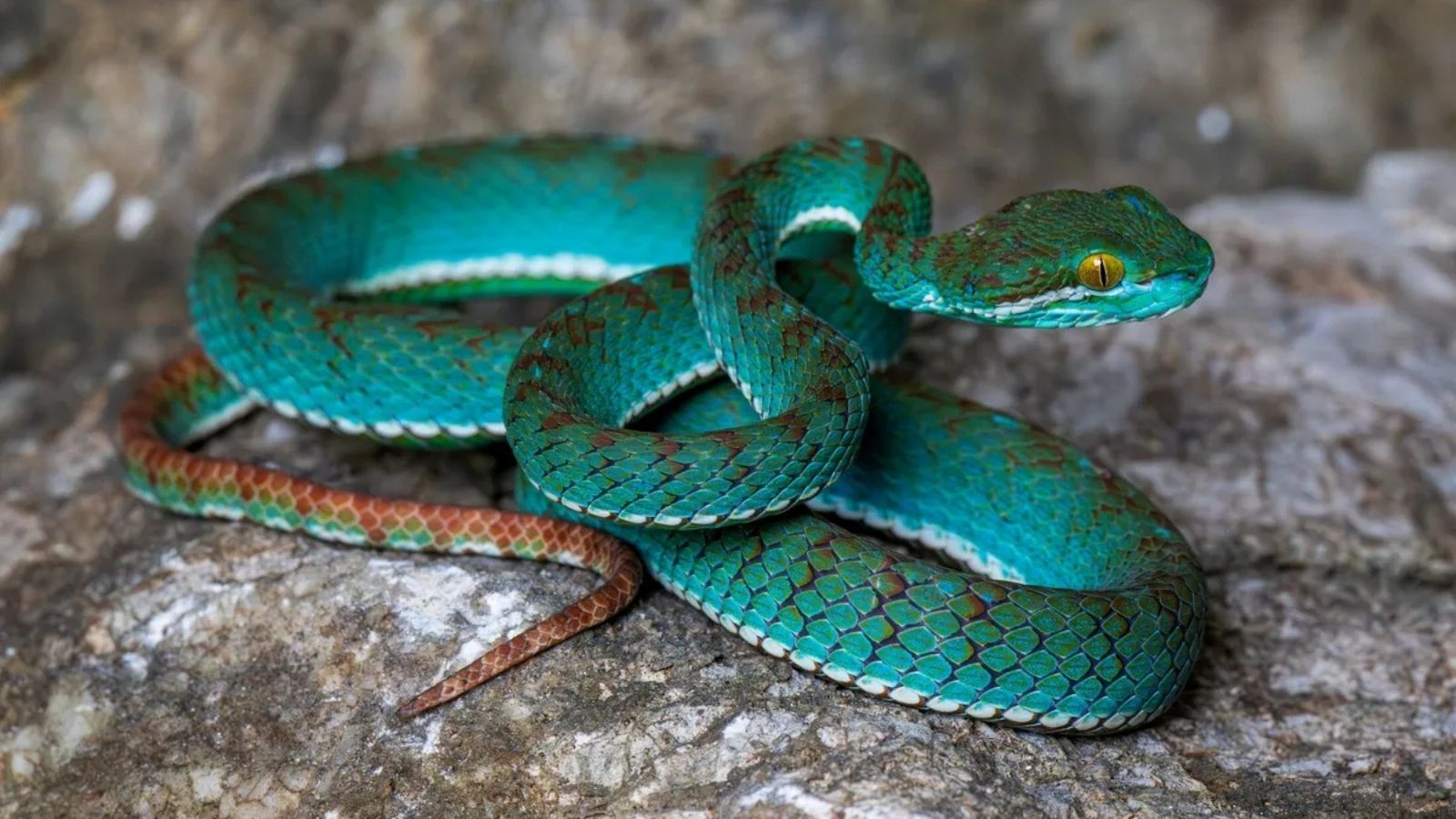
Amongst the most eye-catching species discovered though has to be a blue-green pit viper, who manages to take this quite feared species to a new aesthetic level.


Fauna & Flora
These species are just the tip of the iceberg when it comes to the biodiversity in this province of Southeast Asia. In fact, the region is home to plenty of endangered species, with conservationists urging policymakers to protect it into the long future to ensure that flora and fauna continue to thrive there.
Why? Because its landscape isn’t just picturesque, it’s a complex system that houses endemic and endangered species – including the Sunda pangolin.
This is because the unique features on the land are formed of limestone, with hills and caves housing springs and pools that nurture creatures that struggle to thrive elsewhere – with the absence of humans a significant factor in their survival too.
It’s more important than ever that places like this are allowed to thrive.
Thought that was fascinating? Here’s another story you might like: Why You’ll Never See A Great White Shark In An Aquarium