


Fernanda Avelar Santos
Dear fellow humans: what have we done?
Not content with destroying our own homes and cities with trash we’ve let it get into the waterways, flow into the ocean, and ultimately end up in places where very few humans have ever even been.
If that’s not the sign of an unprecedented, potentially existential mess, then what is?
But it’s not just affecting us – in fact, the trash (particularly plastic trash) that we’ve unleashed on the world is having a destabilising effect on species and ecosystems across the world.
And according to a recent study published in the Marine Pollution Bulletin, sea turtles are our latest victims.


Fernanda Avelar Santos
The study from researchers at Brazil’s São Paulo State University focuses on Trindade Island, where green turtles flock to build their nests every year.
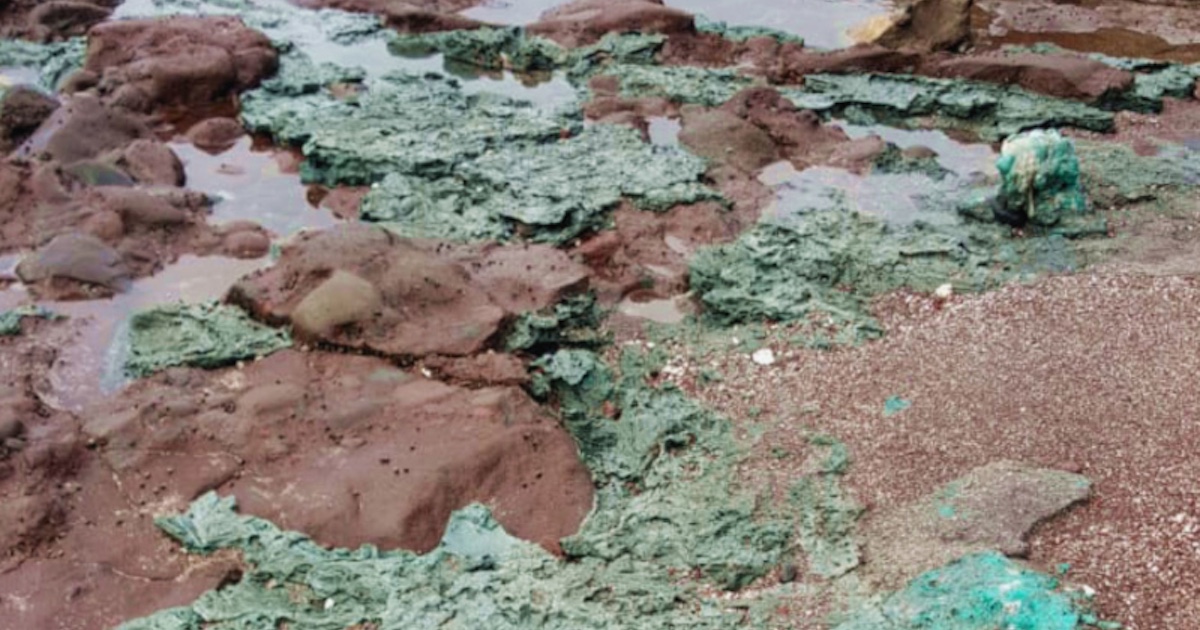
The alarming truth of the nests that the turtles are now building is that ‘plastic rocks’ – masses of plastic mixed with natural sediments, are increasingly common in the turtles’ nests – and they’re eroding quickly, littering the nests with microplastics.
This is particularly startling given that the volcanic island has no permanent human residents to create the accumulation of trash – instead, it comes from litter that has drifted out to sea, as well as significant waste produced by shipping and boat crew.
And when ingested, this plastic waste can be detrimental to a species’ survival.


Fernanda Avelar Santos
The very fact that these plastic rocks are accumulating on a remote island proves just how much our species have destroyed the planet we call home.
In fact, as researcher Fernanda Avelar Santos explains in a statement about the study, our species is having such an impact on our planet’s processes that there’s reason to believe that we’ve caused a new geological epoch:
“One of the requirements for the Anthropocene to be considered a new geological epoch, something still under debate, is precisely the existence of human-made materials buried in the sediment. As they were up to 10 centimeters below the surface in the nests, this is a potential accumulation point for the next million years.”
And that is not a good thing at all.
If you thought that was interesting, you might like to read a story that reveals Earth’s priciest precious metal isn’t gold or platinum and costs over $10,000 an ounce!