



Pexels
In February 2026, something special graced our night skies.
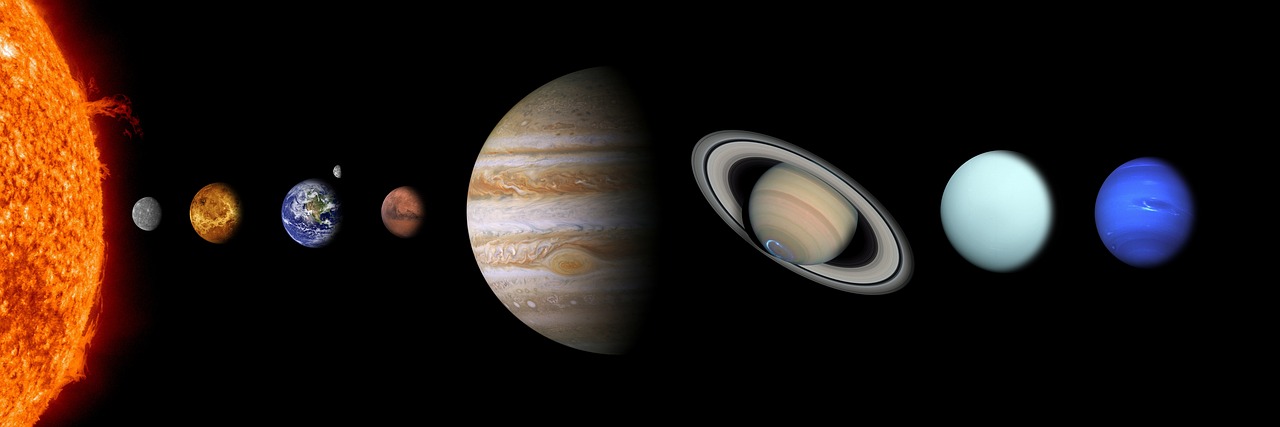
Far from just the moon and a smattering of stars, on a clear night a majestic sight called a ‘planetary parade’ was visible.
This meant that in clear, dark skies, six planets were visible, with four of the six – Mercury, Venus, Saturn and Jupiter – able to be seen with the naked eye, while two further planets – Uranus and Neptune – able to be seen through a telescope.
How? Well, this phenomenon happens when the timing of planets’ orbits happen to time in sequence, with them orbiting on the same side of the Sun at the same time, in a way that is visible from our position on Earth.

Pixabay
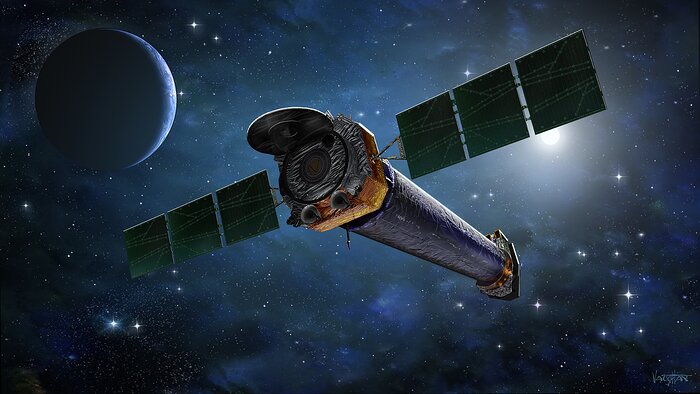
That is, obviously, quite spectacular as it is, but NASA’s Chandra X-ray Observatory has just made this recent planetary parade even more special.
That’s because the astronomical data that they received from three planets (Jupiter, Saturn, Uranus) has been translated into sound, in a process called sonification.
As a result, listeners are able to ‘hear’ these planets like never before.
And with six planets aligned, the ‘sound’ is more intense than ever.

NASA
How does this work?
First, data is captured by Chandra, helping us to understand how individual planets reflect x-rays from the sun. These are represented through woodwind instruments in the clips.
Then, further atmospheric sounds, including layers of cloud or a planet’s rings are represented by the sounds of other instruments – all through the interpretation of Chandra’s data. And it’s not just these three planets that have been sonified, with many more parts of space included in the Universe of Sound project.
In truth?
It’s as fascinating as it is beautiful.
If you think that’s impressive, check out this story about a “goldmine” of lithium that was found in the U.S. that could completely change the EV battery game.