


WCS/Terria Clay
If there’s one thing that will further brighten up a sunny springtime day, it’s cute animal news.
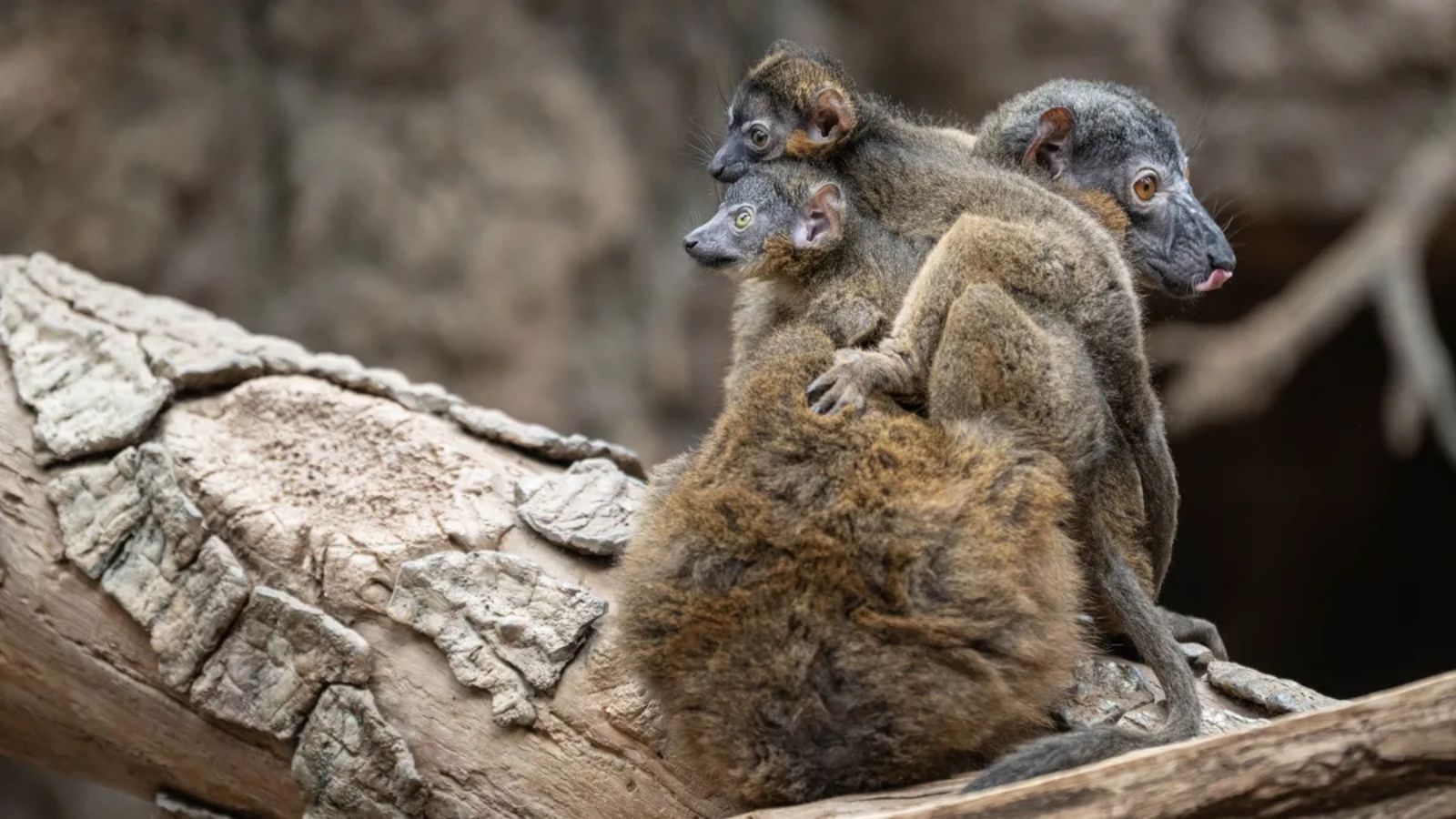
And Bronx Zoo have delivered, with the announcement of the birth to twin baby collared lemurs.
The tiny primates were born on March 15th, 2026, and have been pictured clinging to their mother, as is customary in their early months:
“What’s better than one collared lemur baby…? TWO! The Madagascar! exhibit is now home to twin baby collared lemurs born on March 15. Collared lemurs use their long tails to balance when leaping through the forest canopy. The young cling to their mother, hiding in her fur for the first few months of their lives.”

Bronx Zoo
Endemic to the south-east of Madagascar, the collared lemur is an endangered species, with the Duke Lemur Centre explaining that the significant decline of the species’ population is a result of damaging human activity.
A toxic combination of the slash and burn agricultural practices of rice farming, the illegal pet and bushmeat trades, habitat loss, and more are responsible for the lemurs not only losing their homes, but their lives too.
Trees – like the hardwood trees that are burned in Madagascar for charcoal – are fundamental to the lives and wellbeing of collared lemurs, since they are an arboreal species, meaning that they are adapted for life in a tree canopy.
This keeps them safe, since spending time on the ground – whether enforced by a lack of tree space, or a ploy to capture some food – is dangerous for the individual, putting them easily in the eyes of predators.

Duke Lemur Centre
For these twin collared lemurs though, it’s a life of safety as they are raised by their mother in the Madagascar! zone of the zoo.
If you’re wanting to visit, it’s most likely you’ll be able to spot the lemurs in the afternoon, though they will likely still be hiding within their mother’s fur.
And though they don’t know it, these two baby lemurs are part of a promise from conservationists to do their best to keep species from the brink of extinction, despite the behavior of hunters and irresponsible land users around the world.
But for now, they’re two babies yet to be named, clinging onto their mother as adoring visitors watch on with a smile.
If you enjoyed this story, check out this post about the godwit, the little bird that makes the world’s longest continuous flight.