
Mysterious Sound Observed From Large Meteors Continues To Baffle Scientists

There are many mysteries in the universe that scientists do not yet understand.
One of the most frustrating is an issue that has been observed for hundreds of years, and experts still don’t know what is going on.
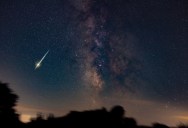
When a meteor streaks through the sky it gets a lot of attention from everyone on the ground, especially when they are fairly large.
For most people, simply seeing the bright light in the sky is enough to ignite awe and wonder. People love looking up at the meteor and seeing the bright light and unique sound that may only happen a few times during ones life.
The mystery that scientists don’t yet understand is what the sound actually is.
Meteors are so far away from the Earth when they streak through our atmosphere and burn up, it is unlikely that anyone on the ground would hear them at all.
If they happened to make a loud enough noise, there would be a delay of several minutes from the time someone saw the light to the time the heard the noise due to the speed difference between light and sound.
Some of the earliest historical reports of meteors say that people saw the bright light and heard a hiss from the fireball in the sky.
These reports were typically dismissed by modern scientists, assuming that the witnesses simply imagined the sound rather than actually heard it.
Over the years, however, many other reports of people, including scientist, also say that there was a hissing or whooshing noise that accompanies meteors, so researchers started to take it more seriously.
In 1998, during the Leonid meteor shower, scientists set up microphones to see if they could capture the sound. They were successful, as can be heard here.
So, if it is known that the sound does not come directly from the meteor due to the lack of a sound delay, what could it be?
Sign up to get our BEST stories of the week straight to your inbox.
Some scientists proposed that the meteors could be producing natural radio waves, which would account for the simultaneous seeing and hearing of the observers.
Unfortunately, this does not appear to be the case as researchers observed 650 bright meteors in the skies of Colorado and did not detect any radio waves.
Other theories suggest that the sound is coming from atmospheric phenomena, including the electric charging of dust in the meteor’s wake.
As of now, however, there is little evidence that this would cause the sounds that people are hearing.
There are many scientific mysteries out there that still need solving.
If you thought that was interesting, you might like to read about 50 amazing finds on Google Earth.






Sign up to get our BEST stories of the week straight to your inbox.
