



Pexels
How tall is the tallest tree you’ve ever seen?
If you’ve spent time in California, it’s possible that you’ve even seen the world’s tallest tree, with Hyperion – a coast redwood – standing at an incredible height of 380.8 feet in Redwood National Park.
But none of this accounts for altitude, with Redwood National Park ranging from sea level to 3,262 feet above.
While Hyperion’s crown as the tallest tree in both California and the world is safe for now, when it comes to the highest altitude tree in California, there’s a new contender in town.


Pexels
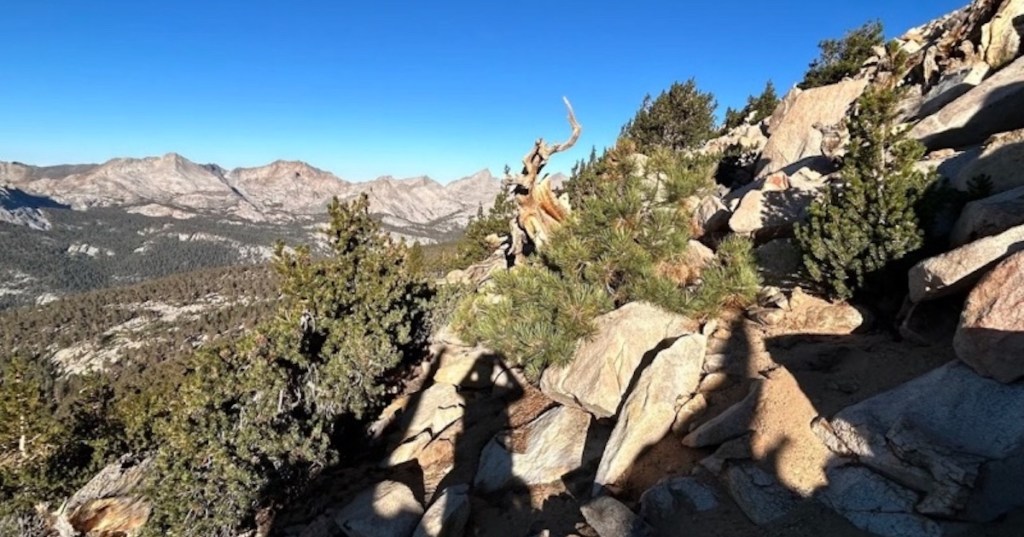
That’s according to Professor Hugh Safford, whose discovery of a Jeffery pine at an altitude of 12,657 feet elevation has recently been published in Madroño, a journal of the California Botanical Society.
In a UC Davis statement about his discovery, Professor Safford explained his shock at encountering a Jeffery pine at such a height, alongside more usual pine trees at Mount Kaweah in Sequoia National Park:
“I thought, ‘What’s that?’ I walk over, and it’s a Jeffrey pine! It made no sense. What is a Jeffrey pine doing above 11,500 feet?”
Why was this so unusual? Well, because the Jeffery pine is common around Lake Tahoe and Mammoth Lakes – it is absolutely not a high elevation tree at all. In fact, the Jeffrey pines that Safford encountered were 1,860 feet higher than any Jeffery pine previously recorded, suggesting that it is likely California’s highest tree.


Hugh Safford/UC Davis
To some this might just seem like a weird anomaly, but to tree experts and climate scientists the growth of these trees at such an altitude is alarming to say the least.
That’s because the germination of the Jeffrey pine seeds at such an altitude is only possible because of earlier snowmelt and higher air temperatures at these heights.
And it’s not just one tree; Professor Safford identified over twenty-five Jeffery pines above 11,800 feet, and there was nothing new about them with some of the trees over twenty years of age.
This says more about climate change than you might realise, as Safford continued:
“I’m looking at trees surviving in habitats where they couldn’t before, but they’re also dying in places they used to live before. They’re not just holding hands and walking uphill. This crazy leapfrogging of species challenges what we think we know about these systems reacting as the climate warms.”


Hugh Safford/UC Davis
But how did the trees get up there in the first place since, as Safford beautifully puts it, they’re not ‘walking uphill’?
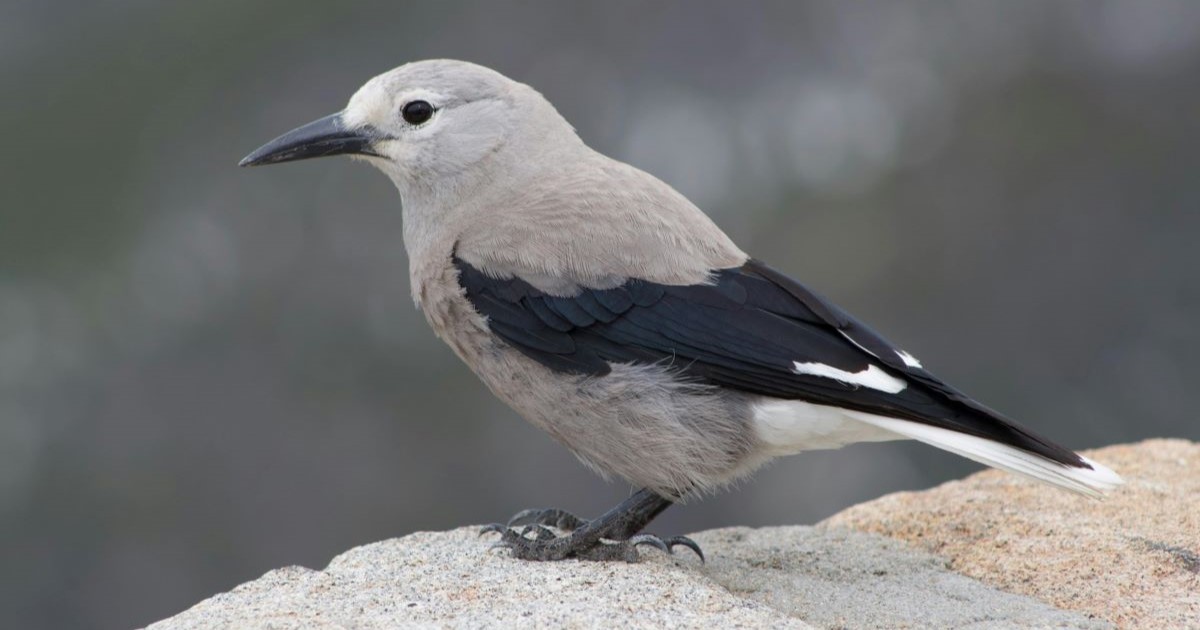
Well, the scientist suspects that the seeds were supposed to be the early summer snack of a bird called the Clark’s nutcracker.
Known for hiding seeds high up in mountains where they stay cool for later, it seems like our warming planet has – over the past two decades – scuppered the bird’s plot.
Instead of keeping the seeds frozen for later, the snowmelt on the mountains and warming temperatures have allowed the seeds to germinate instead, leading to the unusual placement of these once lower-altitude trees.
That they have established so successfully provides a whole new layer of evidence for just how significantly our climate is changing.
If you thought that was interesting, you might like to read about the mysterious “pyramids” discovered in Antarctica. What are they?