


Shutterstock
Bell peppers are delicious. They add a great flavor to many different dishes, and they can be enjoyed on their own or with a little dip. Not only do they taste great, but they are also a very healthy food, boasting a variety of important vitamins and minerals that are needed for a complete nutritious diet.
When shopping for bell peppers, you will want to know as much as you can about them so that you can pick the one that will give you the taste and nutrients that you desire.
The first thing to know is that bell peppers aren’t actually vegetables. They are fruits. Of course, this does not mean that you should put them in a fruit salad. If you do, you might be asked to leave the potluck party! In botanical terms, something is a fruit if it is the mature ovary of a flowering plant, which is exactly what bell peppers are.


Shutterstock
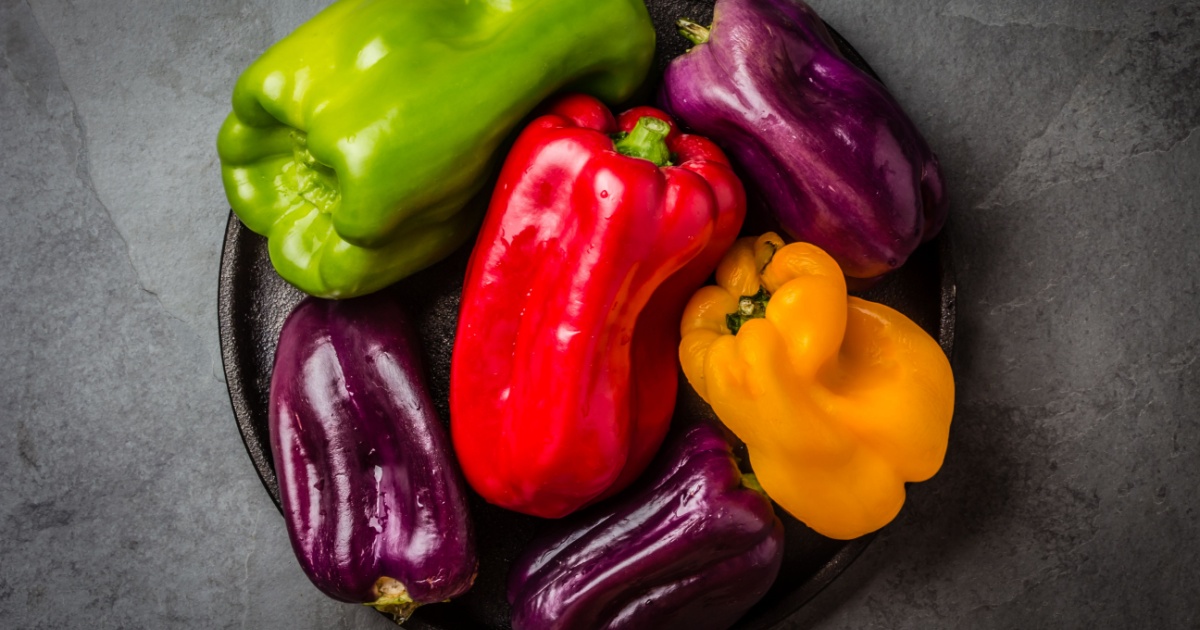
The next thing to know is that the different colored bell peppers aren’t actually different varieties of bell pepper. Instead, they all start out as green peppers and then will ripen to a different color based on the type of seed. This is not unlike how the same type of rose can mature to become red, white, or any number of other colors as a flower. As the pepper ripens, the color (and taste, and nutrients) change. The following are key things to know about each color:
- Green Peppers – These are unripened bell peppers and will have a more bitter taste than the others. They are lower in sugars, but offer an excellent source of vitamin C (even if it is less than the other options). They are also the lowest when it comes to antioxidants. While many people love green peppers, they are generally the ones that offer the least nutrients.
- Yellow Peppers – These are slightly more ripe than the green ones, and that gives them a milder and slightly sweet taste. They are higher in vitamin C and carotenoids than the green ones as well.
- Red Peppers – Red peppers are the sweetest of the options and will typically be a lot more juicy. They boast nearly twice as much vitamin C as green peppers, and also have lots of beta-carotene and antioxidants.
- Purple Peppers – While not nearly as common as the other varieties, bell peppers can also be purple. This type has a similar bitter taste to green peppers, but with a more earthy flavor profile. The nutritional value of purple peppers is also similar to green peppers.
The name pepper is also slightly misleading. When people talk about peppers, they think spicy. Bell peppers, however, do not contain any capsaicin or piperine, which are the compounds that give things like jalapenos the classic ‘hot’ or spicy flavor. Many people who don’t like spicy food love these delicious peppers.

Shutterstock
So, the next time you are at your grocery store or looking through your garden, you will know that bell peppers are a great addition to your diet and that they can be a great way to get your daily servings of fruit (or vegetables if you prefer to think of them that way).
If you think that’s impressive, check out this story about a “goldmine” of lithium that was found in the U.S. that could completely change the EV battery game.