


Pixabay
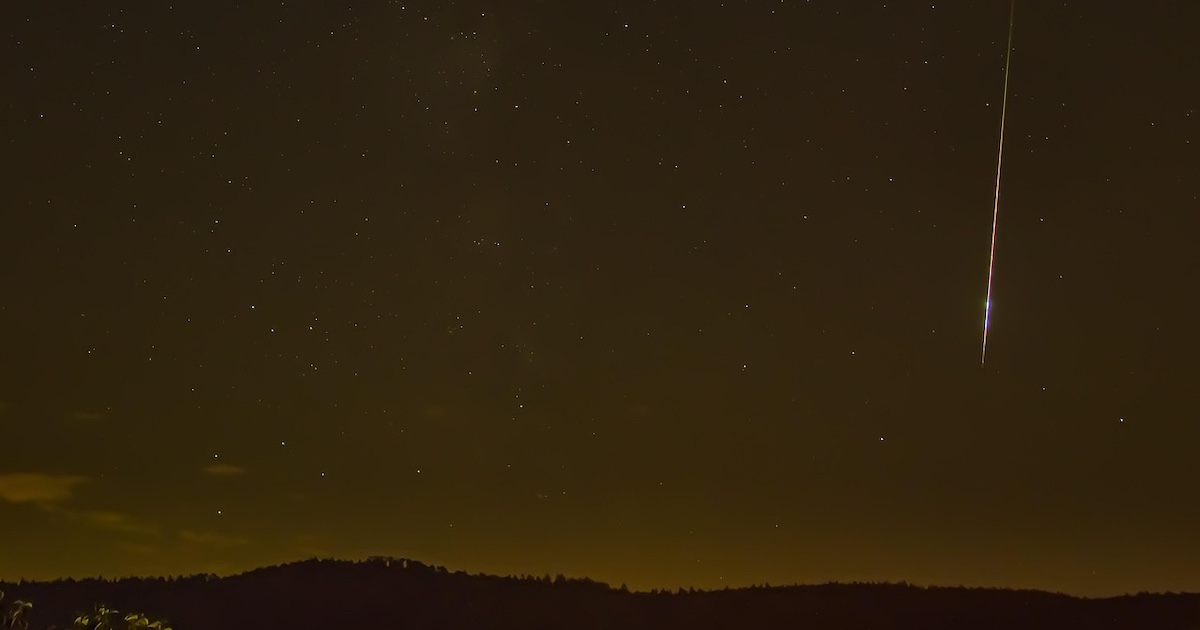
It’s understandable that passing comets and meteors often make the news, since the idea of our planet being struck by one is unsettling to say the least.
But it’s a rarity of course, that any space material actually hits our planet in any meaningful way, since the many meteorites that head towards Earth every day are usually burned up by our planet’s thick atmosphere.
However, every now and then a meteor does strike through our atmosphere and hit Earth – around once a year, though huge impacts that actually threaten life on our planet are much rarer, a once-in-a-few-million-years event.
But what actually happens when a large object actually hits the Earth? Well, a newly-discovered impact crater in China could tell us more.

Ming Chen
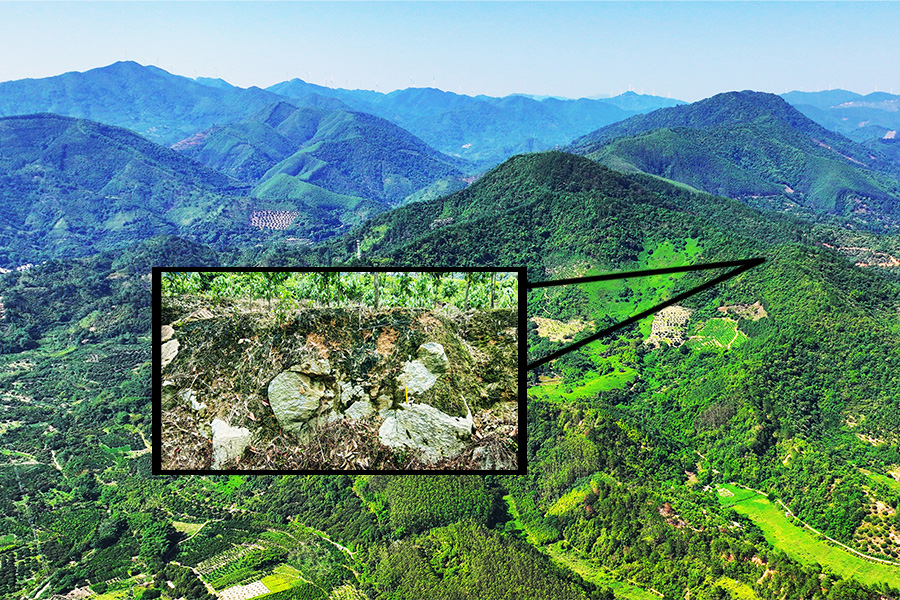
Despite being many thousand years old, the Jinlin crater – located on a hillside in Zhaoqing, Guangdong Province, China – has only just been discovered.
But as a team of researchers explain in their study, which was recently published in the journal Matter and Radiation at Extremes, it was relatively new by impact crater terms. But that wasn’t the only surprise within this huge hole in the ground.
In fact, this early-to-mid Holocene epoch crater was over 900 meters wide, making it by far the widest impact crater known to have been formed within our current geological epoch.
And thanks to the granite layers of this particular crater, it is unusually well-preserved, allowing researchers to learn some quite significant truths about what happened when this particular meteor struck.

Pexels
As the study’s author Ming Chen explained in a statement, the well-preserved crater was full of evidence just waiting to be found, including a very specific type of quartz, which requires such force in its creation that it cannot be created on Earth:
“On the Earth, the formation of planar deformation features in quartz is only from the intense shockwaves generated by celestial body impacts, and its formation pressure ranges from 10 to 35 gigapascals, which is a shock effect that cannot be produced by any geological process of the Earth itself.”
While the researchers are still working hard to understand the particular composition of the meteor, the sheer force with which it struck – sufficient to create planar deformation features in quartz, and so strong that we humans can’t replicate it – tells us more than we’ve ever known about meteor strikes in the Holocene.
Most notably, they’re stronger and more impactful than we ever knew.
If you thought that was interesting, you might like to read a story that reveals Earth’s priciest precious metal isn’t gold or platinum and costs over $10,000 an ounce!