


Pexels/Reddit
Nowadays we have to agree to terms and conditions so frequently, it’s rare that we’ll ever actually read them.
And this is fine, as long as the terms are with a brand or business that you trust, one with integrity that you know would likely not have hidden anything in the fine print.
But what about all those unknown businesses and characters we sign agreements with?
The hotel in this story was sick of workers complaining about not understanding the terms they’d signed.
So they made a change.
Read on to find out what happened.
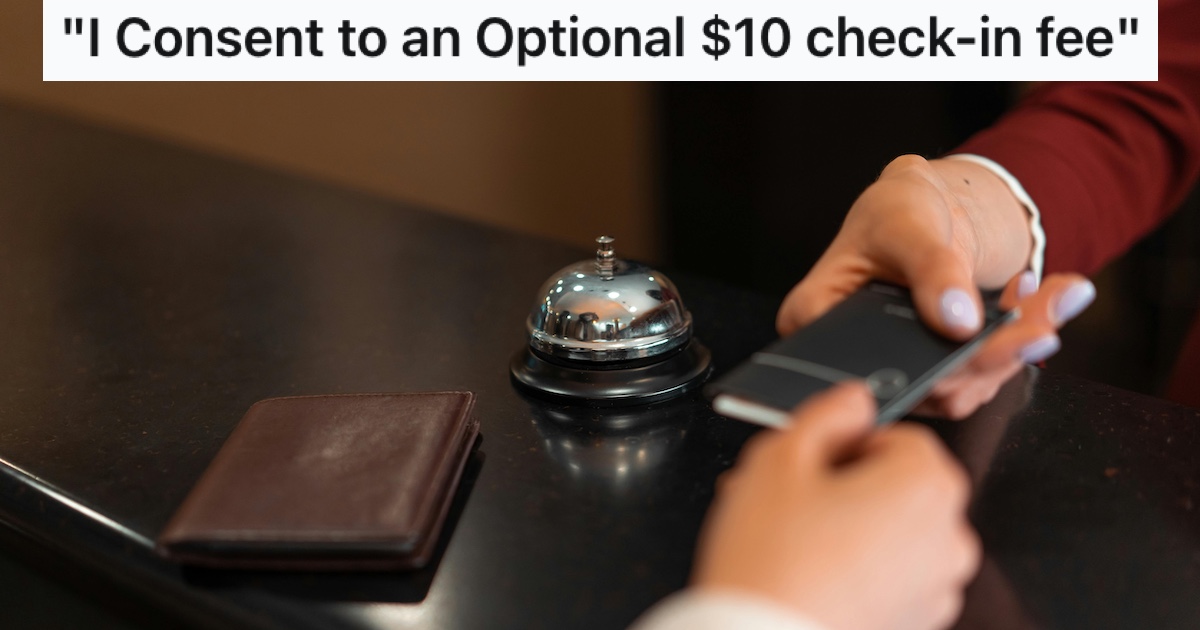
“I Consent to an Optional $10 check-in fee”
One of the biggest pet peeves that front desk agents always have is guests not reading the registration card terms.
Then, we have to deal with them being surprised afterwards about something that was clearly written (rate, check-out time, incidentals, etc.).
This was especially a problem at the hotel where I work when we switched to virtual registration cards, as the guests were rapidly clicking “accept” even before we finished explaining the terms to them.
My old manager had had enough of it after a while, so he had a very clever idea on how to make sure people read the registration card.
Let’s see what this clever idea was.
When we first transitioned to a digital registration card, we had the option to make “optional terms” where hitting “deny” didn’t stop the check-in process.
Think of it more like those screens on kiosks that ask if you want to donate to a certain charity.
Being sick of all these guests breezing through the registration card, he added the following part:
“(Optional) I agree to pay a $10 check-in fee. I am aware that I can opt out of it without consequence, but choose to accept anyway.”
Yikes! Read on to find out how that term worked out for them.
I will stress that we had to say this clause when it popped up, and explain to guests afterwards that we don’t actually charge them, it is just there to ensure that all the terms are being read.
We never actually charged anyone during this “experiment”.
Regardless if they are on term #4 when we are still explaining #2, we were still required to verbally explain all the terms they were accepting (or just accepted previously).
I will say, some of the reactions were priceless when I checked people in.
Let’s see how hotel guests responded when they realised their mistake.
Many were like “Oh no! Please don’t charge me. I just hit accept without even reading it,” but others also accepted it on their terms when they realized what they did (then we explained we won’t actually do it).
We always redid the registration card if they pointed out that they hit accept on accident.
After that, people started to not rush reading the registration card, and that even saved some people from being charged incorrectly.
Eventually we did get rid of that optional term, but to this day, we have a few regulars who still talk about it, mostly saying it was a smart thing for us to do and it helped teach them to always read their registration cards, no matter how much of a rush they are in.
It’s great that this harmless lesson made a difference, both to the hotel and its customers. But there’s probably a lot of customers who weren’t so happy about it.
Because when customers complain about something they’ve already agreed to, they’re so much more likely to have a negative experience – and ruin the agent’s day as well.
Perhaps we all need to learn to take a little longer to read the terms.
Let’s see what folks on Reddit made of this.
This person explained why they don’t read hotel terms.


And others thought the additional term was more of an inconvenience.

Meanwhile, this Redditor was suspicious of what surprised guests so often.

Obviously, this would be annoying to customers who were in a rush, especially since they had to fill it in again afterwards.
But it’s definitely a lesson to those of us who live life on ultra-fast autopilot – one day, something might catch you out, and it’ll be a lot more serious.
We could all learn a lesson from this.
If you liked that post, check out this post about a woman who tracked down a contractor who tried to vanish without a trace.