


Shutterstock
Domesticating wild animals was one of the most important things that humans did in our history. While there is some debate about some aspects of how and when domestication happened, there is little doubt regarding what benefits it brought to us and the animals.
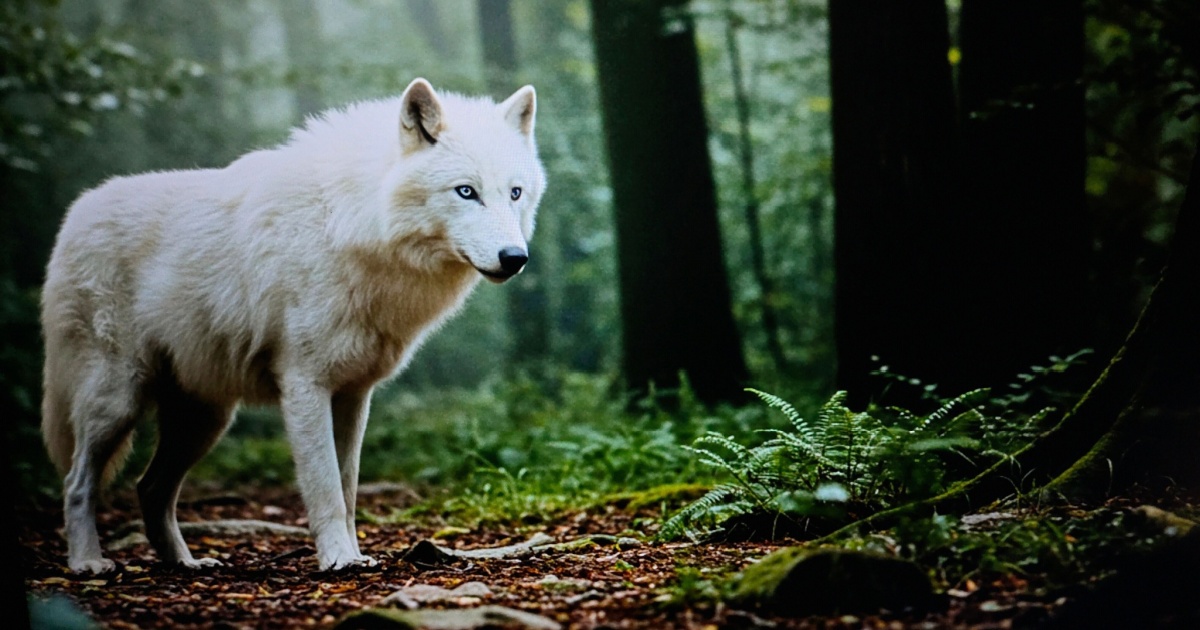
Many generations ago, wolves were a major competitor to humans both in terms of the risk of getting attacked by wolves and the fact that wolves hunted many of the same animals that we did.
At some point, however, daring wolves and curious humans took a risk and started working together. This likely happened when wolves figured out that the food humans left behind was easy to grab, resulting in some packs seeing us as a source of food rather than a threat.
Over the course of time, the wolves eventually stayed close to the humans and got fed directly. In exchange, the humans got the benefit of having wolves help them with hunting, provide protection, and even provide some companionship.
The result of this process is modern dogs, which are among the most common pets in the world. While there is no doubt that domestication helped the animals in many ways, it also meant that they took a different evolutionary path, which rather than having them remain one of the largest and most feared animals in the wild, some breeds today are tiny and all but harmless. That being said, their survival as a species is much safer, so from a survival of the fittest perspective, it was a good move.

Shutterstock
Similar things can be said of cats, which were once exclusively wild hunters that stalked most areas of the world. As humans brought them closer to help with hunting rats and companionship, the cats evolved to look and behave differently, benefiting both them and us.
Other animals, such as the fox, may have actually been kept as pets even longer ago than either cats or dogs. A 2024 study found a human and a fox skeleton buried together, indicating that they had a bond in life. That was in a 1500-year-old burial site located in Argentina.
A 2018 paper on an experiment scientists began in 1959 further highlights that foxes can be domesticated. The scientists took a group of silver foxes into their care and bred them exclusively for traits desired in domesticated animals such as tameness. Lee Alan Dugatin wrote in the paper:
“Starting from what amounted to a population of wild foxes, within six generations (6 years in these foxes, as they reproduce annually), selection for tameness, and tameness alone, produced a subset of foxes that licked the hand of experimenters, could be picked up and petted, whined when humans departed, and wagged their tails when humans approached. An astonishingly fast transformation. Early on, the tamest of the foxes made up a small proportion of the foxes in the experiment: today they make up the vast majority.”
He went on to explain how they continued to quickly evolve:
“Their stress hormone levels by generation 15 were about half the stress hormone (glucocorticoid) levels of wild foxes. Over generations, their adrenal gland became smaller and smaller. Serotonin levels also increased, producing “happier” animals. Over the course of the experiment, researchers also found the domesticated foxes displayed mottled “mutt-like” fur patterns, and they had more juvenilized facial features (shorter, rounder, more dog-like snouts) and body shapes (chunkier, rather than gracile limbs).”
The advantages of domestication for both the animals and the humans are quite obvious, so why doesn’t it happen more often?

Shutterstock
The fact is, not all animals are good candidates for domestication. Researchers in this area say there are certain characteristics that need to be present in order to successfully domesticate an animal. These include the ability to be bred in captivity, they need to have a flexible diet or at least a diet that is easy for humans to supply, and they should have a docile nature. Perhaps most importantly, they should live in a social hierarchy while wild so that they can be easily bred to perform the tasks we desire of them.
With that in mind, it is not a good idea to grab your favorite wild animal and try to get it to live with you. Even if you are successful for a time, there are significant risks involving attack, health problems, disease, and other issue that most people can’t properly address.
If you thought that was interesting, you might like to read a story that reveals Earth’s priciest precious metal isn’t gold or platinum and costs over $10,000 an ounce!